The 24-Hour Fallacy: Deconstructing the Myth of Equal Time and Death
This essay rigorously examines the pervasive myth that 'death and 24 hours a day are absolutely fair.' We unravel its misattribution to Bill Gates, trace its intellectual lineage through Franklin and Arnold Bennett, and expose the stark reality of unequal time sovereignty beneath its veneer of physical impartiality.

Core Insight: A seemingly unshakeable golden rule has long circulated in time management literature and motivational speeches: “Only two things in this world are absolutely fair: everyone dies, and everyone gets 24 hours a day.” In countless business communities, this adage is often unthinkingly attributed to Bill Gates. However, textual research reveals Gates never uttered such a statement. Equating the constancy of natural physical laws with social equity is, in fact, a cognitive placebo designed to mask the levers of class and the alienation of time.
I. The Grafted Icon: Bill Gates’ True Context and the Misattributed Maxim
In modern mass communication, when an inspiring philosophy requires unquestionable authority, the simplest strategy is to “host” it under the name of a top business titan. Bill Gates, Warren Buffett, Li Ka-shing, or Kazuo Inamori frequently serve as vessels for such folk wisdom.
In reality, Bill Gates has never, in any of his public speeches, Microsoft internal columns, annual open letters (GatesNotes), or official biographies, put forth the dualistic assertion that “only two things in the world are absolutely fair.” The public’s memory confusion primarily stems from the misaligned grafting of two distinct real-world contexts:
1. Gates on ‘Fairness’: The Harsh Reality of Inequality
Gates’ most widely known expressions regarding fairness point precisely to the opposite of “absolute fairness”:
“Life is not fair; get used to it.”
Interestingly, this quote was early on attributed in Chinese publications to “Bill Gates’ 11 pieces of advice for young people.” Yet, its original source is actually Dumbing Down Our Kids, a 1996 book by American educator Charles J. Sykes. The internet’s chaotic referencing and secondary editing ultimately transformed Sykes’ stark warning about life’s harshness into a success mantra attributed to Gates.
2. Gates and Buffett on ‘Time’: Capital’s Sole Unpurchasable Commodity
In numerous in-depth conversations with Warren Buffett, Gates indeed repeatedly emphasized time’s extreme scarcity. Buffett once showed Gates his deliberately sparse calendar, stating bluntly: “In this world, I can buy almost anything I want, but the only thing money can’t buy is time.”
Gates’ reverence for time lies in its irreversible, unidirectional flow, not in a saccharine lament about “everyone equally possessing 24 hours.” Popular culture conflated Buffett’s vigilance regarding time’s scarcity with folk fatalism about life and death, ultimately packaging it as the “absolute fairness” doctrine under Gates’ name.
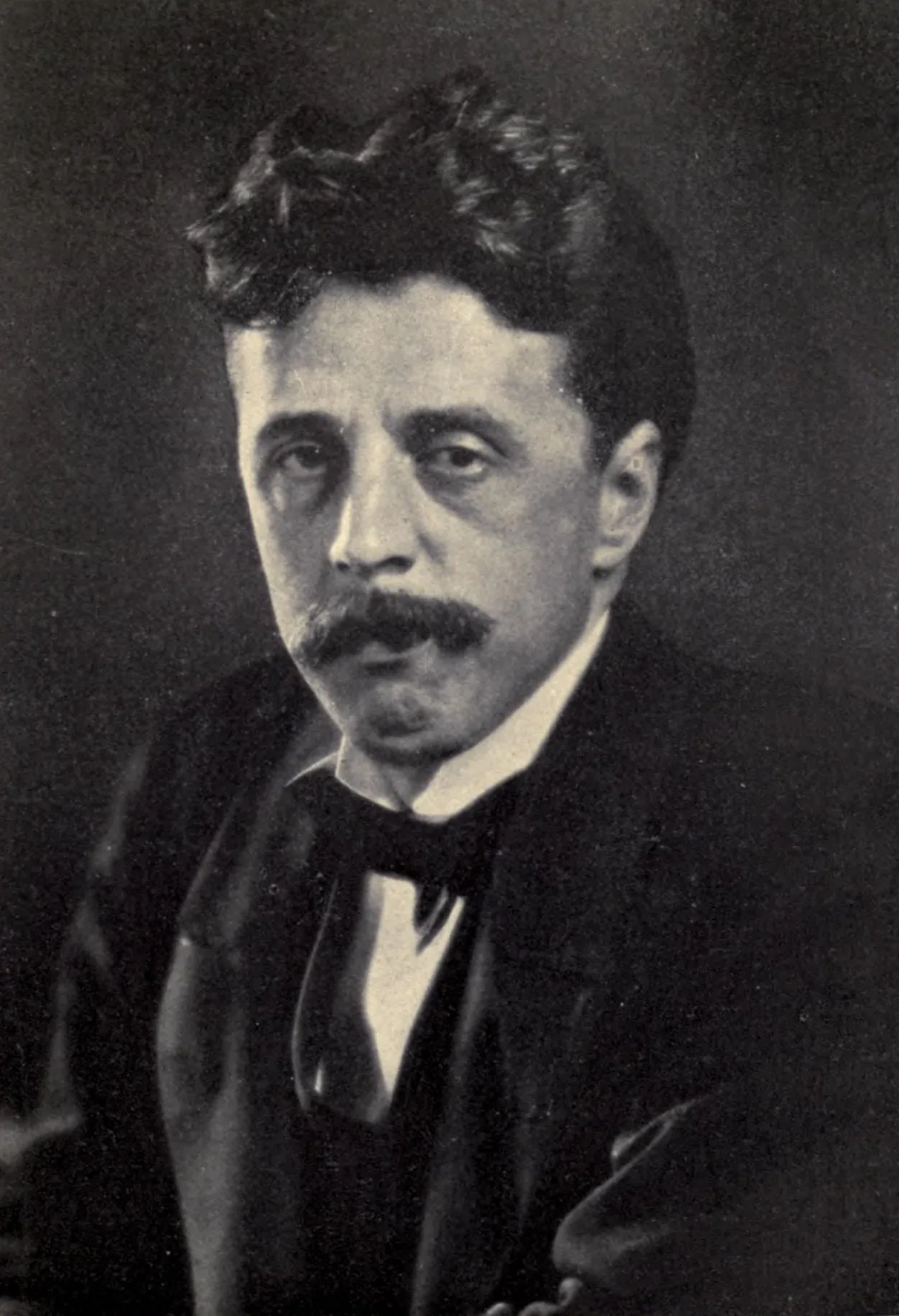
Figure 1: British novelist Arnold Bennett (1867–1931), who in his classic 1908 essay *How to Live on 24 Hours a Day*, systematically argued for time's non-privileged allocation mechanism.
II. Linguistic Lineage and Philosophical Currents: From Franklin’s ‘Taxes’ to Bennett’s ‘24 Hours’
Deconstructing the linguistic DNA of this maxim reveals it’s not a singular flash of insight but a synthesis of classic Western phrasing and ancient philosophical propositions within a modern, secular context.
1. The Progenitor Phrase: Benjamin Franklin’s ‘Death and Taxes’
The standard rhetorical template in Western culture regarding “only two things in the world…” originates from a famous 1789 letter by Benjamin Franklin to French physicist Jean-Baptiste Le Roy:
“Our new Constitution is now established, and has an appearance that promises permanency; but in this world nothing can be said to be certain, except death and taxes.”
Franklin used “death” to represent an irresistible natural law and “taxes” to represent an inescapable secular contract. When localizing such certainty-themed discussions, the Chinese internet naturally borrowed this dual-pivot antithetical structure, replacing “taxes” with the more universally inspiring “24 hours a day.”
2. The Classical Philosophical Roots of ‘Death as Ultimate Equality’
The absolute fairness of death is humanity’s oldest psychological defense mechanism against worldly inequality:
- Ancient Roman Stoicism: Seneca, in On the Shortness of Life, noted that death treats emperors and slaves alike; the poet Horace also wrote: “Pale Death with impartial foot knocks at the hovels of the poor and the palaces of kings.”
- Pre-Qin Daoist Philosophy: Zhuangzi, in Discourse on the Equality of Things, expounded on “the sameness of life and death,” dissolving the absolute boundaries of worldly hierarchy and gain/loss, viewing death as the sole impartial instrument for returning to the grand transformation of heaven and earth.
3. The Modern Source of ‘Equal 24 Hours Daily’: Arnold Bennett
The most complete and classic modern textual expression regarding “equality before time” comes from British novelist and essayist Arnold Bennett’s seminal 1908 work, How to Live on 24 Hours a Day.
In the book, Bennett describes time’s indiscriminate allocation with an almost sacred tone:
“In the realm of time, there are no aristocrats of wealth, no intellectual privileges. Genius does not receive even one extra hour a day; no one can steal your time, nor can anyone pre-empt even a second of tomorrow… Rich or poor, high or low, everyone wakes up each morning, and the universe precisely issues them a full 24 hours.”
Bennett’s discourse aimed to awaken the listless London clerks of the post-Industrial Revolution era, encouraging them to use their commute and after-work leisure for intellectual and spiritual development. This text, imbued with Victorian self-discipline, has, through over a century of popularization, fused with folk Stoic views on life and death, solidifying into the maxim we know today.
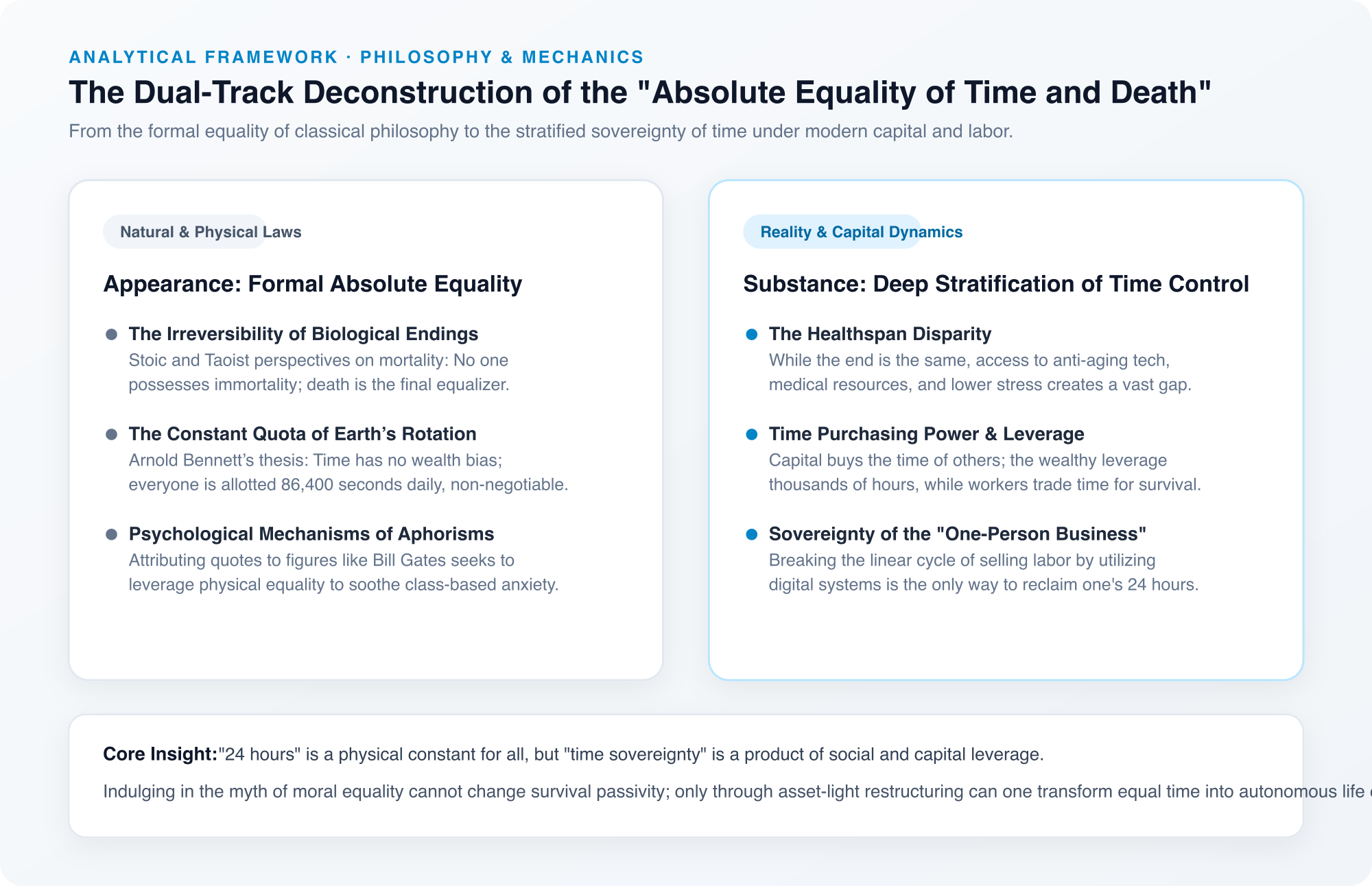
Figure 2: The "Absolute Equality of Time and Death" Dual-Track Deconstruction Matrix: From the formal equality of natural law to the stratified dominion of time under capital's leverage.
III. Dispelling the Illusion: The Physical Impartiality of Time Versus the Deep Stratification of Time Sovereignty
When we use the rational scalpel to strip away the maxim’s motivational aura, a sharp paradox emerges: equating “24 hours a day” with “fairness” is essentially using the indifference of physical measurement to mask the profound exploitation of human life by social division of labor and capital.
In the real mechanisms of operation, time is far from an equal blank check for everyone:
1. Identical Destination, Yet Stratified Healthspan
“Everyone dies” is indeed a biological iron law, but on the journey to that end, there exists a vast chasm in the “high-quality, disease-free survival period” different individuals possess. Advanced preventive medicine, mitochondrial anti-aging interventions, superior air and water quality, and high-resilience recuperative environments have long disrupted the homogenization of average lifespans. The formal irreversibility of the endpoint cannot conceal the class differences in health degradation during the process.
2. Time’s Purchasing Power and the Leverage of Capital
For the average salaried worker under an employment system, the vast majority of their 24 hours are not their own:
- 8-10 hours are directly packaged and sold for basic living cash flow;
- 2-3 hours are dissipated in crowded commutes and physiological recovery (passive sleep);
- Truly autonomous and creative “high-energy time” often amounts to less than 1-2 hours per day.
Conversely, the orchestrators of commercial organizations and capital holders, through remuneration systems, bulk-purchase the life-hours of others, aggregating thousands of individuals’ 24 hours into tens of thousands of hours of super-leverage for themselves. A person who can use capital to buy others’ time, and a person who must sell their biological time for sustenance, possess no substantive equality in the dimension of time.
3. From ‘Selling Hours’ to ‘Reclaiming Time Sovereignty’
When people indulge in the illusory comfort of “everyone gets 24 hours anyway,” they implicitly accept a cheap equalization. The true breakthrough for survival lies not in painful self-discipline within the stripped-away remnants of time, but in systematically restructuring one’s time-output framework:
The Solo Enterprise Time Restructuring Formula: Abandon hourly-based time selling models ➔ Leverage lean assets and automation software to build reusable digital asset systems ➔ Achieve decoupling of income from present-time hours ➔ Fully reclaim sovereignty over every increment of the 24 hours.
Related Research & Topics
Tello Mobile eSIM
SafetyWing Nomad Insurance
* Disclosure: This post contains affiliate links. If you make a purchase through these links, V-G Journal may earn a small commission at no additional cost to you. We only recommend services we independently evaluate and trust.
FIRE and Golf:自由旅居之路
专注于为追求 FIRE 与品质生活的人群提供特惠打球权益与候鸟微度假。不持一砖一瓦,运营品质生活。