The Crowd and the Cultural Revolution: Mass Psychology and the Collapse of Institutional Guardrails
Leveraging Gustave Le Bon's model of mass psychology from 'The Crowd,' this essay dissects the Cultural Revolution's mechanisms of symbolic reduction, anonymous impunity, and emotional contagion. It moves beyond simplistic elite bias to reveal how the erosion of judicial safeguards and individual survival calculations fundamentally fueled the fervor.

Core Insight: Attributing historical movements involving millions to the “stupidity of the masses” is a facile cognitive escape. The central thesis of Gustave Le Bon’s The Crowd was never about intelligent individuals becoming foolish in groups, but rather how rational faculties are systematically erased, judgment is ceded, and individuals, under specific organizational conditions and authority, are driven to destructive collective fervor. However, the intensity of the Cultural Revolution far exceeds the scope of pure crowd psychology. Without dissecting the underlying institutional decay and micro-level survival calculations, the true gears of historical movement remain obscured.
I. Le Bon’s Model Manifested in the Movement
In the late 19th century, Gustave Le Bon, witnessing the turbulence of the French Revolution and the Paris Commune, penned The Crowd: A Study of the Popular Mind. His core argument retains its penetrating power today: When individuals coalesce into a crowd, their personality and rationality rapidly dissolve, yielding absolute dominance to unconscious instincts, emotional polarization, and contagious suggestion.
The street movements and fervent rallies of the early Cultural Revolution, on a psychodynamic level, almost perfectly mirrored Le Bon’s classic depiction of crowd characteristics.
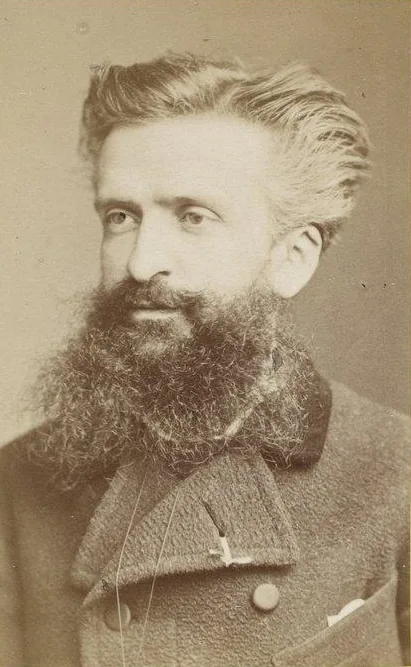
Figure 1: Gustave Le Bon (1841—1931), founder of mass psychology and the study of crowd behavior.
1. Absolute Assertions, Symbolic Reduction, and Contagion of Ideas
Le Bon argued that crowds never accept rigorous logical reasoning or dialectical deduction; they are swayed only by extremely simplified, absolute assertions, frequently repeated symbols, and dense emotional contagion.
- Extreme Reduction of Cognitive Symbols: Complex social contradictions, economic laws, and historical causes were forcibly compressed into a black-and-white, binary opposition: “revolutionary vs. reactionary,” “proletariat vs. bourgeoisie.” Without the need for elaboration, the more absolute the assertion and the more intense the emotional coloring, the less resistance the crowd offered. As we emphasized in discussing the boundaries of logical thinking and formal deduction, once the principles of identity and non-contradiction are stripped away, public language ceases to function for argumentation and becomes a political switch directly triggering collective reactive responses.
- High-Frequency Repetition Bypassing Rational Doubt: Through the constant repetition of “morning greetings, evening reports,” specific quotations, and unified broadcasts, a single political slogan created a closed echo chamber across all public and private spheres. With information sources completely blocked, repetition equated to truth, rapidly solidifying into unquestionable dogma in the subconscious.
- Resonant Contagion in Physical Gatherings: Mass mobilizations (“Great Link-ups”), million-strong rallies, and widespread collective rituals created hyper-dense interpersonal fields. In the fervor of collective resonance, excitement and agitation spread like biological viruses, leaving individuals within the field with almost no psychological buffer to remain detached observers.
2. Anonymous Cover and the Release of Brutality Through Zeroed Responsibility
In normal civilized societies, individuals adhere to basic norms due to the rigid deterrence of law, the reputational constraints of familiar social circles, and their own internal ethical judgments. Once swept into the tide of a crowd, these protective layers are instantly stripped away.
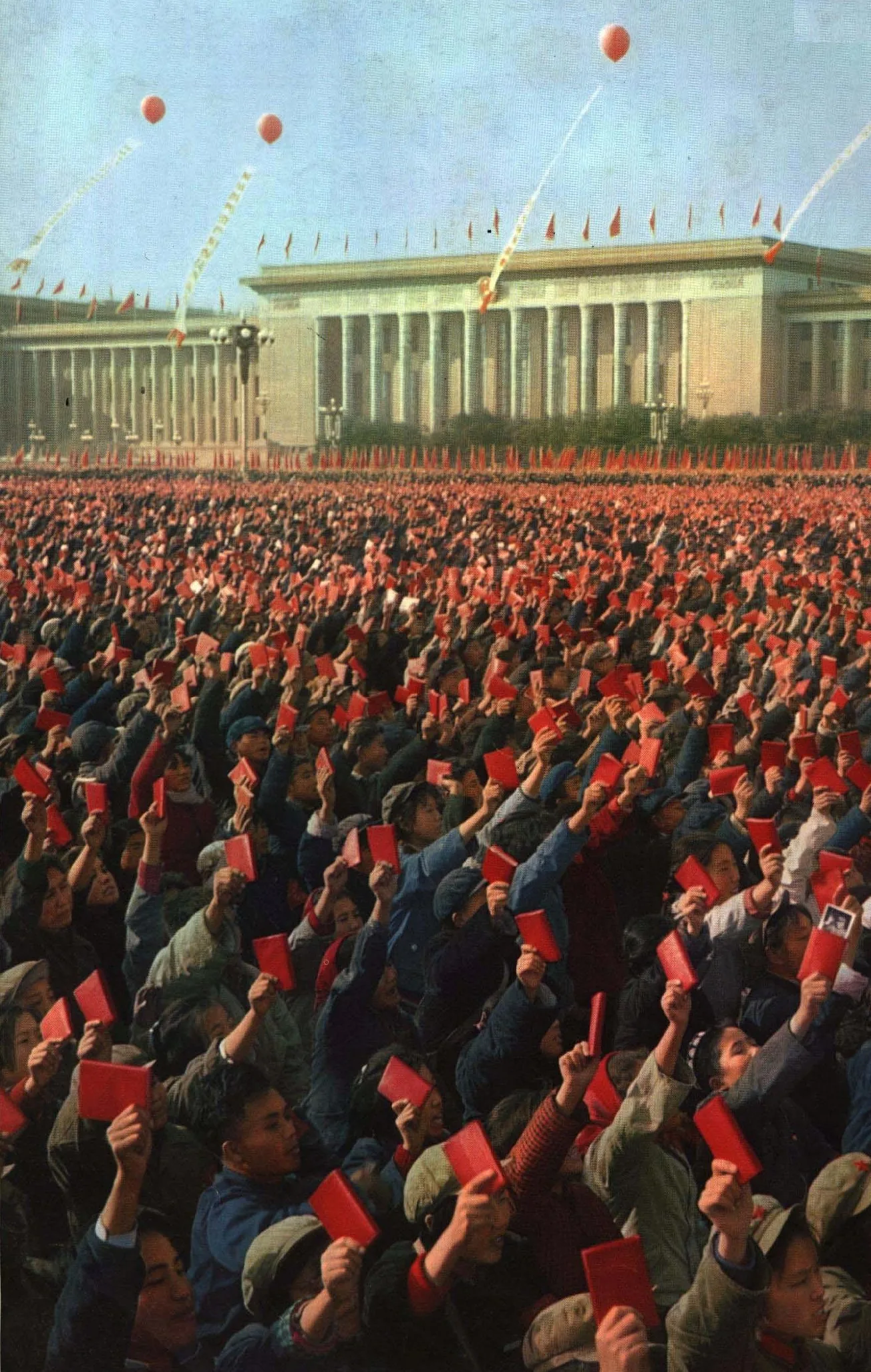
Figure 2: Historical documentation of a mass rally during the Cultural Revolution in 1967, showing individuals within the context of unified labels and collective fervor.
- Organizational Labels Obscuring Individual Identity: When wearing a uniform red armband, a neat military-style uniform, and acting under the banner of a “combat team,” an individual’s specific physical identity is completely hidden by the abstract label of “revolutionary masses.” This anonymity creates an illusion of being “unstoppable,” leading to the mistaken belief that all crowd actions are naturally exempt from accountability.
- Diffusion of Responsibility Leading to the Proliferation of the Banality of Evil: Public denunciations and violent clashes were no longer borne by specific individuals facing criminal or ethical consequences. The psychological cost of perpetrating violence was diluted and spread across hundreds or thousands of people. The psychological phenomenon of “diffusion of responsibility” was amplified to its extreme. Ordinary, timid, and mild-mannered middle school students and young workers, under the protection of group anonymity, could unhesitatingly trample the ethical bottom lines of normal society, packaging primal destructive impulses as a righteous holy war.
3. Attachment to Charismatic Prestige and the Complete Outsourcing of Cognitive Judgment
Le Bon wrote: “The crowd is only impressed by extremes. It demands strength and is not impressed by gentleness of speech. From its point of view, the most brilliant logic is unintelligible, and from its defects, it must be concluded that there is no need to have recourse to it.” The intrinsic spiritual core of a crowd is essentially conservative and dependent; they naturally crave a strong will to guide them.
- The Religious Transformation of Political Fervor: The crowd’s adherence to absolute authority exhibited a strong sacred, religious character. “Morning greetings, evening reports,” loyalty dances, and dogmatic recitations formed a complete modern political religion. Dissent was no longer viewed as an academic or political disagreement but was classified as an unforgivable act of blasphemy.
- The Psychological Paralysis Effect of Leader’s Prestige: The “prestige” Le Bon referred to is a form of mental anesthetic that instantly paralyzes critical thinking. Individuals voluntarily surrendered their freedom to discern right from wrong, completely outsourcing their cognitive judgment of good and evil to the leader’s latest directives. Yesterday’s comrades-in-arms, with just a single editorial’s pronouncement, could today be unhesitatingly classified as enemies and physically eliminated.
II. Le Bon’s Blind Spots: This Was Not Purely “The Crowd”
While Le Bon’s theory offers powerful psychological insights into fervent environments, it carries the distinct limitations of 19th-century European conservative elitism. Le Bon tended to reduce all mass movements to sudden “fits of madness by the lower classes,” a framing that obscured the cold institutional mechanisms and practical logic underlying historical movements.
The Cultural Revolution’s ability to persist for a decade with such high intensity cannot be explained by millions of “blindly following fools” spontaneously going mad in the streets. Peeling back the layers of emotional fervor reveals a highly sophisticated power engineering and micro-level calculation operating beneath the surface.
1. The Physical Dismantling of Institutional Correction Guardrails
For mass fervor to escalate into a society-consuming torrent of destruction, it must be preceded by the complete collapse of the society’s original correction and checks-and-balances mechanisms.
- Physical Shock to the Judicial Punishment System: In the early stages of the Cultural Revolution, the “smash the public security, procuratorate, and courts” campaign effectively removed regular police investigation, procuratorial oversight, and independent judicial trials from the historical stage. When the cost of violating rules, looting property, illegal detention, and even homicide was effectively zeroed out by the absence of criminal legal accountability, the cost of transgression plummeted.
- Deliberate Dismantling of Bureaucratic Damping: Modern bureaucratic hierarchies naturally possess conservative, procedural, and risk-averse characteristics, serving as natural buffers that absorb social radicalism. However, with the paralysis of party committees at all levels and the complete disarray of grassroots administrative organizations, society lost its final layer of rational shock absorption.
- Targeted Endorsement of State Violence: The masses’ savage actions were not only not stopped by the state apparatus but were instead endorsed by the highest levels of power and granted “non-interference” permission. The masses were not suddenly intellectually impaired; rather, upon clearly perceiving the rule change that “violence would not be punished by law,” they rapidly adjusted their behavioral boundaries.
2. Micro-Level “Survival Rationality” and the Ledger of Resource Redistribution
To label all participants in the movement as irrational, blindly obedient puppets is a severe underestimation of complex human nature. Beneath the surface of collective fervor lay extremely subtle and cold calculations by micro-individuals.
- Self-Preservation Ledgers Under Extreme Repression: In an environment where everyone feared for their lives and denunciations were rampant, maintaining silence, neutrality, or detachment carried extremely high political risks, often being directly interpreted as signs of discontented reaction. Actively taking sides, shouting slogans, and participating in denunciations were often the lowest-cost defensive strategies adopted by individuals and families to avoid peril.
- Competition for Class Advancement and Scarce Resources: The factional struggles between rebels and conservatives, while ostensibly a dispute over the orthodoxy of Marxist-Leninist doctrine and ideological purity, were, beneath the ideological shell, fundamentally about the redistribution of power. Groups marginalized by the existing bureaucratic system sought to shatter vested interests through the movement. Young students attempted to seize urban residency quotas and discourse power in a stagnant job market.
- Cost-Benefit Analysis of the Banality of Evil: The fervor of many participants stemmed not from a pure belief in political ideals but from a clear calculation that “bringing others down” could create opportunities for their own advancement, housing, and survival quotas. What appeared irrational on the surface was, at its core, a ruthless micro-economic game.
3. Top-Down Engineered Mobilization, Not Spontaneous Street Riots
The “crowd” depicted by Le Bon more closely resembles medieval religious riots or disorganized street mobs of Paris. The Cultural Revolution, however, was a highly engineered political mobilization precisely controlled by the central power axis.
- Mobilization Closed Loop of the State Apparatus: The movement relied on the unified direction of the Central People’s Broadcasting Station and editorials in the “Two Newspapers and One Journal,” with implementation passed down through revolutionary committees at all levels and rebel liaison headquarters.
- Political Tool for Targeted Release of Privileges: The ebb and flow of the movement, the shifting targets of denunciation, and even the changes in the tone of big-character posters were consistently guided by the bargaining will and political leverage of the highest levels of power. The masses were granted the “legitimate immunity” to dismantle the old bureaucratic system; they were a directed, empowered shock force, not a disordered, wandering mob.
III. Comparative Matrix and Rational Reflection
To clarify the boundaries between the explanatory power of mass psychology and the deconstruction of historical institutions, we place Le Bon’s model alongside the perspective of institutional game theory in a comparative matrix.
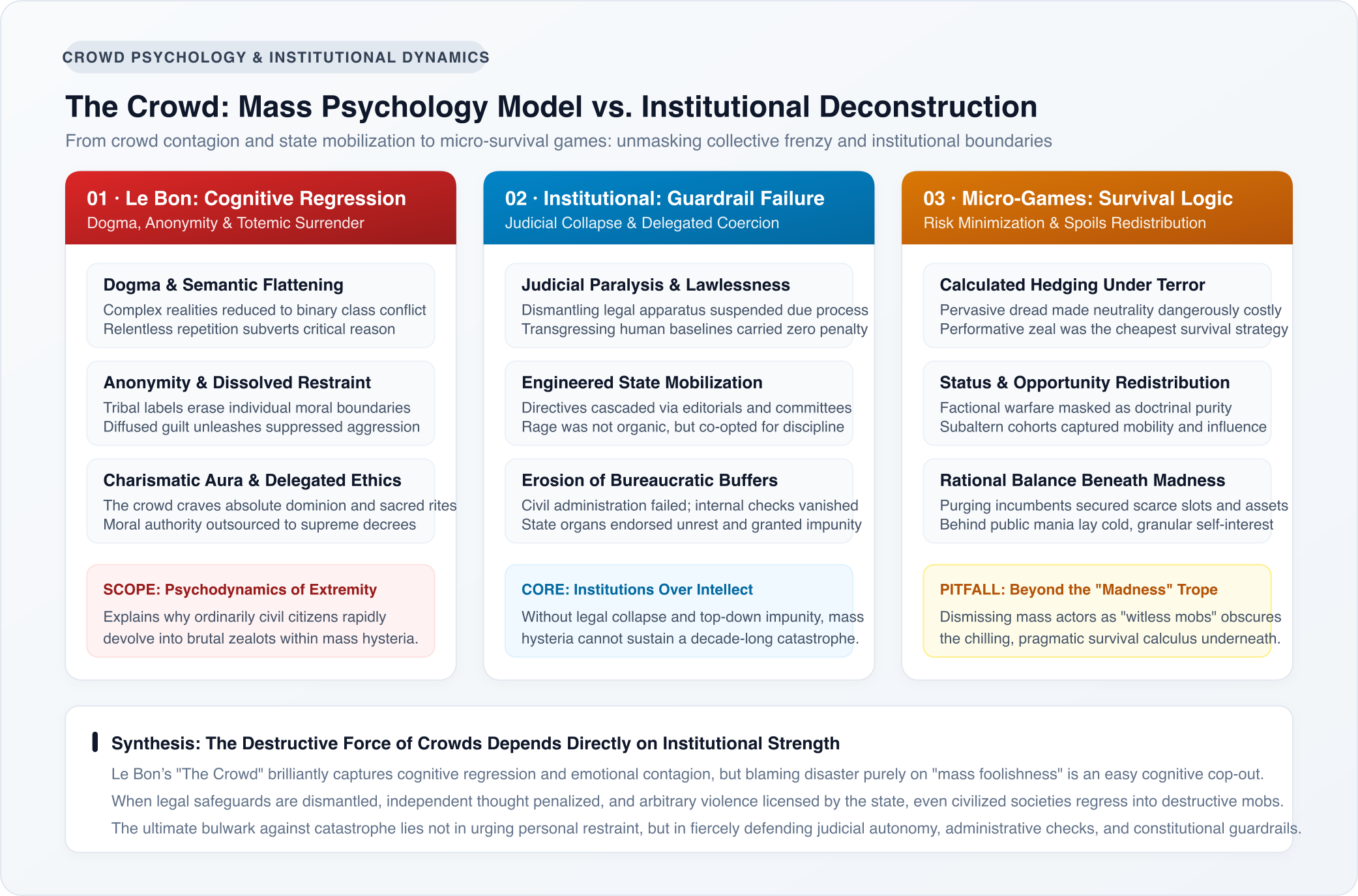
Figure 3: Comparative Matrix of ‘The Crowd’ Mass Psychology Model and Historical Institutional Deconstruction
Core Mechanism Summary:
- The Theoretical Merit of the Psychological Dimension: Le Bon’s The Crowd accurately reconstructs the process of psychological reduction in extreme group situations. It explains how symbolic reduction bypasses rational scrutiny, how anonymous impunity disarms moral constraints, and how charismatic prestige induces the outsourcing of judgment. It reveals the universal human vulnerability to blind obedience and brutality in specific contexts.
- Deep Penetration Through Institutional and Game Theory: Purely relying on psychology cannot explain the movement’s duration and destructive intensity. The essence of the Cultural Revolution’s tragedy lies in the physical dismantling of the judicial system, the complete erosion of bureaucratic checks and balances, and the state apparatus’s issuance of unchecked privileges and immunity for violence to ordinary individuals.
- Beware the Cheap Attribution of “Mass Stupidity”: Attributing catastrophe to the “stupid masses” is not only ignorant of historical mechanisms but also a blind disregard for the seductive power of totalitarian systems. At the micro-level, fervor often masks cold survival rationality and the pursuit of gain.
A healthy society must never place its hope for peace and rationality in the illusory moral self-discipline of “universally clear-headed masses.” Crowds themselves possess no constant intellectual or moral fortitude; their behavioral floor is entirely dependent on the physical rigidity of the external institutional container.
Once the ramparts of justice are breached, independent thought becomes a liability for survival, and public power begins to grant unchecked privileges and immunity for violence to the masses, even the most gentle and rational modern society can rapidly reconstruct a highly efficient, brutal, and cold-blooded “crowd” in a very short period. Upholding the bottom line of the rule of law and procedural justice is the true wall against the recurrence of irrational collective frenzy.
Related Research & Topics
The Anatomy of Digital Predation: Inside the Syndicate Targeting the Elderly via Livestream Appraisal Scams
Starlink V4 and the Low-Earth Orbit Satellite Arms Race: How a 100,000-Node Optical Mesh Pierces the Submarine Cable Monopoly
Tello Mobile eSIM
SafetyWing Nomad Insurance
* Disclosure: This post contains affiliate links. If you make a purchase through these links, V-G Journal may earn a small commission at no additional cost to you. We only recommend services we independently evaluate and trust.
FIRE and Golf:自由旅居之路
专注于为追求 FIRE 与品质生活的人群提供特惠打球权益与候鸟微度假。不持一砖一瓦,运营品质生活。