From Empirical Tradition to Evidence-Based Audits: Why Industrialized Herbal Care Became an Arbitrage Machine
An analytical deconstruction of the epistemological divide between shamanic, empirical, and modern medicine. This essay explores the mechanics of TCM industrialization, the risks of institutional arbitrage in healthcare, and the necessity of toxicological boundaries.

Executive Summary: The perennial debate surrounding Traditional Chinese Medicine (TCM) is, at its core, a generational conflict between human cognitive paradigms and the industrial transformation of ancient experience by modern capital. To discuss the merits of any medical system without addressing causal logic, controlled verification, and toxicological error-correction is to descend into futile emotional tribalism. By mapping the three-dimensional divide between shamanism, empirical TCM, and modern biomedicine, we can establish a rational framework for health decision-making—one that accounts for institutional arbitrage, insurance solvency, and the mechanics of modern pharmaceutical conversion.
Discussions on Traditional Chinese Medicine are often paralyzed by cultural polarization. Proponents revere it as the distilled wisdom of millennia of human trial and error; critics dismiss it as an obsolete collection of anecdotes lacking double-blind validation. However, if we extract the conversation from narrow nationalist contexts and view TCM, shamanic medicine, and modern biomedicine through the lens of the philosophy of science, the fundamental divide becomes clear. The chasm is not between “herbs” and “chemicals,” but in the logic of etiology, the pathways of verification, and the existence of institutionalized error-correction mechanisms.
Simultaneously, the intervention of modern capital and industrial manufacturing has scaled TCM into a multi-hundred-billion-dollar industry. In this profound industrial overhaul, has mass production increased healthcare accessibility, or has it become a sanctuary for evading rigorous toxicology and extracting arbitrage from state insurance funds? A systemic deconstruction of facts and data is required.

Figure 1: The intersection of traditional empirical systems and modern pharmaceutical protocols in a contemporary hospital pharmacy.
I. The Epistemological Divide: Shamanism, Empirical TCM, and Biomedicine
The evolution of human medical cognition has been defined by two critical rational revolutions.
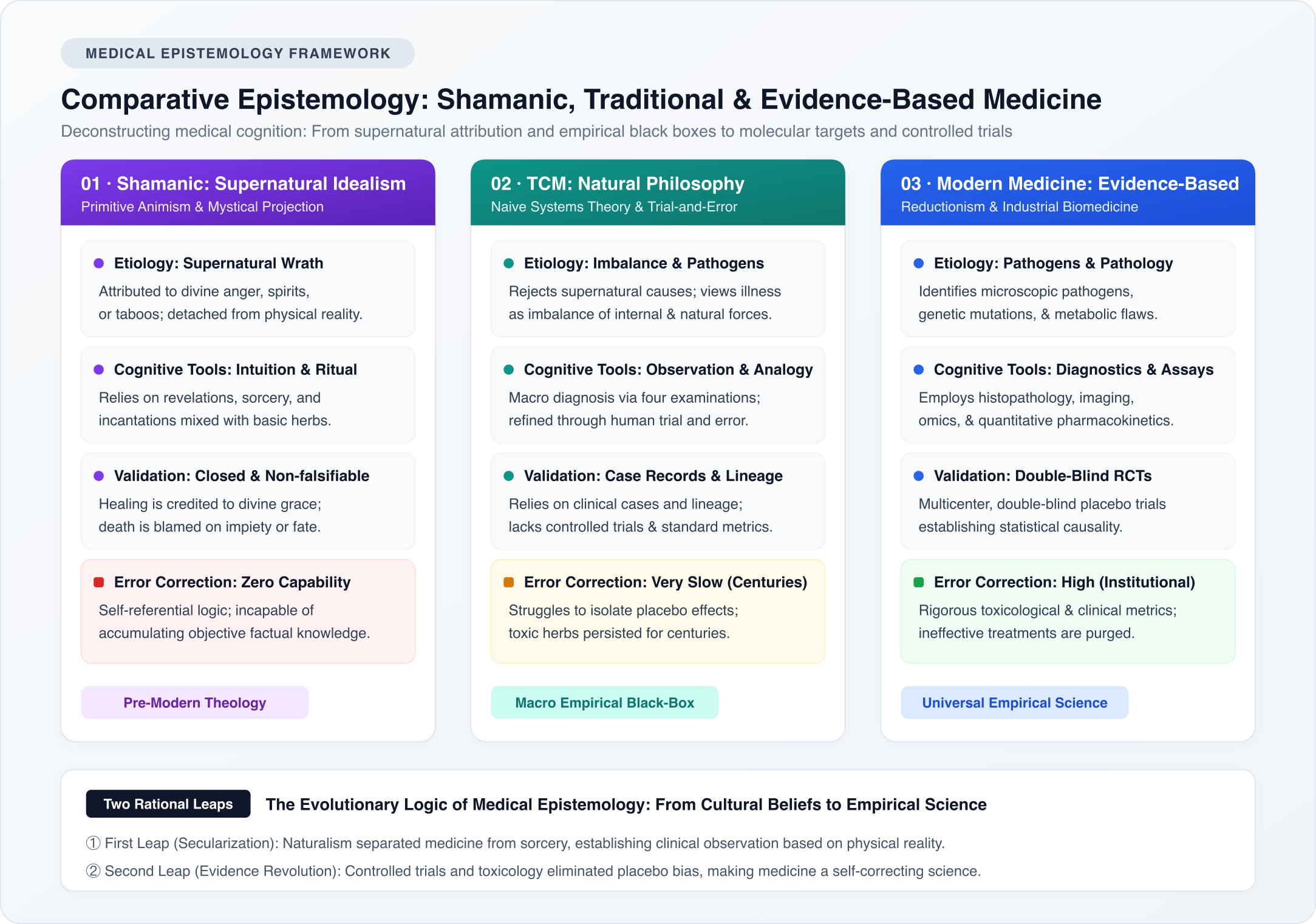
Figure 2: A comparative matrix of cognitive paradigms across medical systems.
1. Shamanic Medicine: Supernatural Idealism and the Unfalsifiable Loop
In the pre-modern era, lacking the tools for microscopic or physical attribution, humanity assigned the causes of plague, organ failure, and infant mortality to supernatural forces—divine punishment, demonic possession, or the violation of ancestral taboos. From the incantations of ancient Egypt to the exorcisms of medieval Europe and the shamanic rites of pre-Qin China, the paradigm remained the same.
The essence of shamanic medicine is psychological comfort and ritualistic control, serving as an adjunct to theocratic power. Its defining epistemological trait is that it is entirely unfalsifiable. If a patient recovers, the ritual worked; if they die, the patient lacked faith or their destiny was sealed. The causal chain is a closed loop, immune to external feedback and devoid of any capacity for error correction.
2. Empirical TCM: A Natural Philosophy Black Box
The turning point in Chinese medical history was the “separation of medicine and shamanism,” famously signaled by the physician Bian Que’s refusal to treat those who “believed in shamans rather than doctors.” This was a monumental rational rupture for Eastern civilization.
TCM abandoned supernatural hypotheses in favor of a primitive natural materialism. It defined disease as an imbalance of internal Yin and Yang, disharmony of the Zang-fu organs, or the invasion of external natural forces (the “Six Excesses”). Lacking microscopy and biochemistry, TCM utilized “observing the exterior to infer the interior” and “reasoning by analogy.” Over millennia, through direct human trial and error, it identified a vast array of bioactive botanical, animal, and mineral compounds (e.g., Ephedra for asthma, Coptis for dysentery, Sweet Wormwood for malaria).
However, the fatal flaw of any macro-empirical system is its inability to isolate confounding variables:
- Self-limiting Illness: A significant percentage of ailments (acute respiratory infections, mild gastroenteritis) resolve via the immune system regardless of intervention.
- The Placebo Effect: Ritualistic care and psychological suggestion trigger positive neuroendocrine responses.
- Lack of Statistical Calibration: Ancient medical records are subjective narratives of success. They rarely document failures and lack control groups or quantitative rigor.
This limitation results in a “black box” where effective treatments are inextricably mixed with ineffective or toxic ones (such as the long-term use of mercury, lead, or arsenic in elixirs). Error correction in this system operates on a centennial scale, moving with agonizing slowness.
3. Modern Medicine: A Global Evidence-Based Industrial System
What is commonly termed “Western Medicine” is not the bloodletting of the European Middle Ages, but a modern empirical and biological system evolved from anatomy, physiology, organic chemistry, and statistics. It is a branch of science built by all of humanity.
Its foundation is the dialectic between reductionism and systems biology:
- Microscopic Etiology: Causes must be traced to pathogens (bacteria, viruses), genetic mutations, specific receptors, or enzymatic pathways.
- The Gold Standard of Evidence: The efficacy of a treatment cannot rely on the authority of a physician or an ancient text. It must be established through multi-center, randomized, double-blind, placebo-controlled trials (RCTs) to prove statistical significance in survival rates or clinical endpoints.
- Institutionalized Self-Elimination: Modern medicine possesses a powerful error-correction mechanism. Using pharmacokinetics and toxicology as yardsticks, any treatment that fails a double-blind trial or shows severe organ toxicity is forcibly purged from clinical guidelines.
| Dimension | Shamanic Medicine | Empirical TCM | Modern Biomedicine (EBM) |
|---|---|---|---|
| Theoretical Base | Supernatural, Animism | Natural Philosophy, Balance | Molecular Biology, Pathology |
| Etiology | Divine punishment, Spirits | Internal imbalance, External “Evils” | Pathogens, Genetics, Metabolic dysfunction |
| Cognitive Tools | Revelation, Prayer, Ritual | Macro-observation, Human trial/error | Physical instrumentation, Histology, Controlled experiments |
| Verification | Closed loop, Unfalsifiable | Classics, Lineage, Anecdotal cases | Randomized Controlled Trials (RCTs), Evidence chains |
| Error Correction | Zero | Extremely slow (Centuries) | High (Forced elimination via data) |
II. Industrialized TCM: Scale, Quality Control, and Institutional Arbitrage
When traditional medicine moves from the artisan’s workshop to the industrial assembly line and state insurance schemes, its “pros” and “cons” are amplified by the machinery of scale.
1. The Positive Drivers of Industrialization
From the perspective of industrial manufacturing and scientific empowerment, the industrialization of TCM has yielded three major advancements:
- Lowering Marginal Costs: Standardized GAP (Good Agricultural Practice) cultivation and modern extraction have turned rare, expensive resources into stable, mass-produced preparations, expanding basic healthcare access to millions.
- Standardizing the Safety Floor: Modern pharmaceutical industry practices—such as High-Performance Liquid Chromatography (HPLC) and mass spectrometry—allow for the detection of heavy metals and pesticides. Setting minimum thresholds for active ingredients (like Tanshinone or Astragaloside) has eliminated many of the moldy or adulterated products found in unregulated markets.
- A Library for Drug Discovery: Millennia of human experience serve as a treasure map for modern pharmacology. Tu Youyou’s discovery of Artemisinin, inspired by Ge Hong’s Manual of Clinical Practice and Emergency Remedies (4th Century), saved millions of malaria patients. Similarly, the use of arsenic trioxide for APL leukemia has become a global standard for targeted differentiation therapy.
2. The Currents of Alienation (The “Cons”)
However, when industrialization bypasses rigorous toxicology and evidence-based standards, it risks becoming a systemic hazard driven by capital and regulatory leniency:
- Clinical Value Inversion and Insurance Arbitrage: The most controversial product of industrialization is the “TCM Injection.” Traditional TCM relies on oral or topical administration, where the digestive tract acts as a natural barrier. Injecting complex, poorly defined herbal extracts directly into the bloodstream has historically led to widespread anaphylactic shock and hemolysis. Until recent regulatory crackdowns, many of these “adjuvant drugs,” lacking high-quality clinical evidence, were prescribed widely, siphoning billions from insurance funds that should have gone to life-saving oncology or orphan drugs.
- Agricultural Degradation of Efficacy: The drive for yield has led to the overuse of fertilizers and growth regulators in herbal farming. Roots that once took years to accumulate secondary metabolites are now harvested in one. While they look “plump,” their active chemical profile is diluted, and heavy metal accumulation is common. This destroys the “terroir” (Dao-di) of the herbs, leading to the clinical paradox of “the right prescription with the wrong effect.”
- The “Natural and Safe” Marketing Trap: In the consumer market, “all-natural” is often marketed as “side-effect free.” In molecular toxicology, “natural” does not equal “safe.”
- Aristolochic Acid Nephropathy: Herbs like Guan Mu Tong have been proven to cause irreversible renal failure and urothelial cancer.
- Drug-Induced Liver Injury (DILI): Improper use of He Shou Wu or Tusanqi frequently results in acute liver failure in clinical settings.
- Aconitine Toxicity: Improper processing of Fuzi can block sodium channels in heart cells, inducing fatal arrhythmias. The phrase “Adverse reactions: Unknown” in a drug insert is often misinterpreted by consumers as “No adverse reactions,” when in scientific terms, it simply means a lack of safety data.
III. The Myth of Replacement and the Ledger of History
Two questions dominate public discourse: Should modern medicine replace TCM? And has TCM saved more people than it has harmed?
1. Should Modern Medicine Replace TCM?
The consensus in global public health is clear: Modern evidence-based medicine is the non-negotiable core of clinical defense. Traditional medicine exists as “Complementary and Integrative Medicine,” providing synergistic value in specific functional and rehabilitative contexts.
- The Mainstream Defense: In trauma, ICU care, surgery, vaccines, and targeted oncology, modern medicine’s molecular pathology is irreplaceable. It must be the first and primary line of defense.
- The Complementary Role: In chronic pain management (acupuncture is evidence-backed for analgesia), functional gastrointestinal disorders, and palliative care for cancer patients, traditional methods offer valuable empirical synergy.
- The Conversion of Experience: The WHO’s inclusion of traditional medicine in its classification is not a blanket endorsement but a mandate for “validation through evidence.” Components that pass toxicological and RCT hurdles become part of the global medical toolkit; those that fail must be restricted.
2. The Historical Ledger: Net Benefit or Harm?
This cannot be answered with a single number across millennia. It must be viewed through the lens of time:
- Pre-Modern Era: Before the microscope and penicillin, TCM was the most systematic empirical system in East Asia. It provided trauma care, symptomatic relief, and early epidemic insights (such as the “pestilential qi” theory). It undoubtedly mitigated suffering and supported population survival. The lack of microscopic understanding was a historical limitation, not a moral failing.
- The Modern Era: Today, the “harm” occurs primarily through two avenues:
- Opportunity Cost: Delaying the “golden window” for treating cancer or acute myocardial infarction by relying on “secret remedies” leads to preventable death.
- Toxicological Blind Spots: The improper use of heavy metals or nephrotoxic herbs leads to organ failure. Under the supervision of qualified practitioners who respect objective diagnostic indicators, TCM can improve quality of life. Outside that supervision, it is a gamble.
IV. Conclusion: Rebuilding the Defense with Evidence
The modernization of TCM is not a political declaration of cultural confidence; it is a serious audit of human life and scientific reality. Industrialization is a neutral tool. Its outcome depends entirely on the regulatory thresholds we set.
The Divergent Paths of Modernization
- The Regressive Path: Lowering approval bars ➔ Evading RCTs ➔ Relying on nationalist marketing ➔ Siphoning insurance funds. Result: Bad money drives out good; increased public health and financial risk.
- The Evolutionary Path: Strict toxicological screening ➔ Quantitative fingerprinting ➔ Rigorous RCTs ➔ Isolating lead compounds. Result: Distilling the impurities of history into a global resource for empirical medicine.
The yardstick for the success of TCM industrialization is not the market cap of its corporations or the volume of its sales. It is whether its products can produce evidence of efficacy that survives hostile scrutiny in a double-blind trial and safety boundaries that are clearly defined in a toxicology lab.
A rational attitude toward life requires us to discard tribalism and place clinical benefit and patient safety above all else. In the face of acute pathology, modern evidence-based medicine must lead. For the treasury of traditional medicine, we must use toxicology to purge the dross and pharmacology to extract the essence. Only then can we secure a baseline of certainty for individual health amidst the noise of the marketplace.
Related Research & Topics
Tello Mobile eSIM
SafetyWing Nomad Insurance
* Disclosure: This post contains affiliate links. If you make a purchase through these links, V-G Journal may earn a small commission at no additional cost to you. We only recommend services we independently evaluate and trust.
FIRE and Golf:自由旅居之路
专注于为追求 FIRE 与品质生活的人群提供特惠打球权益与候鸟微度假。不持一砖一瓦,运营品质生活。