A Pitch Memo to SpaceX for LEO Controlled Ablation: First Principles, Unit Economics, and High-Seas Regulatory Arbitrage
Disrupting the $100B+ legacy end-of-life industry. A formal first-principles commercial pitch memo to SpaceX (Project Exosphere): leveraging Falcon 9 rideshare capacity and expendable observation pods to deliver planetary overview, atmospheric nitrogen transition, and 7.8 km/s hypersonic plasma vaporisation in 90 minutes. Featuring a 56%+ gross margin unit economics model and offshore high-seas launch architecture.

Executive Summary:
Pitching a business initiative to commercial space leaders requires stripping away sentimental romanticism and liberal-arts daydreams. When addressing Elon Musk, Gwynne Shotwell, and the SpaceX engineering executive committee, the only dialect that cuts through institutional friction is First Principles, Extreme Cost Reduction, and Unforgiving Unit Economics.The global industry for terminal end-of-life care, palliative resuscitation, and terrestrial mortuary infrastructure represents an inefficient market exceeding one hundred billion dollars annually. High-net-worth individuals routinely spend their final weeks suffering the indignity of invasive clinical depreciation, followed by estates paying perpetual rents on suburban cemetery plots leased in twenty-year intervals. Meanwhile, existing “space burial” services operate as hollow gimmicks: launching tiny capsules containing a few grams of cremains into decaying orbits delivers zero antemortem experience to the individual while polluting low Earth orbit with long-duration debris.
This document serves as a formal commercial proposal and feasibility memo (Project Exosphere). From orbital flight profiles and hardware bills of materials to offshore legal arbitrage, it details how uniting planetary overview delivery with atomic-scale plasma dissociation can engineer the highest-margin recurring service in commercial aerospace history.
DOCUMENT ID: SPX-BIZ-EXOSPHERE-01
CLASSIFICATION: COMMERCIAL PROPOSAL & FEASIBILITY MEMO
SUBJECT: Commercial LEO Terminal Journey & Controlled Ablation Service (Project Exosphere)
TARGET AUDIENCE: SpaceX Commercial Sales, Advanced Projects & Office of the CEO
1. Market Wedge & First Principles: Disrupting the $100B Legacy End-of-Life Industry
On modern balance sheets, the legacy end-of-life ecosystem—intensive hospital resuscitation, palliative care, and cemetery real estate—is a monopolistic, opaque, and economically inefficient sector capturing over one hundred billion dollars each year.
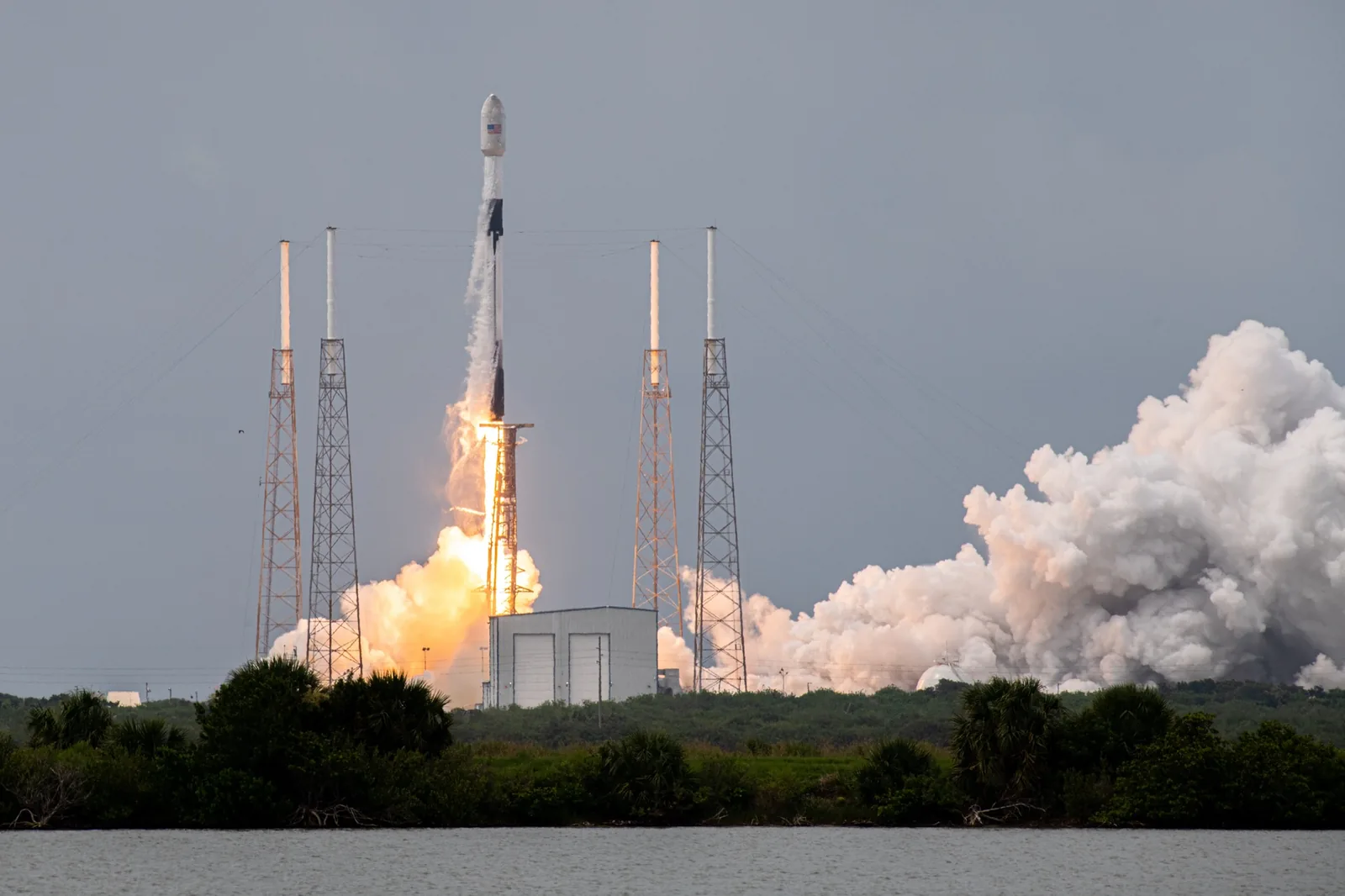 Figure: A SpaceX Falcon 9 lifting off on a dedicated Transporter rideshare mission. High-cadence, standardized orbital rideshare architecture has compressed per-kilogram launch costs to historic lows, providing an off-the-shelf industrial baseline for single-unit commercial payloads.
High-net-worth individuals (HNWIs) face two fundamental value mismatches at their biological conclusion:
- Antemortem Clinical Depreciation: Windowless intensive care units (ICUs) deploy central venous catheters, mechanical ventilators, and vasopressor infusions to sustain marginal vital signs for weeks or months. This invasive prolongation of biological collapse inflicts excruciating physical trauma while generating out-of-pocket bills ranging from hundreds of thousands to millions of dollars, compressing living quality to zero.
- Postmortem Extractive Tenancy: Families pay astronomical premiums for concrete niches under twenty-year leaseholds, locked into ongoing maintenance fees and predatory middleman markups across regional funeral cartels.
Existing “space burial” offerings (such as Celestis or Elysium Space) fail basic first-principles scrutiny:
- Zero Sensory Delivery: By launching tiny capsules of already-cremated ash, the client receives zero antemortem conscious experience.
- Orbital Negative Externalities: Leaving unguided micro-satellites stranded at altitudes above 500 kilometers creates decades-long orbital debris hazards, compounding space sustainability challenges.
First-Principles Reconstruction:
Unite the ultimate conscious milestone (the planetary Overview Effect) with complete physical closure (hypersonic shockwave plasma vaporization) into a single, unidirectional sub-three-hour orbital mission profile.
2. Mission Profile & Flight Architecture
Leveraging SpaceX’s operational Falcon 9 flight hardware and orbital insertion capabilities, the standard flight profile for Project Exosphere executes as follows:
1. T+00:00 Launch & Insertion
- Payload Specification: A single-occupant lightweight observation pod (180 to 220 kg dry mass), pressurized to one standard atmosphere with a medical-grade oxygen-nitrogen atmosphere.
- Orbital Profile: Manifested as a secondary payload on regular quarterly Transporter rideshare missions or dedicated small-lift boosters into a 300 to 350 km low-inclination or sun-synchronous orbit. Following fairing separation and microgravity insertion, the pod autonomously detaches and stabilizes into an Earth-facing attitude.
2. T+01:30 Planetary Overview Effect Delivery
- Visual Interface: The forward dome features a wide-aperture panoramic cupola manufactured from optical-grade fused silica and polycarbonate (structurally derived from the Dragon Cupola developed for Inspiration4).
- Borderless Planetary Circumnavigation: Traveling at first cosmic velocity (7.8 km/s) across a ninety-minute orbital period, the passenger observes day and night hemispheres in real time—the sweeping movement of the planetary terminator, the faint blue atmospheric airglow at the stratospheric boundary, and dynamic auroral displays over the poles.
- Cognitive Closure: Delivered in absolute orbital silence without tropospheric atmospheric scattering, providing the central nervous system with an unmediated, ultimate planetary farewell.
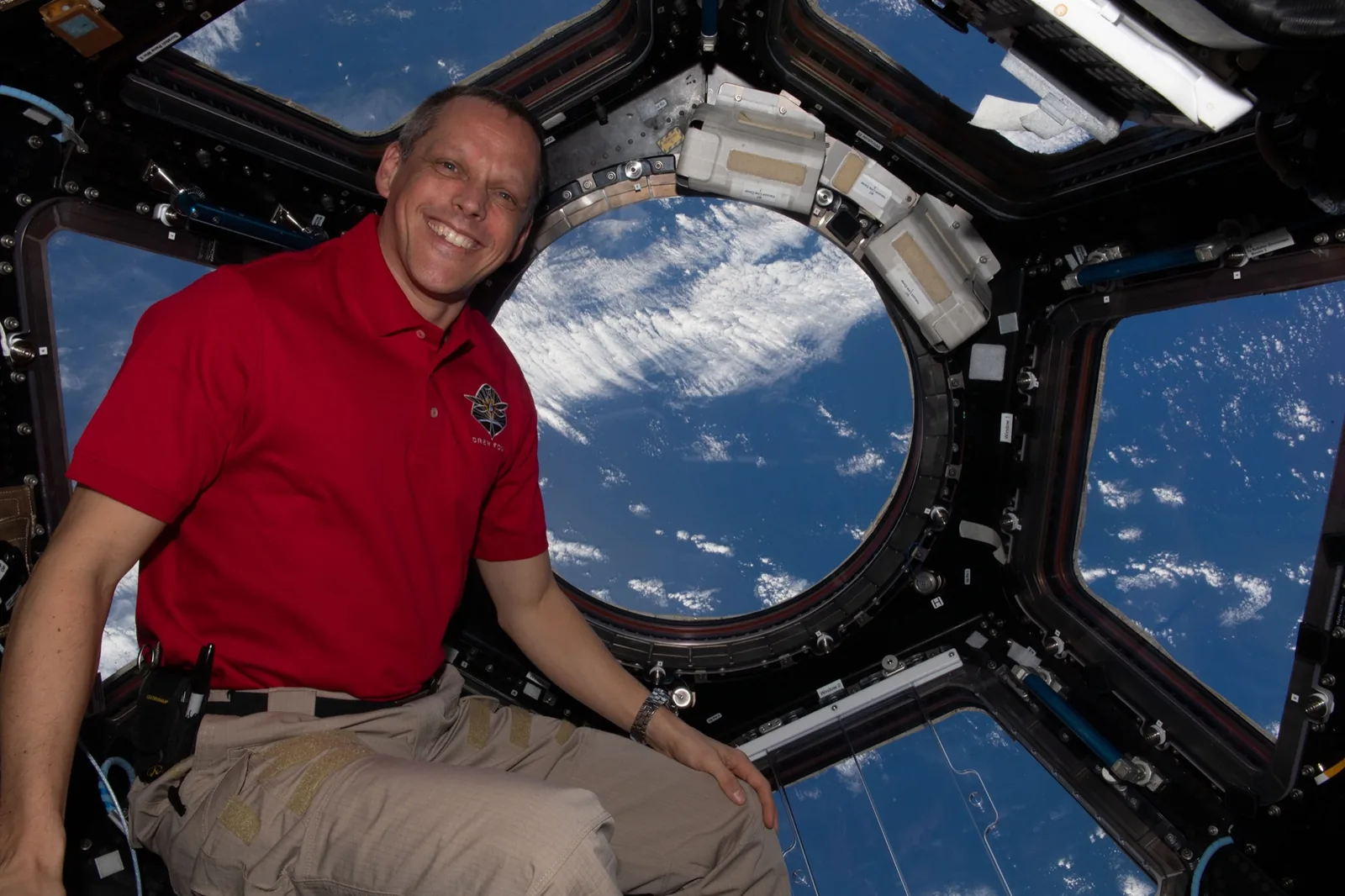 Figure: Astronaut gazing at the blue planet through a panoramic cupola window in Low Earth Orbit (NASA). Under the Project Exosphere architecture, an expendable observation pod utilizes a wide-aperture quartz viewport to deliver the unmediated Overview Effect free from tropospheric scattering.
3. T+01:45 Controlled Hypoxia via Normobaric Nitrogen
- Physiological Modulation: Upon completion of the experiential observation window, the onboard flight computer executes a pre-programmed command, isolating the oxygen feed lines and introducing high-purity nitrogen gas at constant pressure.
- Rapid Reverse Washout: Residual oxygen molecules within alveoli and pulmonary capillaries are cleared through consecutive breaths, resulting in a precipitous decline in arterial oxygen saturation (SpO2).
- Silent Cognitive Shutdown: Because the carbon dioxide elimination pathway remains unobstructed, the medullary respiratory center experiences no hypercapnic distress or sensation of suffocation. The passenger experiences light sedation and mild euphoria, transitioning peacefully into profound unconsciousness within forty seconds, followed by cardiac arrest.
4. T+02:00 Direct Controlled De-orbit & Hypersonic Plasma Ablation
- De-orbit Burn: A solid-propellant de-orbit motor mounted on the aft bulkhead ignites, delivering approximately 150 m/s of retrograde velocity change (Delta-v). This burn lowers the orbital perigee below 70 km into the upper mesosphere over remote oceanic corridors.
- Aerothermodynamic Shock Compression: The craft strikes the denser atmospheric layers at approximately 7.8 km/s. Rapid adiabatic compression generates a hypersonic bow shock and an enveloping plasma sheath exceeding 1,600°C to 2,000°C.
- Atomic-Scale Dissociation: The thin-gauge aluminum-lithium shell ablates within seconds. The human body—composed predominantly of water, lipids, and proteins—is subjected to extreme thermal and kinetic shock, completely dissociating into elemental carbon dioxide, water vapor, and trace atmospheric gases.
- Physical Closure: The vehicle dissolves cleanly as an artificial meteor across the ionosphere and stratosphere. Zero debris reaches terrestrial soil, and zero hardware remains in orbit.
3. Unit Economics: Why This Yields Margins Beyond Traditional Payloads
In commercial spaceflight, payload manufacturing and operations remain prohibitively expensive because missions demand extreme safety margins, extensive flight redundancy, multi-year orbital lifespans, and complex atmospheric thermal protection shields.
The definitive breakthrough of Project Exosphere stems from its unidirectional expendable profile and reversed physical constraints:
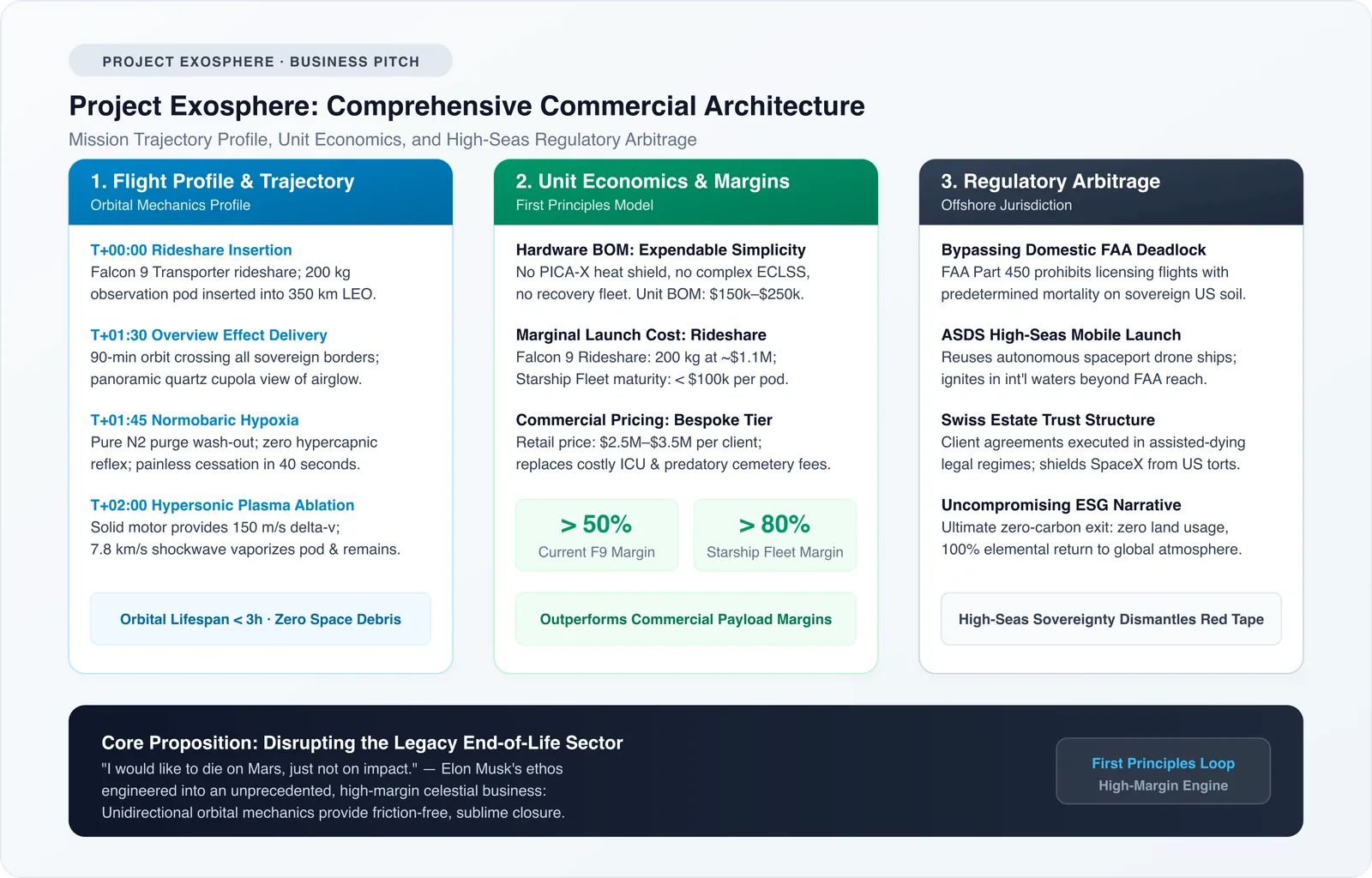 Figure: Comprehensive commercial architecture for Project Exosphere, outlining the four-phase mission profile, unit economics breakdown, and high-seas jurisdiction arbitrage pathway.
1. Structural Collapse of Hardware BOM Costs
- Elimination of Thermal Protection Systems (TPS): The heaviest, costliest, and most maintenance-intensive subsystem of orbital spacecraft (such as the PICA-X shield on Crew Dragon) is completely omitted. Because the mission objective is controlled vaporization, no heat shield is required. The cabin structure utilizes thin-gauge stamped aluminum-lithium alloy.
- Elimination of Regenerative Life Support (ECLSS): Complex multi-week carbon dioxide scrubbers, water distillation units, and redundant oxygen tanks are unnecessary. Life support is reduced to a two-hour single-pass gaseous loop.
- Elimination of Parachutes and Marine Recovery Operations: Parachute mortar canisters, ocean recovery vessels, fast-response divers, and recovery helicopters are eliminated. Post-mission recovery operations expenditure drops to zero.
- Hardware BOM Estimate: Total production cost per individual observation pod (including the optical quartz dome, nitrogen solenoid assembly, and solid de-orbit motor) is strictly contained between $150,000 and $250,000.
2. Launch Capacity Marginal Economics
- Falcon 9 Rideshare Baseline: Based on published commercial rideshare pricing (~$5,500/kg), launching a 200 kg encapsulated payload requires approximately $1.1 million.
- Starship Scale Era: Once Starship enters routine commercial cadence, per-kilogram orbital delivery costs drop below $100/kg, reducing single-unit launch allocation costs to under $100,000.
3. Commercial Pricing and Gross Margin Structure
- Retail Pricing: Positioned as a premier end-of-life bespoke offering for ultra-high-net-worth individuals ($30M+ net worth), the standard retail package is structured between $2.5 million and $3.5 million. (For comparison, advanced terminal hospital interventions combined with multi-generational private cemetery acquisition in Tier-1 cities routinely reach this financial threshold.)
- Gross Margin Profile:
- Under existing Falcon 9 rideshare infrastructure: With retail revenue of $3.0 million, deducting $200,000 in hardware BOM and $1.1 million in launch costs yields a net gross profit of $1.7 million per unit, representing a 56%+ gross margin.
- Under mature Starship cadence: Total combined hardware and launch costs drop below $300,000, driving gross margins beyond 85%.
This unit economics profile substantially exceeds the operating margins of commercial telecommunication satellite contracts or orbital scientific payloads, establishing an unprecedented high-margin cash engine for commercial human spaceflight.
4. Regulatory Arbitrage: Bypassing the FAA Part 450 Human Spaceflight Deadlock
While the technological and financial models are robust, the sole structural impediment lies within terrestrial bureaucracy: The Federal Aviation Administration (FAA Office of Commercial Space Transportation) cannot issue a domestic launch license for a human flight profile intended to terminate in mortality.
Realizing this initiative requires regulatory arbitrage rooted in offshore maritime sovereignty:
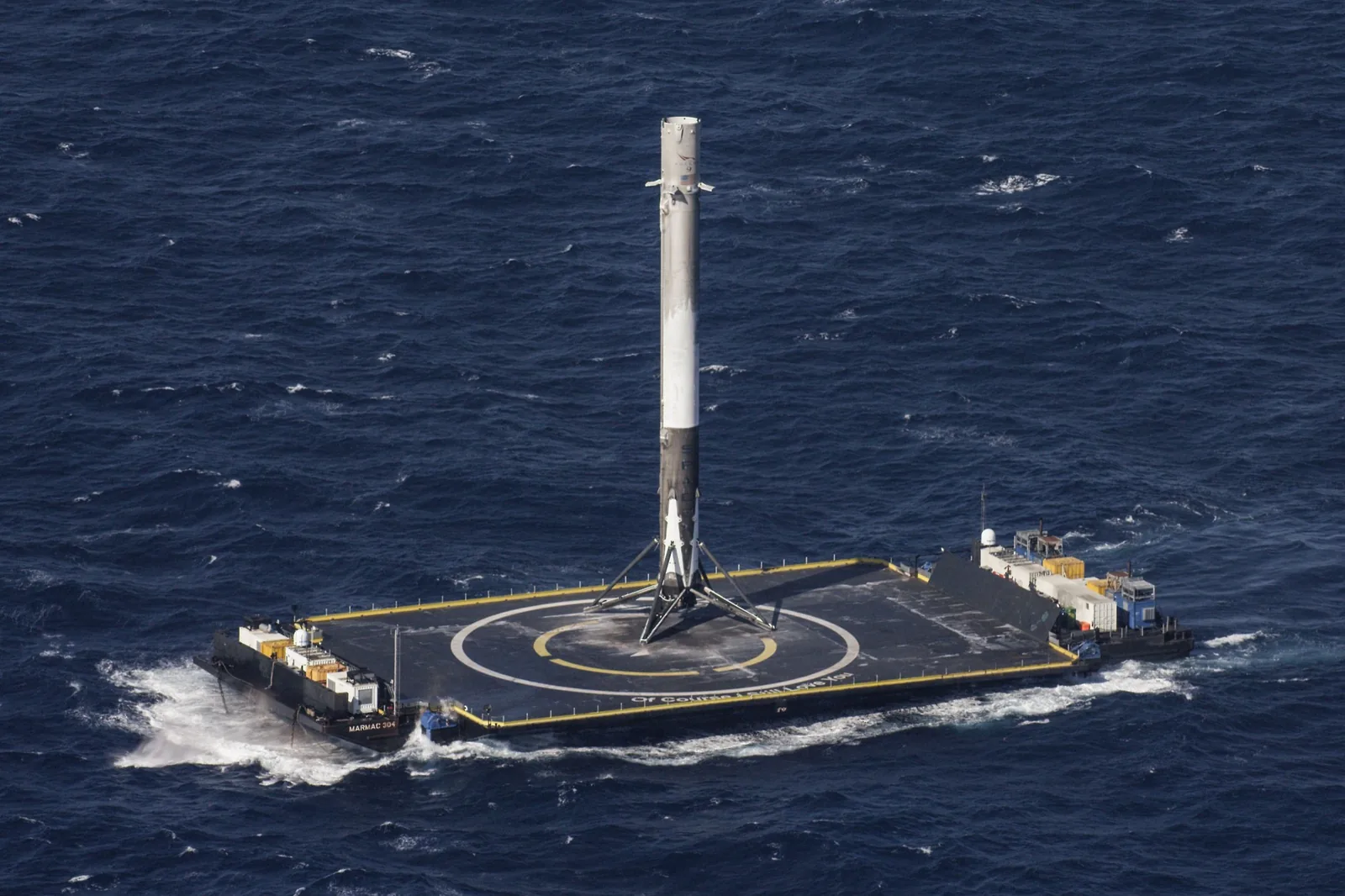 Figure: A SpaceX Falcon 9 first stage secured aboard the Autonomous Spaceport Drone Ship (ASDS) ‘Of Course I Still Love You’ in international waters (NASA/SpaceX). Proven offshore naval autonomy provides the physical foundation for high-seas orbital launches beyond domestic territorial jurisdiction.
1. Launch Site Offshoring: High-Seas Floating Platform Liftoff
- SpaceX possesses unmatched operational mastery over Autonomous Spaceport Drone Ships (ASDS, including Of Course I Still Love You and A Shortfall of Gravitas) and oceanic launch platforms.
- Relocating launch operations from domestic pads (SLC-40, LC-39A, or SLC-4E) to offshore platforms moored in international waters bypasses domestic territorial airspace.
- Igniting boosters in international waters frees the flight profile from domestic FAA Part 450 airworthiness regulations and territorial human-rating constraints.
2. Offshore Legal Architecture: Swiss Estate Trusts and Consignor Representation
- Passenger agreements are executed directly through specialized trust entities established in jurisdictions with mature assisted-dying frameworks (such as Switzerland or the Netherlands).
- Prior to transit, the individual completes formal legal notarizations, psychiatric competency evaluations, and estate mandates, empowering the offshore entity to act as the legal consignor of the payload.
- SpaceX operates purely as a commercial third-party orbital logistics contractor executing an offshore maritime freight agreement, severing common-law wrongful death tort liabilities and domestic judicial exposure.
3. Regulatory Exemption via Zero Orbital Debris
- Conventional low-Earth orbit satellites face rigorous oversight under Federal Communications Commission (FCC) and Inter-Agency Space Debris Coordination Committee (IADC) five-year de-orbit guidelines.
- Project Exosphere executes direct controlled de-orbit: total elapsed time from orbital insertion to complete atmospheric incineration is strictly managed within three hours. With zero passive orbital decay and zero space debris generated, the mission easily complies with the United Nations Registration Convention and environmental impact evaluations.
4. An Uncompromising Ecological Narrative
- Conventional terrestrial mortuary practices consume substantial quantities of fossil fuel in municipal crematoria, discharge mercury and particulate pollutants, and permanently monopolize scarce urban land.
- Project Exosphere transforms the human vessel into elemental atmospheric gases via upper-altitude hypersonic plasma, returning carbon, nitrogen, and hydrogen to the global biosphere in the most ecologically immaculate departure yet devised.
Conclusion: From “Dying on Mars” to Commercial Convergence
Elon Musk famously remarked during a public forum:
“I would like to die on Mars, just not on impact.”
Underlying that statement is an engineer’s aesthetic desire for biological conclusion aligned with celestial mechanics—rejecting the undignified decay of clinical pipelines in favor of a clean closure governed by the laws of physics.
Yet for contemporary carbon-based humans, interplanetary migration and Martian settlement remain distant horizons.
Project Exosphere adapts that philosophical aspiration to flight-proven Low Earth Orbit hardware today. It does not demand waiting fifty years for self-sustaining planetary colonies. Utilizing operational Falcon 9 rideshare capacity, autonomous maritime launch platforms, and well-understood hypersonic aerothermodynamics, the complete lifecycle achieves operational closure across a ninety-minute orbit.
It represents not merely a graceful personal resolution, but one of the most commercially viable, high-margin revenue models awaiting deployment in commercial spaceflight.
Related Research & Topics
Starlink V4 and the Low-Earth Orbit Satellite Arms Race: How a 100,000-Node Optical Mesh Pierces the Submarine Cable Monopoly
The 0.81-Second Threshold: Deconstructing the Physics of the Tesla Roadster’s SpaceX Package
Tello Mobile eSIM
SafetyWing Nomad Insurance
* Disclosure: This post contains affiliate links. If you make a purchase through these links, V-G Journal may earn a small commission at no additional cost to you. We only recommend services we independently evaluate and trust.
FIRE and Golf:自由旅居之路
专注于为追求 FIRE 与品质生活的人群提供特惠打球权益与候鸟微度假。不持一砖一瓦,运营品质生活。