Ledgers, Deficits, and Network Effects: The Micro-Realities of RMB Displacement in Africa
Moving beyond geopolitical rhetoric to examine the structural barriers of de-dollarization. A deep dive into trade imbalances, offshore hedging vacuums, and the legal inertia of global commodity markets.

Executive Summary: The debate over whether the Renminbi (RMB) can displace the US Dollar in Africa must move beyond geopolitical posturing. Currency is not a totem expanded through slogans; it is the organic byproduct of trade balances, capital depth, and the long-term evolution of global credit institutions.
From clearing documents at Lagos’s Apapa Port to concession agreements in Zambian copper mines, market choices are dictated by the cold calculus of settlement costs. By deconstructing the micro-ledgers and the plumbing of correspondent banking, we find that while the RMB is building a high-value “systemic fault-tolerant backup” in specific niches, it faces four formidable institutional barriers to total displacement.
At Apapa Port in Lagos, Nigeria, the figures on a freight forwarder’s clearing documents speak louder than any keynote at a macro-economic forum.
Consider a local trader importing small appliances and diesel generators from Shunde, Guangdong. At the counter of a local commercial bank, he applies for a US Dollar Letter of Credit (L/C). With the central bank’s foreign exchange reserves depleted, the queue for official dollar allocations has stretched to four months. The teller hands him a guide for offshore RMB settlement. Theoretically, using China’s Cross-border Interbank Payment System (CIPS) could bypass New York clearing accounts entirely.
However, the friction points emerge the moment he reviews his ledger: his account holds only the Naira, a currency under perpetual devaluation pressure. The local bank has no spot RMB liquidity to sell him. To borrow RMB in the interbank market, the hedging costs and bid-ask spreads would incinerate the entire gross margin of his shipment.
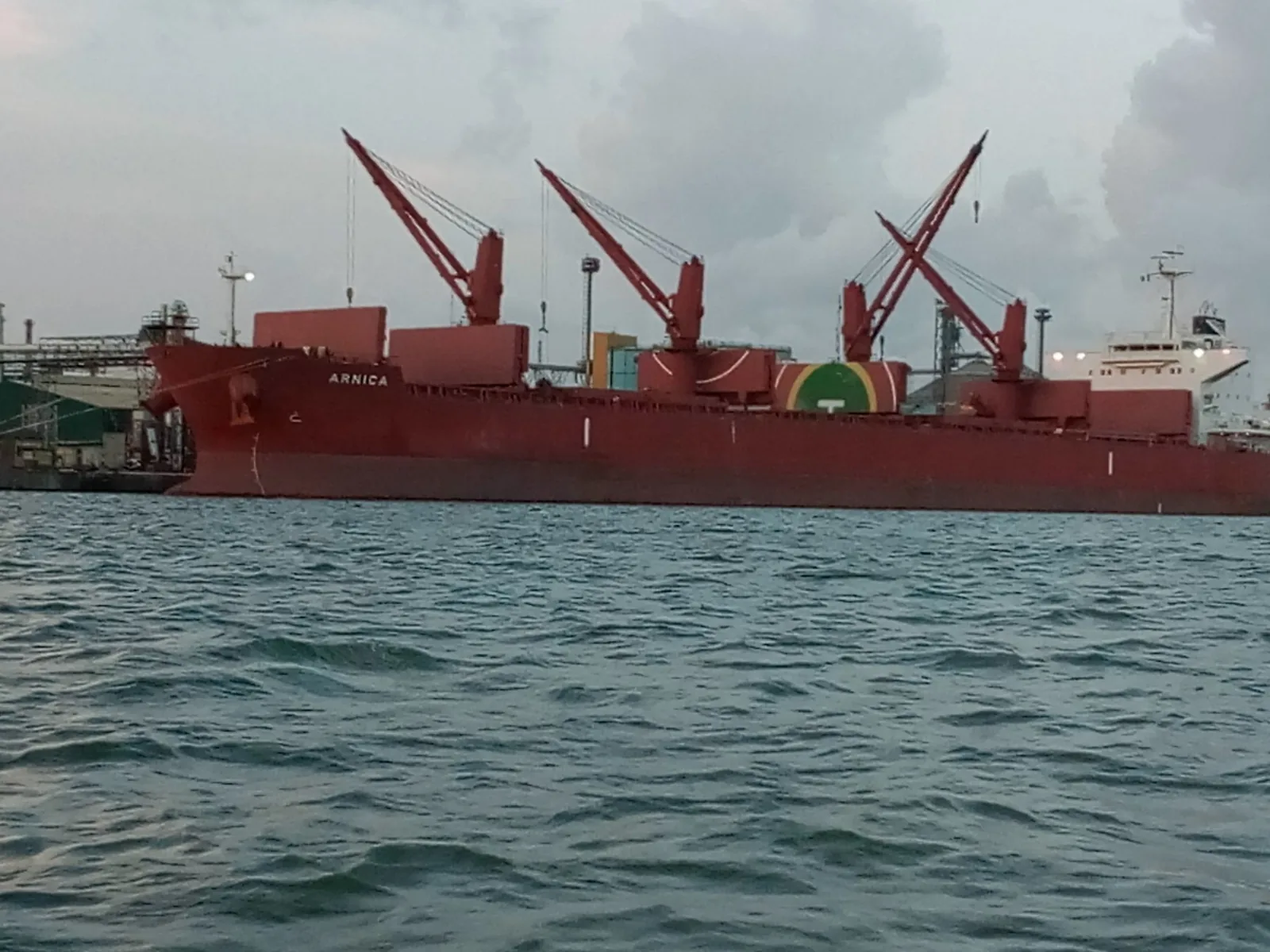 Figure: Apapa Port, Lagos. In the trenches of African commerce, dollar shortages are a daily reality, yet shifting to RMB settlement is constrained by a lack of local market-making and hedging instruments.
This is the microcosm of the RMB’s reality in Africa. To understand its trajectory, one must look past the grand narratives of “de-dollarization” and examine the underlying gears of trade structures and correspondent banking networks.
I. The Logic of Adoption: Closed-Loop Scenarios and Sovereign Debt
In specific structural niches, the partial displacement of the dollar is already a reality, driven by clear economic incentives.
1. The “Point-to-Point” Trade Loop
When bilateral trade involves symmetrical flows of goods or franchised resources, local currency settlement directly reduces exchange friction.
In Angola, Zambia, or Guinea, Chinese enterprises procure oil, copper, or bauxite directly. They pay local exporters in onshore or offshore RMB. These resource firms or sovereign wealth funds then bypass the third-party offshore FX markets, transferring those RMB funds directly to Chinese equipment suppliers or EPC contractors to purchase heavy-duty trucks, mineral processing equipment, and rail infrastructure.
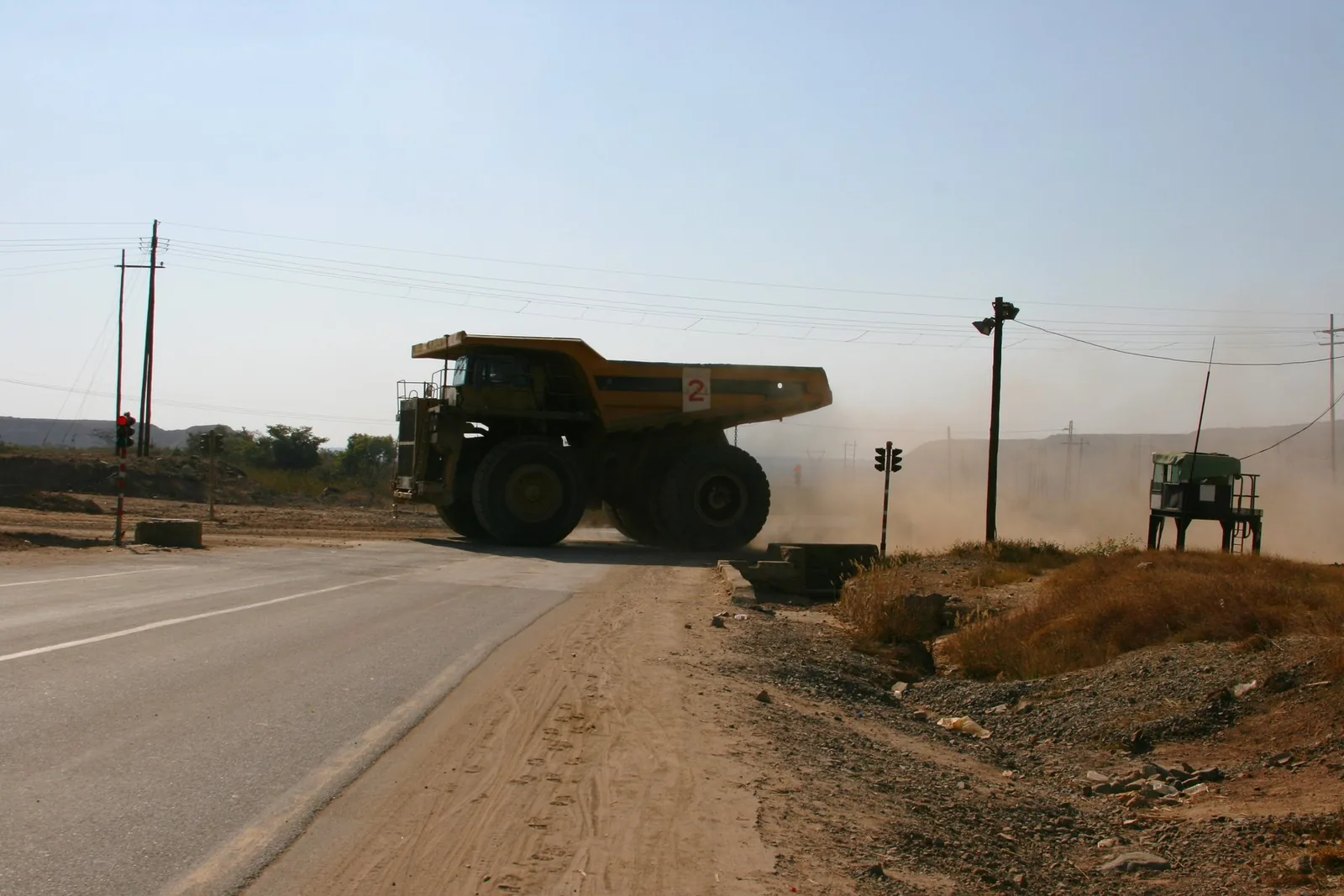 Figure: Copper mining in Zambia. Resource-rich nations exporting commodities in exchange for RMB to fund industrial imports create a closed-loop settlement cycle that avoids the double-spread costs of the dollar.
This “Resources-for-Industrial-Goods” model creates a closed internal offset system, entirely circumventing the delays and costs of New York-based clearing.
2. Sovereign Debt Denomination and Interest Rate Arbitrage
During the Federal Reserve’s aggressive hiking cycles, the secondary market yields on dollar-denominated Eurobonds issued by African nations often skyrocket into double digits, triggering default risks.
In this context, issuing “Panda Bonds” (RMB-denominated bonds) or converting bilateral sovereign loans into RMB carries obvious financial appeal. Swapping high-interest dollar debt for lower-cost RMB liabilities reduces annual interest expenses on sovereign balance sheets and mitigates the “principal explosion” caused by unilateral dollar appreciation.
3. The Redundancy Value of Financial Plumbing
The expansion of clearing banks, such as the Bank of China’s Johannesburg branch, alongside bilateral currency swap agreements with central banks like Nigeria’s, has established a “backup pipe” independent of the New York clearing system.
For economies facing geopolitical friction or extreme dollar scarcity, the RMB clearing channel provides a “fault-tolerant floor” that ensures basic trade remains uninterrupted.
| Scenario | Mechanism | Primary Driver |
|---|---|---|
| Commodity Trade | Closed-loop internal settlement | Transaction cost reduction |
| Sovereign Finance | Panda Bonds / Loan re-denomination | Debt servicing cost arbitrage |
| Emergency Liquidity | Central Bank Currency Swaps | Systemic risk mitigation |
II. The Barriers: Structural Imbalance and Institutional Inertia
The primary obstacles to the RMB’s total displacement of the dollar are not a lack of political will, but rather four “hard” laws of finance.
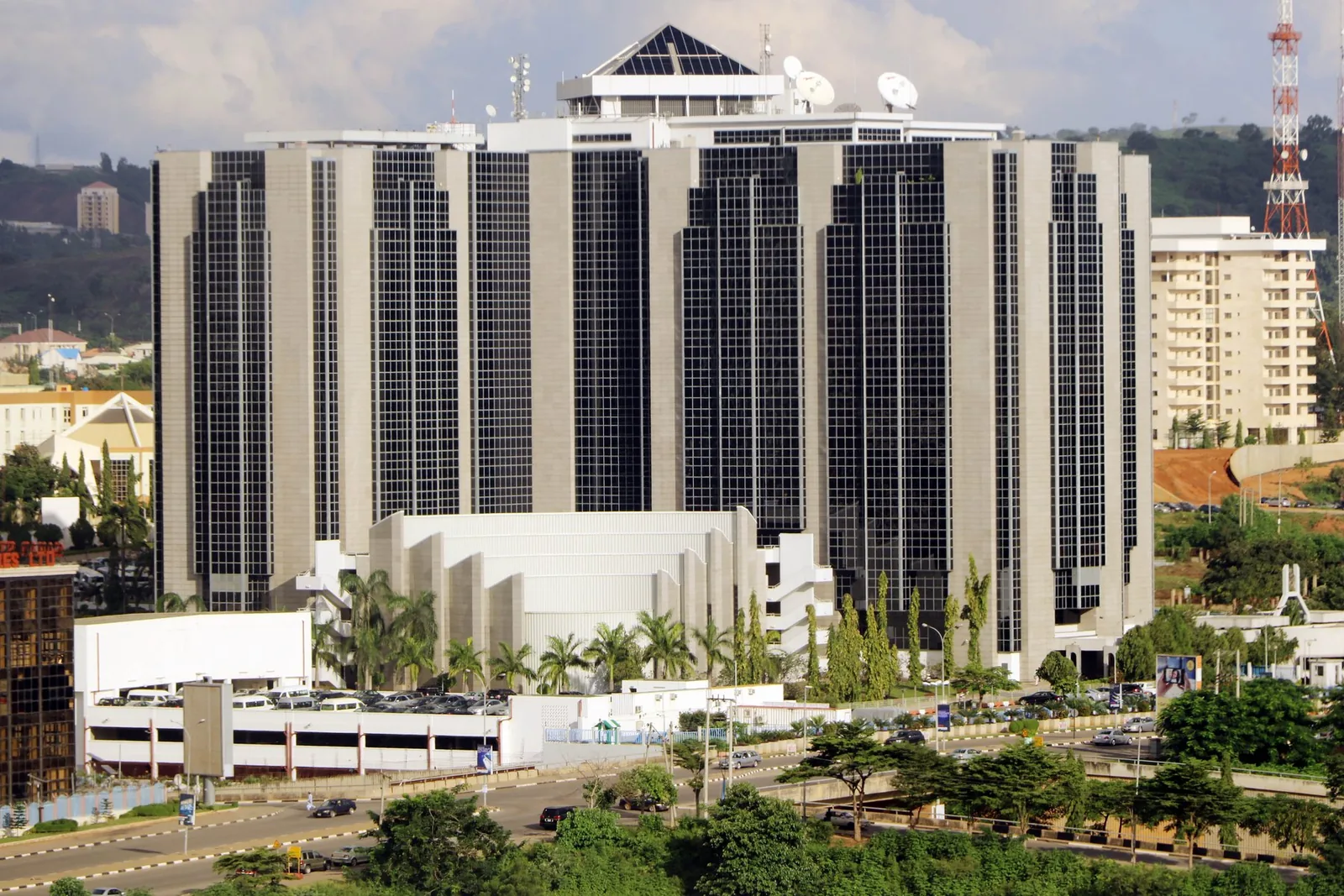 Figure: The Central Bank of Nigeria. African central banks manage reserves to cover global obligations—oil, medicine, and multilateral debt—where capital account convertibility remains the decisive factor.
1. Trade Asymmetry and “Unilateral Currency Accumulation”
Currency internationalization requires a two-way flow: either through a current account deficit (exporting currency to the world, as the US does) or an open capital account that allows foreign holders to reinvest easily.
In the China-Africa trade map, most nations—excluding a few commodity exporters—run massive deficits with China. Kenya, Ethiopia, and Tanzania import vast amounts of machinery and textiles but export very little in return. If local currency settlement were forced, African importers would exhaust their RMB reserves almost instantly.
The inverse is even more problematic: if Chinese firms accept local currencies (e.g., Kenyan Shillings or Ghanaian Cedi), they end up holding “weak” currencies characterized by high inflation and strict capital controls. These currencies lack global liquidity; a Chinese firm cannot use Shillings to buy Saudi oil or German precision tools. Ultimately, these exchange losses and “trapped” funds would have to be absorbed by the enterprises themselves.
2. Reserve Attributes and the Capital Account Boundary
African central banks do not hold reserves merely to trade with China. Their foreign exchange requirements are multi-dimensional:
- Purchasing dollar-denominated global oil quotas;
- Buying patented pharmaceuticals and specialized fertilizers from Europe and the US;
- Servicing debt to the World Bank, IMF, and European creditors;
- Intervening in FX markets to stabilize their own currencies during bank runs.
The dollar’s core advantage is its frictionless convertibility. The RMB, while stable, maintains a managed capital account with institutional separations between offshore (CNH) and onshore (CNY) markets. When an African central bank realizes its RMB assets cannot be converted instantly and without limit in a third-party market to meet an emergency sovereign payment, the rational choice remains to anchor the majority of reserves in the dollar.
3. Correspondent Banking Lock-in and the Hedging Vacuum
The ecosystem of African commercial banks is deeply tethered to Western correspondent networks. From Dakar to Nairobi, the core FX corridors of major players like Ecobank or Standard Bank are dominated by Citi, J.P. Morgan, and Standard Chartered, embedded in the SWIFT and CHIPS architecture.
Establishing a full RMB clearing suite involves high fixed costs in AML (Anti-Money Laundering) compliance and a steep learning curve in market-making. Most local banks lack the capacity to price or hedge RMB derivatives (forwards, swaps, options). Without these tools, they cannot flatten their exposure, forcing them to pass high risk premiums onto importers, making RMB settlement more expensive than the “mature” dollar route.
4. The Legal Inertia of Commodity Benchmarking
Africa’s hardest currency earners—oil, copper, diamonds, and cocoa—are priced against global benchmarks: the CME, LME, and Brent Crude.
When sovereign governments sign decades-long concession agreements with multinational mining giants, the clauses regarding offshore account supervision, L/C conditions, and arbitration venues are almost universally governed by New York or English law. Even if a government wishes to diversify its reserves, it cannot unilaterally overturn the dollar-denominated settlement terms of contracts backed by the International Chamber of Commerce (ICC).
Conclusion: A Systemic Backup, Not a Default Base
Currency is not a totem; it is the result of a long-term game involving trade flows, capital depth, and credit institutions.
In Africa, the RMB is successfully constructing a pragmatic, risk-mitigating supplementary system:
- In closed-loop infrastructure projects, it provides a direct alternative to the dollar.
- In sovereign financing, it offers an arbitrage path through Panda bonds.
- In dollar-starved nations, it serves as an emergency lifeline to keep trade alive.
However, as long as the structural trade surplus remains one-sided, and as long as global commodity pricing and multilateral clearing remain anchored in dollar assets, the RMB will function as a high-value “systemic fault-tolerant backup” rather than the “default operating base.”
The true market choice is always written in the actual cost of the clearing ledger.
Related Research & Topics
Tello Mobile eSIM
SafetyWing Nomad Insurance
* Disclosure: This post contains affiliate links. If you make a purchase through these links, V-G Journal may earn a small commission at no additional cost to you. We only recommend services we independently evaluate and trust.
FIRE and Golf:自由旅居之路
专注于为追求 FIRE 与品质生活的人群提供特惠打球权益与候鸟微度假。不持一砖一瓦,运营品质生活。