The Limits of Adaptation: Polar Bear Drowning and the Dissolution of the Arctic Commons
The recorded drowning of polar bears due to long-distance swimming exposes a brutal reality: environmental decay is now outpacing evolutionary adaptation. A deep analysis of how sea ice fragmentation, the loss of hydrodynamic barriers, and metabolic exhaustion are triggering a systemic collapse of the Arctic’s apex umbrella species.

Executive Summary: In traditional polar biology, the drowning of an adult polar bear was considered a statistical impossibility. However, recent records from the Beaufort Sea and other Arctic regions have documented a grim phenomenon: apex predators succumbing to exhaustion in open water. This is more than a singular tragedy; it is a biological red line. When the rate of habitat disintegration is measured in decades, the physiological equilibrium established over hundreds of thousands of years of evolution is shattered. As the “umbrella species” of the Arctic food chain falls, it signals that the entire sea-ice-based ecosystem is sliding toward an irreversible systemic phase shift.
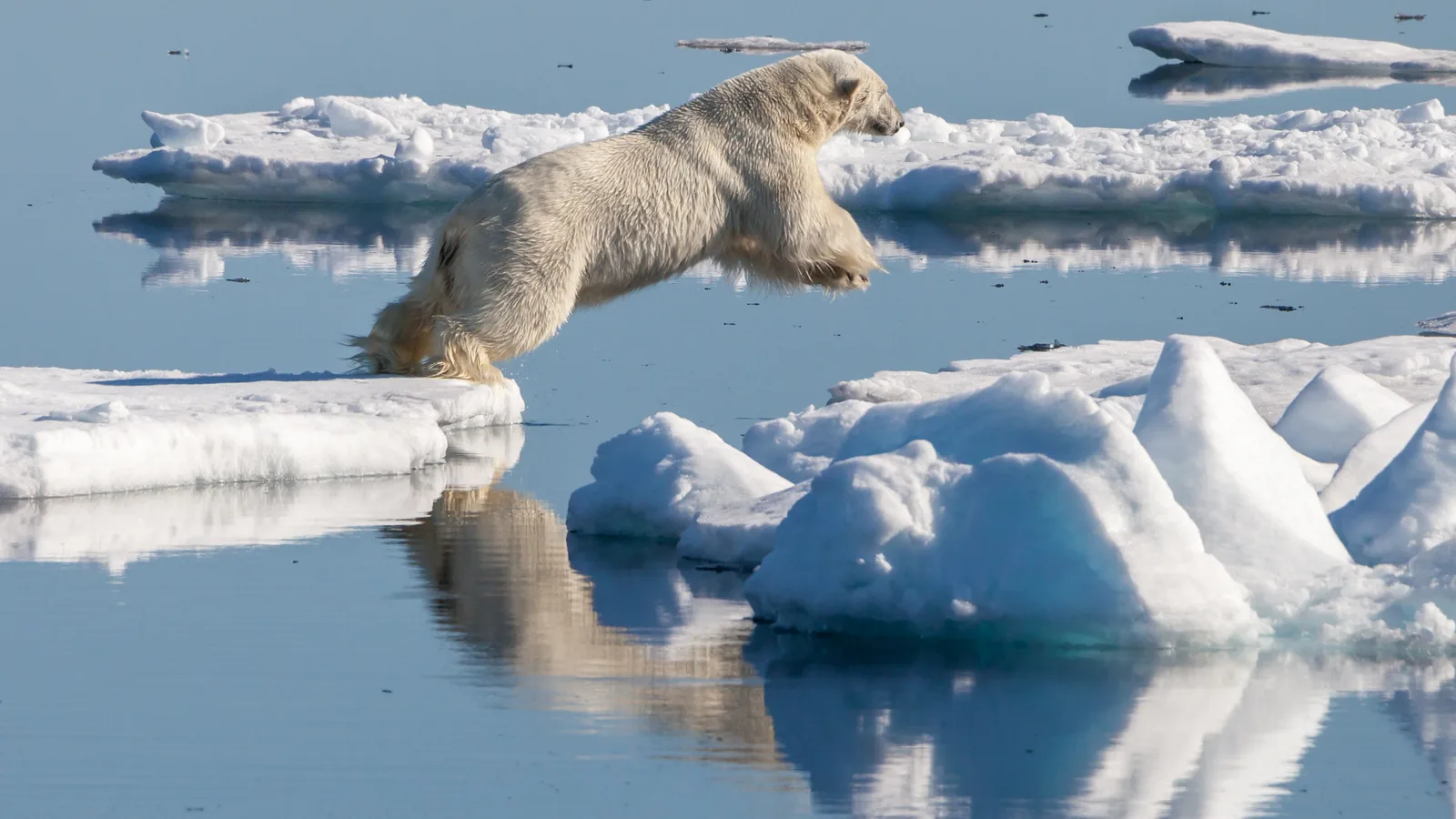
Figure 1: In the waters north of Svalbard, a polar bear pauses at the edge of fragmented ice. The retreat of sea ice forces these predators into grueling long-distance swims across open deep water.
I. Breaking the Evolutionary Buffer: From Specialized Advantage to Physiological Insolvency
In rigorous biological classification, the polar bear is defined as a “marine mammal” (Ursus maritimus). Throughout its evolutionary history, the species developed a suite of specialized physiological traits optimized for a world of ice and water:
- Hydrodynamic Propulsion: Massive forepaws, often exceeding 30 centimeters in diameter, act as oars. Stiff bristles on the paw pads provide traction on ice and thrust in water, while hind limbs serve as rudders for stability.
- High-Density Thermal Shielding: A dual-layer coat—where the outer guard hairs are hollow and oil-rich—traps air and sheds water instantly, maintaining core temperature in sub-zero conditions.
- The Adipose Buoyancy Engine: A dense layer of subcutaneous fat, up to 10 centimeters thick, serves as both a thermal insulator and a source of “passive positive buoyancy” in the water.
For millennia, swimming dozens of kilometers was a routine task for an adult bear. Drowning was an anomaly.
However, the fundamental logic of evolution is that all adaptive mechanisms function only within a specific tolerance range. When biologists record bears swimming hundreds of kilometers only to succumb to muscle failure, hypothermia, and aspiration, it indicates that the environmental variables have breached the species’ evolutionary “compensation limit.”
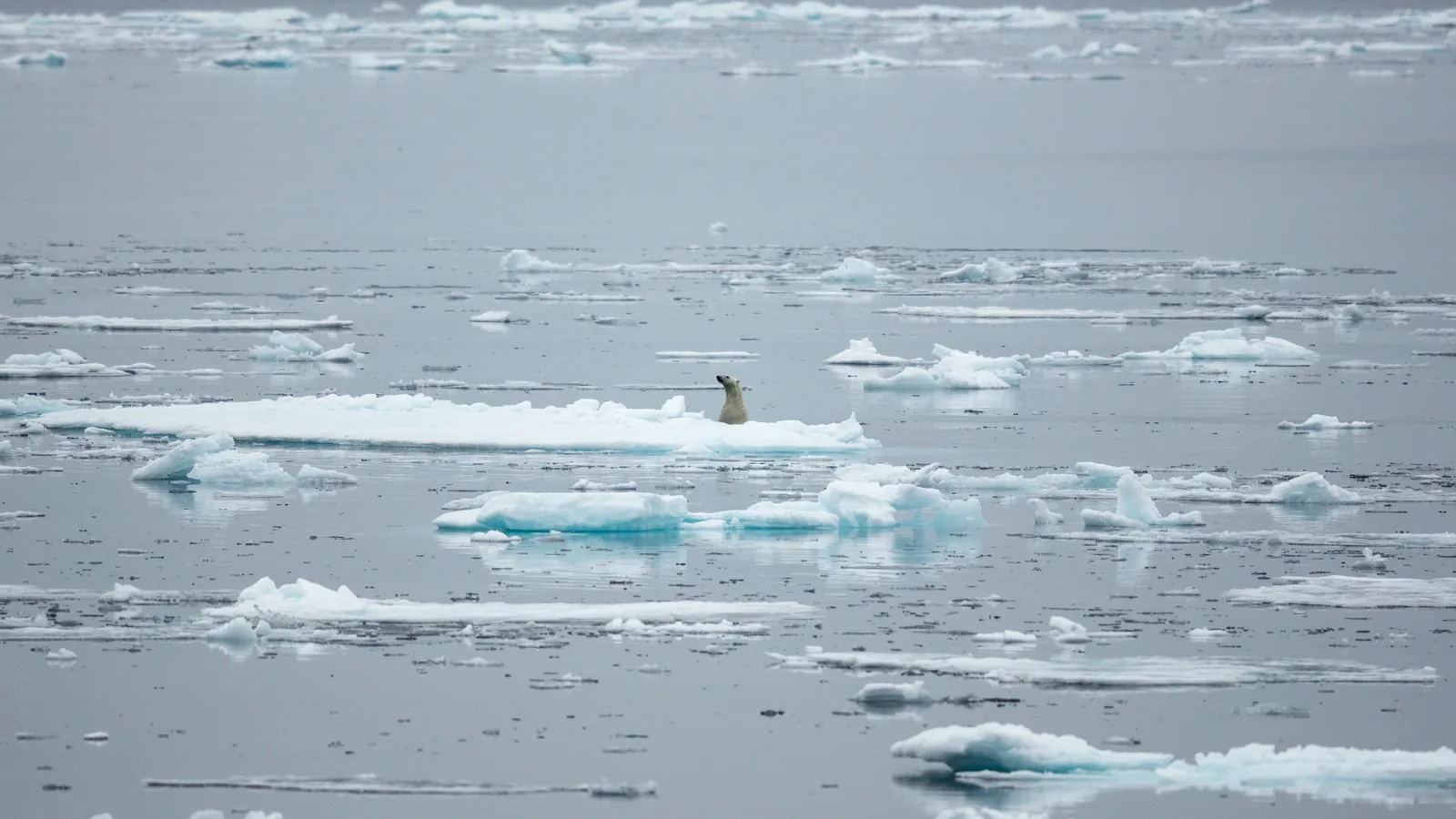
Figure 2: A polar bear swimming in open water at 81°N. The increasing distance between ice floes subjects the animal to non-stop aquatic marathons lasting over 48 hours.
II. Habitat Fragmentation: From Stepping Stones to Deep-Sea Marathons
Polar bears are not truly pelagic creatures. Their hunting, mating, and migration are anchored to sea ice—a solid physical platform. For a bear, sea ice is what roads and shelters are to terrestrial animals.
As global temperatures rise, the summer Arctic ice follows a trajectory of irreversible fragmentation:
- Discrete Dispersion: What were once vast, contiguous sheets of ice have disintegrated into isolated fragments. The gaps between floes have expanded from a few hundred meters to hundreds of kilometers.
- Exponential Distance Scaling: To find ice stable enough to support their weight, or to return to land from the melting periphery, bears are forced into “Open Water” crossings of unprecedented scale. Satellite tracking now frequently records bears swimming for over 100 consecutive hours.
- The Efficiency Gap: In terms of fluid dynamics, swimming is significantly less energy-efficient than walking on ice. Every additional kilometer of open water increases the metabolic load exponentially, pushing the bear toward a state of physiological insolvency.
III. The Loss of Hydrodynamic Barriers: Storms and the Cub Mortality Trap
Sea ice plays a critical role in Arctic oceanography as a “physical wave dampener.” Large expanses of ice absorb wave energy, keeping the sea surface relatively calm even in high winds.
The retreat of summer ice transforms the Arctic into a volatile, open ocean:
- Increased Fetch and Wave Height: With the thermal destabilization of Arctic atmospheric circulation, summer cyclones have become more frequent. Without ice to break the surface tension, these storms generate massive swells and powerful currents.
- Aspiration and Hypothermia: Even a fit adult bear struggles to maintain a breathing rhythm in heavy seas. Sustained swimming in meters-high waves leads to water aspiration and cold-induced tetany (muscle spasms).
- The Death Sentence for Cubs: This hydrodynamic shift is lethal for offspring. Cubs lack the thick subcutaneous fat of adults; their muscle mass cannot generate enough heat to offset the rapid thermal draw of cold water. When forced into long-distance swims in rough seas, the mortality rate for cubs approaches 100%.
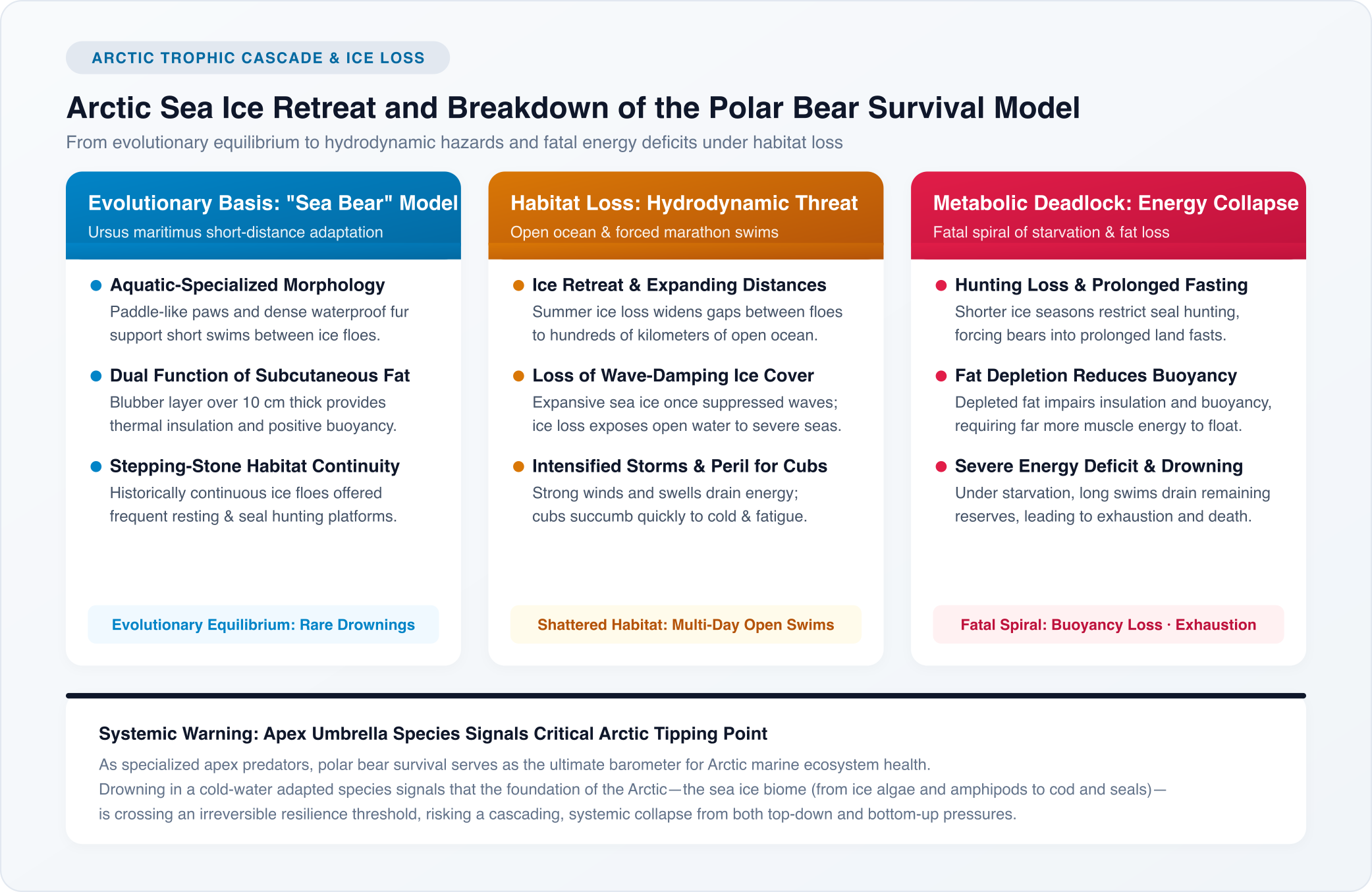
Figure 3: A matrix of sea ice retreat versus the collapse of the polar bear survival model, illustrating the triple threat of physiological limits, hydrodynamic stress, and metabolic failure.
IV. The Metabolic Death Spiral: Buoyancy Decay and Energy Exhaustion
If long-distance swimming and storms are the external physical pressures, the catastrophic drop in internal energy reserves is the final biochemical noose.
Sea ice is not just a highway; it is the primary hunting ground for the bear’s high-calorie prey—ringed and bearded seals. The extension of the ice-free season has destroyed the bear’s primary window for caloric intake:
- The Forced Terrestrial Fast: During the ice-free summer and autumn, bears are pushed onto land where they scavenge for berries, eggs, or carrion. These low-density foods cannot meet their basal metabolic requirements; a bear can lose 1–2 kilograms of body mass per day.
- The Buoyancy-Fat Correlation: As the fast continues, the bear’s fat stores are metabolized. Fat is less dense than water and provides natural buoyancy. As the fat layer thins, the bear’s overall density increases.
- The Negative Feedback Loop: In their most depleted state, bears must swim the longest distances. Because they have lost buoyancy, they must exert more muscular force simply to stay afloat. Lower buoyancy requires more work; more work depletes glycogen and muscle tissue faster. The bear eventually reaches a point of total exhaustion, cramps, and sinks.
V. The Tipping Point of an Indicator Species: Systemic Phase Shift
In ecology, the polar bear is more than a predator; it is a quintessential Indicator Species and an Umbrella Species.
The survival of an umbrella species requires a vast, healthy habitat network. When the strongest individual at the top of the pyramid—an animal evolved specifically for cold-water endurance—drowns due to exhaustion, it is not an isolated incident. It is a signal that the underlying support system has undergone a systemic phase shift.
The Arctic Trophic Cascade of Decay
Dissolution of Sea Ice Base ➔ Collapse of Ice Algae Productivity ➔ Crash of Pelagic Crustaceans ➔ Shrinkage of Arctic Cod Stocks ➔ Retreat of Pinniped (Seal) Populations ➔ Exhaustion and Drowning of the Apex Predator.
The physical foundation of the Arctic biosphere for hundreds of thousands of years has been sea ice. The microscopic algae growing on the underside of the ice are the energy source for the entire pyramid. The retreat of the ice is a bidirectional tearing of the ecosystem—from the microscopic nutrient level up, and from the apex predator down.
The drowning of polar bears strips away the abstract rhetoric of climate change. It presents an irrefutable physical and physiological fact: the structural buffer of the Arctic ecosystem has reached its limit. Natural laws offer no reprieve; when the speed of environmental collapse outpaces the rate of evolutionary adaptation, the dissolution of the system becomes inevitable.
Related Research & Topics
Tello Mobile eSIM
SafetyWing Nomad Insurance
* Disclosure: This post contains affiliate links. If you make a purchase through these links, V-G Journal may earn a small commission at no additional cost to you. We only recommend services we independently evaluate and trust.
FIRE and Golf:自由旅居之路
专注于为追求 FIRE 与品质生活的人群提供特惠打球权益与候鸟微度假。不持一砖一瓦,运营品质生活。