The Industrial Enclave and the Rusting Core: A Century of Economic Trajectory in Northeast China
Deconstructing the dual myths of the 'Manchukuo industrial miracle' and 'moralized decline' through the lenses of capital flow, institutional rigidity, and the physical constraints of geological exhaustion and global maritime trade.

Executive Summary: For decades, discussions regarding the economic trajectory of Northeast China (Dongbei) have been trapped in a polarized narrative. One camp views the industrial output and rail networks of the Manchukuo era through a romanticized lens of an “East Asian industrial miracle.” The other dismisses the region’s contemporary stagnation as a moral failure of local culture or a lack of entrepreneurial spirit.
Stripping away emotional moralizing and historical nostalgia reveals a different reality. Through the lenses of industrial geography, wartime economics, and the restructuring of global maritime trade, the “prosperity” of the 1930s was essentially a colonial military enclave driven by the Japanese high command. Conversely, the region’s modern deceleration is a physical inevitability—the result of resource exhaustion and a shift in the global logistics gravity toward containerized shipping.
I. The Fushun Open-Pit: A Geological Section of Industrial History
On the edge of Fushun, Liaoning, lies a gargantuan scar: an open-pit mine nearly 7 kilometers long, 2 kilometers wide, and over 400 meters deep.
From the precipice, tiers of excavation spiral downward into the earth. The railway tracks lining the pit appear as thin as silk threads against the massive geological strata. Once celebrated as the “Number One Open-Pit Mine in Asia,” the Fushun West Open-Pit is the most visceral physical incision through which to observe the century-long evolution of the Northeast.
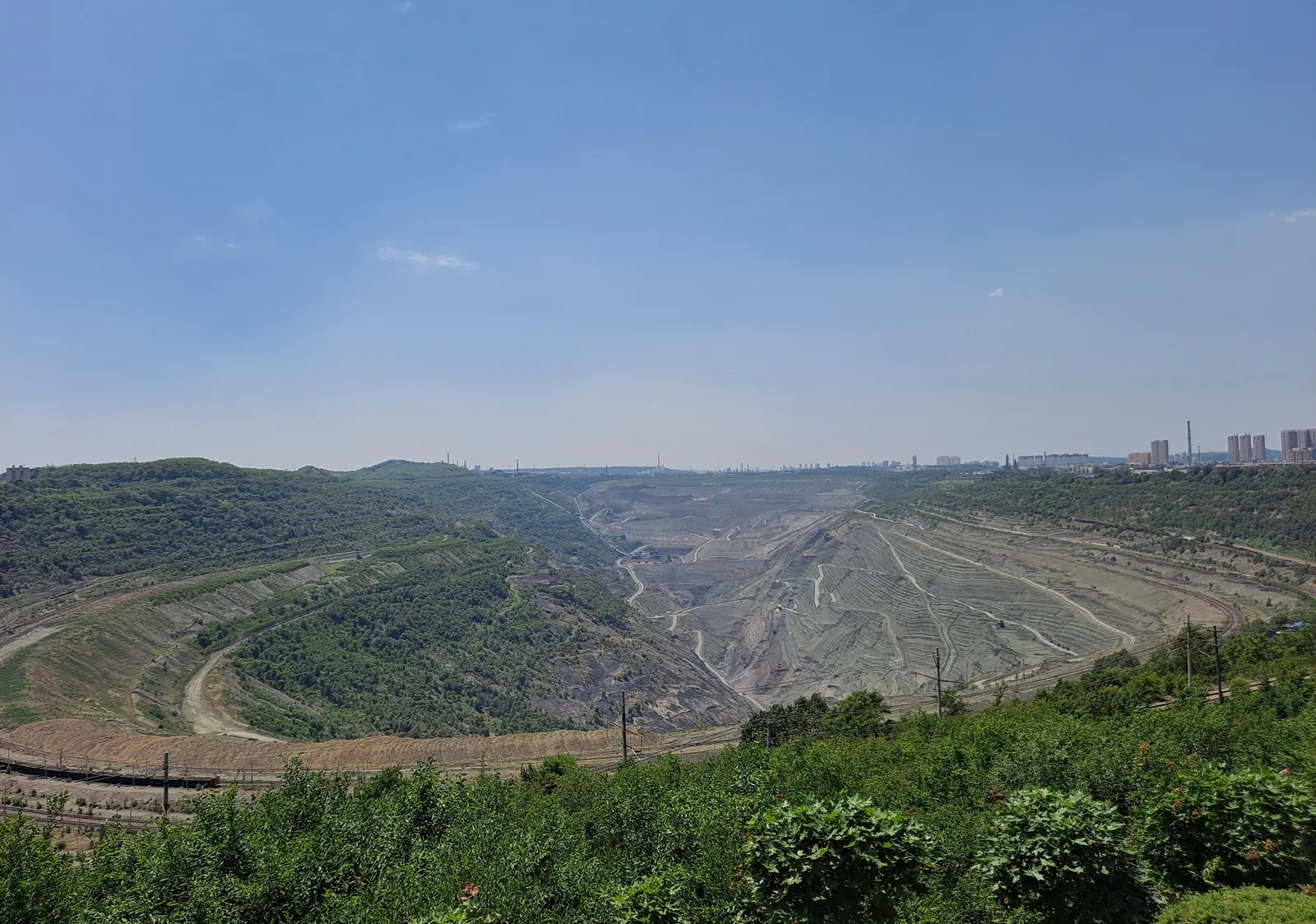 Figure 1: The Fushun West Open-Pit Mine. This massive excavation, the result of over a century of high-intensity mining, reflects the physical cycle of the Northeast from resource extraction to the exhaustion of geological capital.
In current public discourse, the narrative of the Northeast is often fractured:
On one hand, historical revisionists cite 1930s-40s data—the highest density of electrified railways in Asia, massive crude steel capacity, the hydroelectric output of the Fengman Dam, and the planned boulevards of Changchun—to argue that a “great industrial heritage” was squandered.
On the other hand, when faced with the reality of population outflow and the sluggish transformation of traditional industrial cities, public opinion often retreats into idealistic accusations of “conservative mindsets” or “defective business culture.”
Both perspectives share a common blind spot: they ignore the political prerequisites of capital formation, the institutional mechanisms of resource allocation, and the geographical logistics upon which industrial zones depend.
II. The Essence of the “Manchukuo Miracle”: A Wartime Colonial Enclave
To objectively assess the industrial peak of the 1930s and 40s, one must look past the ledger of output figures and analyze the capital structure, supply chain control, and the final destination of production.
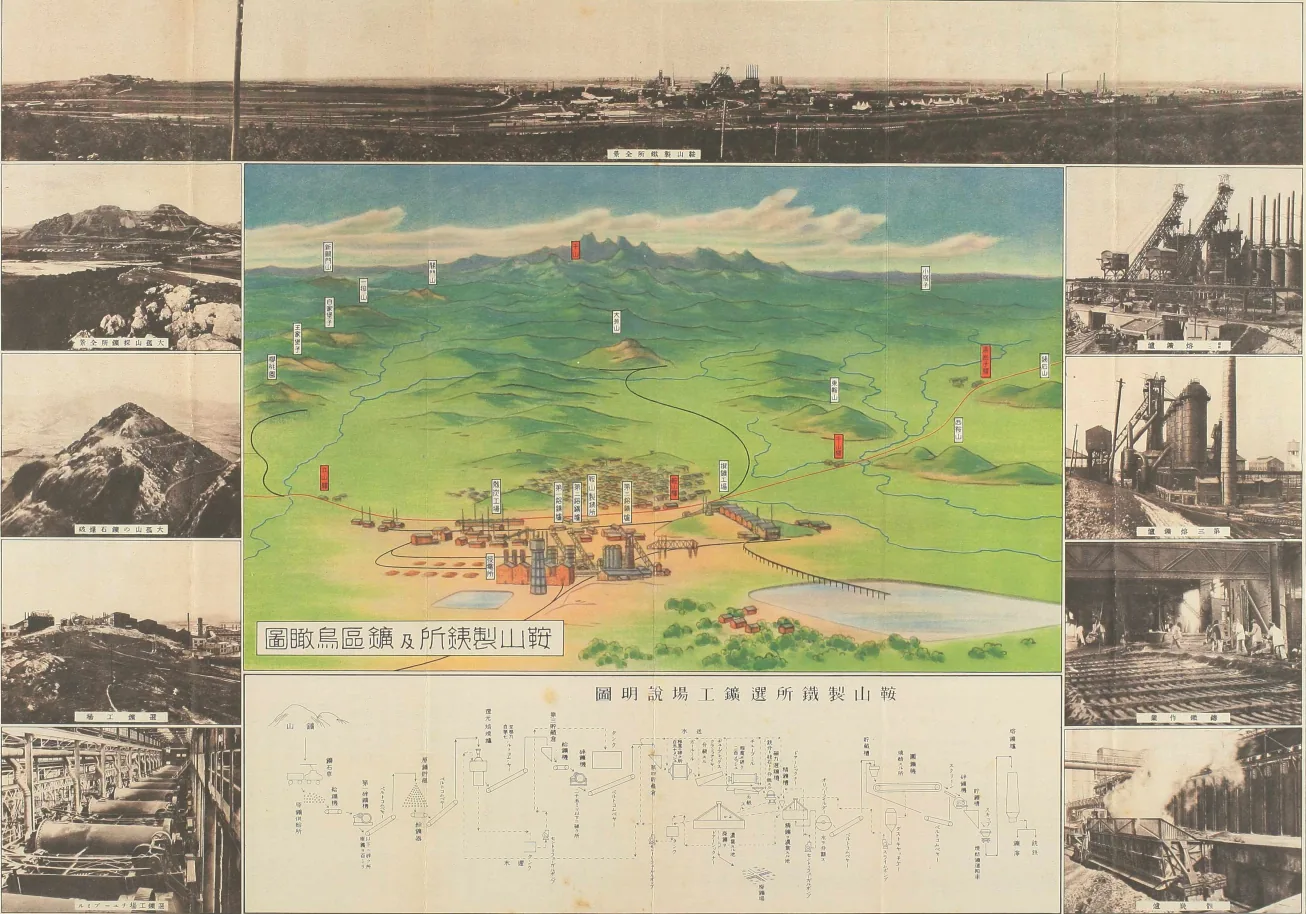 Figure 2: The blast furnaces of the Showa Steel Works in Anshan. As a core heavy industrial asset monopolized by the Nissan Konzerne (Mangyo), its entire output was dedicated to the Japanese wartime supply chain.
1. The Controlled Economy of the Kwantung Army
Following the 1931 invasion, the Japanese Kwantung Army established an ultra-centralized “controlled economy.” Its strategic orientation was strictly subservient to the military requirements of the invasion of China and preparations for war with the Soviet Union. It was never intended to develop a local civilian economy or a self-sustaining market.
In 1937, the Japanese wartime cabinet and the Kwantung Army co-founded the “Manchuria Heavy Industrial Development Co., Ltd.” (Mangyo). Yoshisuke Aikawa moved the core assets, technical teams, and capital of the Nissan Konzerne into the region. Through a system of exclusive franchises, Mangyo monopolized steel, coal, light metals, synthetic petroleum, and munitions.
While this period saw the construction of massive clusters like the Showa Steel Works and the Fushun Shale Oil Plant, this was essentially a “capacity transplant.” Japan, lacking domestic resources, used the Northeast as a strategic extraction site and a primary smelting base.
2. The One-Way Siphon of Resources
The value generated by this industrial machinery flowed exclusively into the Japanese war machine:
- Heavy Industry & Armaments: Pig iron and high-quality steel from Showa Steel were processed directly into armor plating, rails, and shells for the Kwantung Army.
- Energy & Raw Materials: High-quality coal from Fushun and Hegang was shipped via rail-to-sea links to the Yawata Steel Works in Japan.
- Agricultural Commodities: The soybeans of the Northeast’s black soil were monopolized by the military and sold on international markets to secure the foreign exchange (USD/GBP) needed to purchase aviation fuel and rubber from the West.
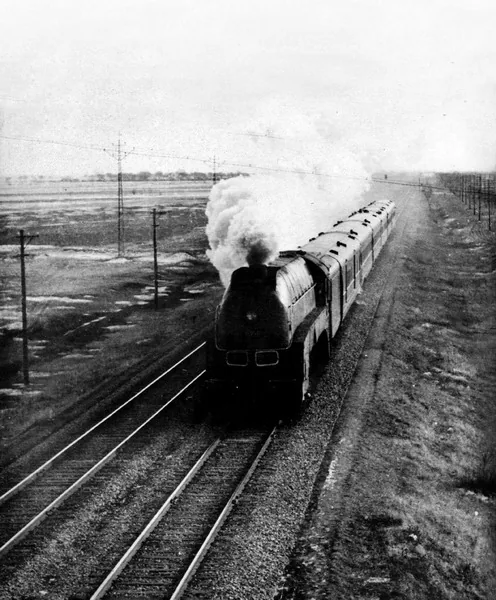 Figure 3: The ‘Asia Express.’ While its speed and luxury were top-tier for East Asia at the time, its primary function was to link the Port of Dalian with inland military-industrial bases, creating a high-speed corridor for military logistics.
3. The Decoupling of Wealth from Local Welfare
The “miracle” was built on the extreme suppression of the local population:
- Rationing and Segregation: A strict rationing system was implemented. Rice was classified as a “Grade A” commodity, reserved for Japanese immigrants and military personnel. Local Chinese residents caught eating rice were branded “economic criminals”; their diet was restricted to “acorn flour”—a mixture of husks, weeds, and impurities.
- Human Attrition: To meet wartime deadlines, millions of laborers were forcibly conscripted or deceived into entering the mines. Under brutal conditions, gas explosions and cholera were rampant, leading to the “mass graves” (Wanrenkeng) found today in Fushun and Liaoyuan.
- Monopoly of Knowledge: Management and engineering roles were held exclusively by Japanese bureaucrats and experts. The local workforce was barred from high-value-added segments. Profits flowed back to the Japanese military and industrial zaibatsus, leaving virtually no local capital accumulation or civilian market.
Strategic Assessment: The heavy industry of Manchukuo was an “external plug-in” military enclave grafted onto the region’s resources. It was not built on local purchasing power or internal commercial division of labor. Once the wartime “host” collapsed and maritime supply lines were severed, the system lacked any endogenous capacity for self-repair.
III. The Planned Economy: The “Mother Machine” and Value Transfer
After 1949, the Northeast inherited the remnants of these facilities. Under the “156 Key Projects” supported by the Soviet Union, it was rebuilt into China’s earliest and most complete heavy industrial base.
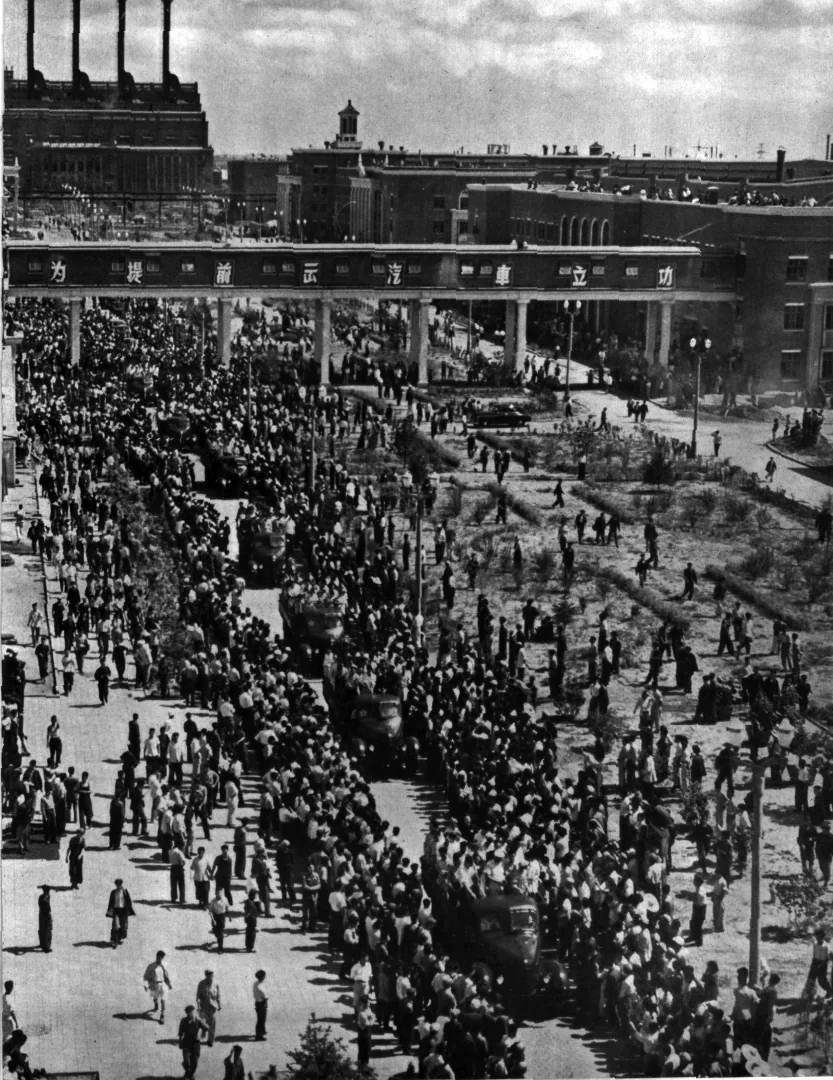 Figure 4: July 1956, Changchun. The first domestically produced Jiefang trucks. As the “Eldest Son of the Republic,” the Northeast provided the “mother machine” foundation for China’s modern manufacturing.
During this era, the Northeast was tasked with being the “Granary, Engine, and Energy Heart” of the nation. However, the underlying logic was one of inter-regional value transfer at subsidized prices.
1. Low-Cost Allocation of Strategic Assets
For over thirty years, the Northeast funneled hundreds of millions of tons of strategic materials to the rest of the country at “plan prices” (far below market value):
- Energy: Crude oil from Daqing and coal from Fushun fueled the industrialization of other provinces.
- Equipment: Heavy machinery from Shenyang and turbines from Harbin were shipped en masse to support the “Third Front Construction” in the southwest and the industrialization of the coast.
- Human Capital: Entire cohorts of skilled workers and engineers were reassigned to open new industrial frontiers in places like Panzhihua and Baotou.
Through the “Price Scissors” (the gap between low-priced raw materials and high-priced finished goods), the Northeast effectively bore the cost of China’s primitive industrial accumulation by surrendering its potential market premiums.
2. Structural Lock-in and the “Danwei” Rigidity
This division of labor left two deep institutional marks:
| Structural Feature | Operational Manifestation | Long-term Constraint |
|---|---|---|
| Extreme Heavy-Industry Bias | Fixed assets and credit were locked into upstream extraction, smelting, and heavy machinery. | A total lack of downstream light industry (textiles, consumer goods), resulting in a barren commercial ecosystem. |
| The “Enterprise-as-Society” Model | State-owned enterprises (SOEs) provided everything: nurseries, hospitals, housing, and even employment for family members. | Social security and reproduction costs were internalized on corporate balance sheets, leaving no “exit elasticity” when market shocks arrived. |
The “pain of restructuring” in the 1990s was not merely a management failure; it was the concentrated release of decades of institutional depreciation and social welfare costs that had been buried inside the heavy industrial SOEs.
IV. Modern Constraints: Geological Reality and Geographic Realignment
Beyond moralizing, the slowdown of the Northeast is dictated by cold geological laws and the reshaping of global maritime trade.
1. The Irreversible Geological Lifecycle
Heavy industrial bases are inherently resource-dependent. Their lifecycle is dictated by the physical volume of underground deposits.
- The Law of Depletion: Fushun’s coal seams reached depths of over 1,000 meters, leading to massive sinkholes and safety risks. The mine was officially closed in 2019. Similar crises face Fuxin and Liaoyuan.
- Surging Marginal Costs: After decades of high output, the Daqing oil field has entered a “high water-cut” stage. The extracted liquid is over 90% water; the electricity and polymer costs required to extract one ton of oil have multiplied, making it geologically unable to compete with low-cost, shallow-well oil from the Middle East.
Whether it is the American “Rust Belt,” the German “Ruhr,” or the British coal mines of Yorkshire, single-resource industrial zones inevitably face a period of contraction once their geological endowment is spent.
2. The Dependency on Maritime Mainlines
The economic explosion of China’s coastal regions over the last 40 years was built on global offshore supply chains anchored by container shipping:
- The Coastal Advantage: The Yangtze and Pearl River Deltas possess world-class deep-water ports. Their dense private supply chains and temperate climates allow for “Just-In-Time” global procurement and ultra-low shipping costs.
- Geopolitical Cul-de-sac: The Northeast is tucked into the inland hinterland of Northeast Asia. The Tumen River outlet is restricted by historical treaties; development in the Russian Far East is hampered by poor infrastructure; and the division of the Korean Peninsula prevents the Northeast from forming a seamless maritime economic loop.
- The Cost of Cold: The long, harsh winters impose hard costs—massive energy loads for municipal heating, restricted construction windows, and the need for specialized equipment protection. These factors raise the marginal cost of entry for competitive industries like consumer electronics.
The flow of capital, technology, and labor toward coastal hubs is a natural expression of comparative advantage and economies of scale, not a product of individual moral failing.
V. The Matrix of Evolution: Three Eras of the Northeast
By comparing the wartime enclave, the planned economy engine, and the modern maritime era, the underlying logic of the century-long shift becomes clear:
| Dimension | Phase I: Wartime Enclave (1932–1945) | Phase II: Planned Engine (1949–1980s) | Phase III: Global Maritime Era (1990s–Present) |
|---|---|---|---|
| Capital & Decision Center | Kwantung Army / Nissan Konzerne (Mangyo). | Central Planning / Soviet “156 Projects.” | FDI, Private Capital, and Export-oriented Markets. |
| Output Flow | One-way siphon to Japan and the front lines. | Subsidized transfer of oil/steel to the rest of China. | Integration into global container networks (US/EU markets). |
| Chain Structure | Heavy industry only; zero civilian ecosystem. | Upstream extraction and “mother machines.” | Flexible consumer electronics and digital services. |
| Local Welfare | Extreme rationing; high labor mortality. | “Danwei” system; social security tied to the factory. | Market-driven labor flow; social security pressure. |
| Logistics Base | Military rail and Dalian Port. | National rail network; bulk commodity transport. | Deep-water ports; 10,000+ TEU vessels; JIT logistics. |
| Endgame Mechanism | Collapse of the maritime lifeline post-defeat. | Release of institutional depreciation during marketization. | Physical contraction due to depletion and geography. |
VI. Conclusion: Beyond the Emotional Lens
The “Manchukuo Miracle” was never a self-sustaining commercial success; it was a wartime experiment in extraction, fueled by the consumption of land and human life.
The industrial glory of the early PRC was the result of the Northeast acting as the “Eldest Son,” sacrificing its own market premiums to subsidize the nation’s primitive accumulation.
As the world economy shifted toward containerized shipping, JIT supply chains, and private consumption, the Northeast—hampered by geological exhaustion and its inland position—entered a period of natural physical convergence.
The rise and fall of regional economies follow the cold laws of geology, geography, and capital flow. Only by stripping away distorted historical filters and moralizing critiques can we see the physical channel through which this industrial giant must navigate its transformation.
Related Research & Topics
Tello Mobile eSIM
SafetyWing Nomad Insurance
* Disclosure: This post contains affiliate links. If you make a purchase through these links, V-G Journal may earn a small commission at no additional cost to you. We only recommend services we independently evaluate and trust.
FIRE and Golf:自由旅居之路
专注于为追求 FIRE 与品质生活的人群提供特惠打球权益与候鸟微度假。不持一砖一瓦,运营品质生活。