Actuarial Capital and Sudden Collapse: What Liu Huan’s Death at 63 Reveals About Cohort Mortality and Cardiovascular Defense
The death of Chinese musical titan and academic Liu Huan at age 63 exposes a critical blind spot in public perceptions of longevity. Deconstructing the gap between birth-year life expectancy and adult cohort survival, this essay examines the actuarial realities and cardiovascular defense systems essential for midlife preservation.

Executive Summary: On September 25, 2026, Liu Huan—revered composer, pop icon, and retired professor at Beijing’s University of International Business and Economics (UIBE)—died in Shanghai at 63. Beyond nationwide mourning, his sudden passing forces an uncomfortable demographic inquiry: where does age 63 sit on the survival curve for China’s post-1960 generation? By distinguishing static life expectancy at birth from dynamic cohort remaining life expectancy, this dispatch dismantles prevailing statistical rationalizations and extracts vital cardiovascular and joint-defense imperatives from his clinical history.
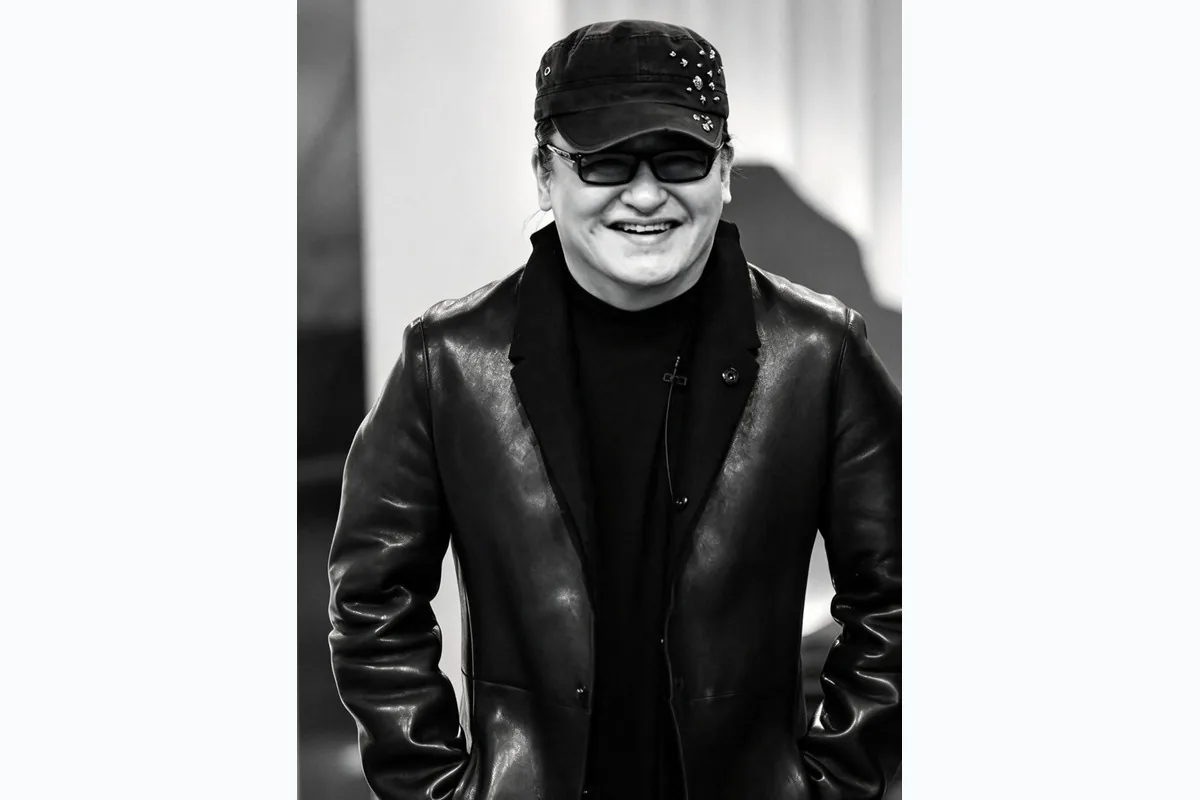
Figure 1: Musician and retired UIBE Professor Liu Huan (1963–2026, UIBE official archive).
I. The Dual Trajectory: Cultural Titan and Pure Academic
To the wider public, Liu Huan was the vocal architect of modern Chinese collective memory.
His rise began in 1987 with the television drama Plainclothes Policeman and its runaway theme song, launching a four-decade run across the apex of the country’s cultural landscape. From early anthems like Crescent Moon and Asian Winds to the working-class resilience embodied in Starting Over, culminating in the 2008 Beijing Olympics duet You and Me alongside Sarah Brightman, his baritone was woven into the acoustic backdrop of contemporary China.
Behind the stadium spotlights, however, Liu defined himself through a quieter tenure: that of an educator.
- Humanities Foundation and Global Vision: Admitted in 1981 to the University of International Relations to read French Literature, Liu possessed a sharp linguistic ear and intuitive composition skills. After winning Beijing’s inaugural French-English university vocal competitions in 1985 and undertaking cultural exchange in Paris, he grounded his musical sensibilities in classical Western tradition. Upon graduation, he spent a formative year teaching music in Ningxia’s industrial fringes with the Central Lecturer Corps.
- Three Decades in the Lecture Hall: Appointed to the Arts Faculty at UIBE in 1991, Liu anchored his open-elective course, History of Western Music, for over thirty years. The class attained legendary status. He eschewed digital slides entirely, covering blackboards in dense, elegant cursive notes that bridged primary texts and acoustic analysis across English, French, and German. He treated the stage as secondary: “In this lecture hall, I am simply an instructor. Singing is my hobby.”
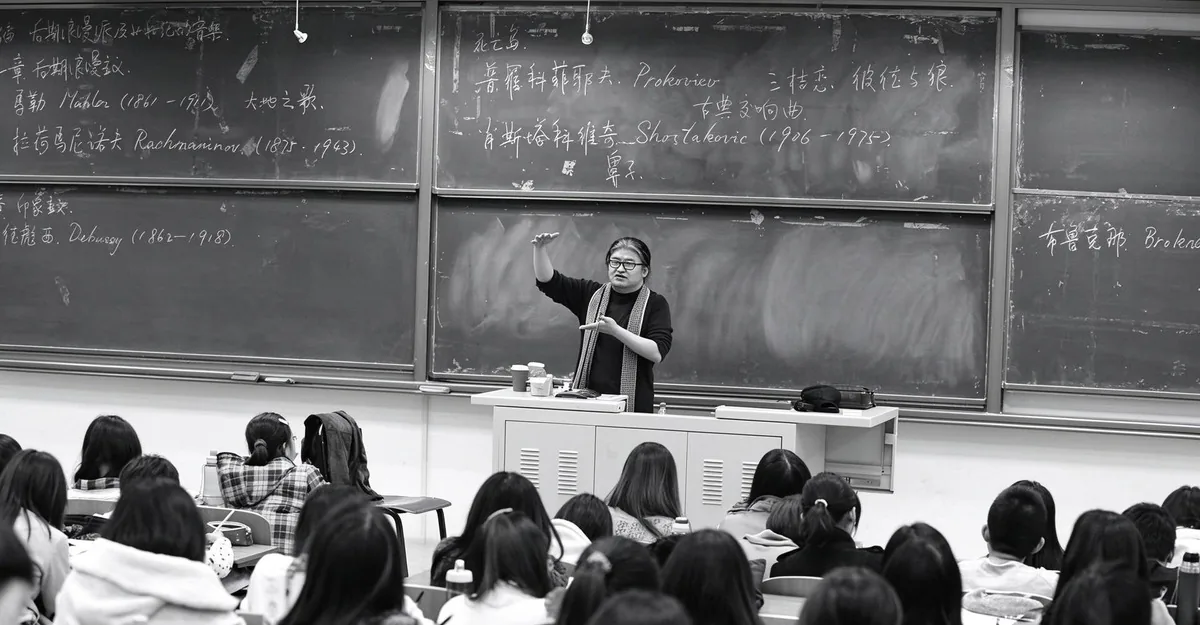
Figure 2: Liu Huan lecturing on Western Music History at UIBE, using chalk to draft orchestral structures and historical timelines (UIBE official archive).
- Quiet Retirement and Abrupt Exit: In autumn 2023, having turned 60, Liu quietly stepped down from his university post. The reprieve was brief. At 9:52 AM on September 25, 2026, he died in Shanghai. The university’s sparse obituary brought a sudden close to a life lived simultaneously on the national stage and in the quiet rigor of the academy.
II. The Actuarial Fallacy: What Does Dying at 63 Actually Mean?
In public discourse, a comforting rationalization emerged almost immediately: “For someone born in 1963, Chinese life expectancy was barely above 50. Making it to 63 is technically beating the baseline.”
This line of reasoning commits a fundamental error in actuarial demography. Evaluating mortality at 63 requires separating static period life expectancy at birth from conditional cohort remaining life expectancy.
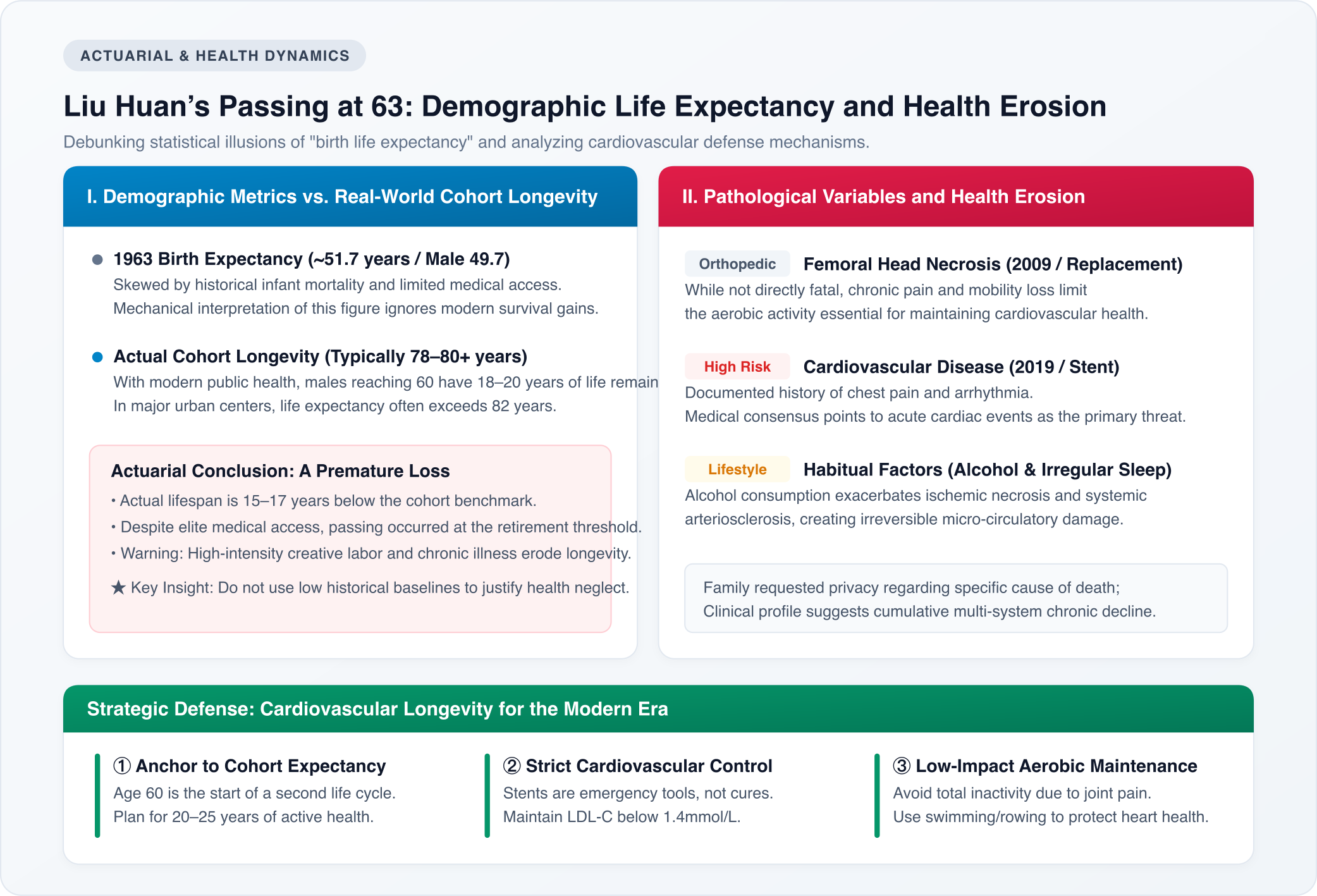
Figure 3: Analytical matrix comparing demographic survival curves against midlife biological wear-and-tear.
1. Dimension One: Period Life Expectancy at Birth (The Cross-Sectional Artifact)
According to historical records from the World Bank and the UN Population Division:
- In 1963, Chinese nationwide period life expectancy at birth was approximately 51.7 years (roughly 49.7 for males).
- This figure reflected high infant mortality, early-stage public health rebuilds, and severely constrained antibiotic distribution, which pulled the statistical mean downward at the earliest nodes of life.
Comparing a modern adult’s lifespan against this 1963 historical snapshot yields a superficial surplus of 11 to 13 years. But applying a baseline skewed by newborn mortality to an adult navigating the 21st-century healthcare environment is an analytical dead end.
2. Dimension Two: Conditional Adult Cohort Expectancy (The Real Survival Curve)
Life expectancy at birth measures cross-sectional mortality risks across all ages within a single calendar year. Once an individual survives infancy, childhood, and mid-career wear to enter their 60s, their risk profile shifts entirely.
- Actuarial Remaining Years: Contemporary national health and life insurance tables place overall Chinese life expectancy near 79. More importantly, a Chinese male who reached age 60 intact retains a median conditional remaining life expectancy of 18 to 20 years. In biological and actuarial terms, an adult from the 1960s cohort has a baseline expectation of reaching 78 to 80.
- The Urban Resource Premium: In tier-1 metropolises like Beijing and Shanghai, where tertiary medical infrastructure is heavily concentrated, life expectancy for permanent residents routinely exceeds 82 to 84 years.
The Actuarial Reality: Under modern medical infrastructure, passing at 63 represents an actuarial deficit of 15 to 17 years relative to peer cohort baselines. Coming immediately after stepping back from professional life—at the precise moment meant for harvesting the dividends of a long career—it constitutes a premature clinical exit.
III. Biological Degradation: The Interlocking Pathology
Honoring his family’s request for discretion, the UIBE bulletin listed only that Liu passed away “due to illness in Shanghai,” omitting granular diagnostic records. However, a synthesis of his verified clinical history and public physical trajectory reveals an interlocking three-dimensional failure cascade:
1. Avascular Necrosis of the Femoral Head: The Kinetic Bottleneck
In 2009, Liu was diagnosed with avascular necrosis (AVN) of the right femoral head, necessitating crutches and a temporary withdrawal from academic and creative life. He underwent total hip arthroplasty in the United States, completing rehabilitation before returning to the lecture hall in 2011.
- Pathophysiology: AVN cuts off microvascular perfusion to the femoral head, leading to microfractures in the trabecular bone, structural collapse, and debilitating chronic pain. Clinicians often describe it as an “orthopedic non-fatal malignancy.”
- Systemic Impact: A damaged joint rarely acts as a primary cause of death. However, in individuals past 50, severe mechanical joint disruption collapses daily non-exercise physical activity. The subsequent loss of sustained aerobic conditioning accelerates visceral adiposity, peripheral insulin resistance, and systemic cardiorespiratory decay.
2. Cardiovascular Organic Decay: The Lethal Fulcrum
Cardiovascular disease remains the leading terminal event for men between 55 and 75. Liu’s vascular history presented clear structural warning signals over several years:
- During the filming of Singer 2019, he suffered acute dyspnea, palpitations, and arrhythmias, requiring emergency administration of sublingual nitroglycerin-type rescue medication on set.
- In March of that same year, he underwent coronary percutaneous coronary intervention (PCI) with stent placement in Beijing.
Coronary stents restore luminal diameter across focal blockages and salvage ischemic myocardium, but they leave the broader arterial substrate of systemic atherosclerosis untouched. When followed by sustained cognitive stress, autonomic imbalance, or late-stage in-stent restenosis, the baseline risks of acute myocardial infarction, fatal ventricular arrhythmias, or acute decompensated heart failure remain active. Clinical patterns strongly suggest an acute cardiovascular event served as the proximal mechanism of death.
3. Alcohol and Circadian Disruption: The Systemic Accelerant
Creative output in the arts frequently trades circadian stability for nocturnal focus, accompanied by systemic alcohol consumption. In his early and mid-career, Liu’s heavy alcohol tolerance was widely acknowledged in artistic circles:
- Etiological Link to Osteonecrosis: High-dose, long-term alcohol consumption is a prime non-traumatic etiology of osteonecrosis. Alcohol-induced dyslipidemia generates fat microemboli that occlude subchondral terminal arterioles.
- Vascular Remodeling: Chronic heavy drinking locks the sympathetic nervous system into perpetual overactivation. This baseline drives stubborn endothelial hypertension, promotes myocardial interstitial fibrosis, and increases the frequency of paroxysmal arrhythmias. Decades of microvascular damage eventually convert into structural cardiac deficits.
IV. Defensive Protocols: Lessons for Midlife and FIRE Operators
Liu Huan’s death offers an uncompromising blueprint for anyone past age 40 attempting to engineer a durable healthspan. Longevity is not a passive holding pattern; it is an active risk-management system:
1. Discard Historical Baselines; Manage to Modern Life Tables
Do not use historical mortality baselines to rationalize deteriorating biomarkers. Age 60 is neither a natural biological terminus nor an automatic victory lap; it is the intake gate for an individual’s second physiological act. Without proactive management of silent metabolic decay, the transition into retirement or financial independence often induces a sharp metabolic downshift rather than sustainable leisure.
2. Treat Established Cardiovascular Disease with Aggressive Management
Believing a stent “cures” coronary disease is one of the most perilous misconceptions in middle-aged health management. A stent is localized plumbing; it does not address the inflamed arterial endothelium:
- Following confirmed coronary artery disease or endovascular intervention, low-density lipoprotein cholesterol (LDL-C) targets must be aggressively driven below 1.4 mmol/L (or reduced by more than 50% from baseline), using modern statin and PCSK9-inhibitor therapies.
- Carrying verified sublingual rescue compounds, tracking plaque progression via regular coronary CT angiography, and strictly curtailing alcohol intake are structural guardrails against sudden cardiac arrest.
3. Build Non-Weight-Bearing Aerobic Redundancies During Joint Breakdown
When confronted with avascular necrosis, severe osteoarthritis, or spinal stenosis, the instinct to adopt prolonged sedentary rest is counterproductive. Total immobilization destroys cardiopulmonary reserve within months:
- Transition immediately toward zero-impact aerobic modalities: deep-water running, lap swimming, and adaptive rowing.
- This approach insulates damaged joints from destructive axial loads while sustaining stroke volume, peripheral capillary density, and insulin sensitivity—effectively breaking the negative feedback loop where joint failure initiates cardiometabolic decline.
Related Research & Topics
Tello Mobile eSIM
SafetyWing Nomad Insurance
* Disclosure: This post contains affiliate links. If you make a purchase through these links, V-G Journal may earn a small commission at no additional cost to you. We only recommend services we independently evaluate and trust.
FIRE and Golf:自由旅居之路
专注于为追求 FIRE 与品质生活的人群提供特惠打球权益与候鸟微度假。不持一砖一瓦,运营品质生活。