The Physical Iron Laws Behind the Laoganma AI Rumor: Five Real-World Moats for the Next Decade
When rumors of Laoganma replacing hundreds of workers with AI went viral, the reality check was swift. This essay dissects why, despite the hype, the physical, legal, and biological 'hard walls' of our world—from Moravec’s Paradox to the necessity of human accountability—remain impenetrable to algorithms.

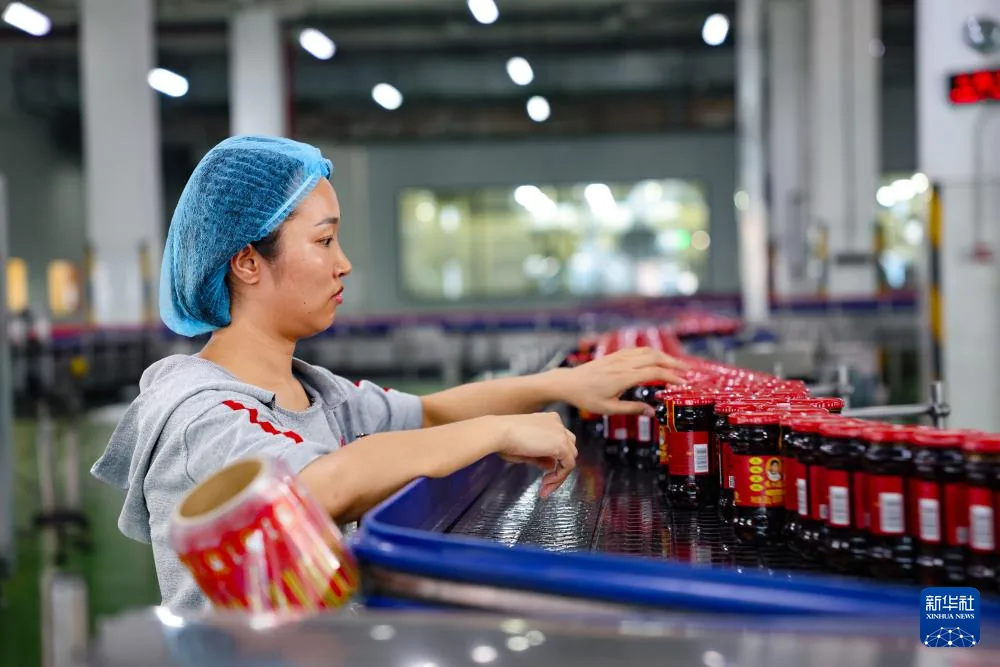
Figure 1: Raw material inspection and sorting on a modernized production line.
At a recent industrial quality summit, Laoganma—the iconic chili sauce manufacturer—disclosed data on its industrial upgrade: the integration of an AI visual inspection system had reduced defect rates in critical processes to 0.02%, with full-link digital traceability for raw materials. What should have been a standard manufacturing update was immediately twisted by social media into a sensationalist fable: “AI replaces 600 chili-sorting workers, leaving only 48; Laoganma rakes in 5.4 billion annually through computing power.” The ensuing public outcry forced the company to issue a clarification: the production line never employed that many people to begin with.
This farce exposes a blind spot among techno-utopians: those living in the “bit world” often assume that if you stack enough compute, code can bulldoze every obstacle in the physical world.
Reality, however, is governed by gravity, friction, legal liability, and the murky undercurrents of human social dynamics. Over the next decade, Large Language Models (LLMs) and multimodal agents will undoubtedly reconstruct virtual roles—from code-monkeys and copywriters to entry-level translators and analysts caught in the cycle of workplace depreciation. Yet, the moment AI steps outside the glowing LCD screen, it hits a series of thick, impenetrable walls built by physics, institutional game theory, and biological instinct.
The industries truly immune to AI over the next decade do not rely on “human warmth and poetry.” They rely on five immovable real-world moats.
I. High-Entropy Blue-Collar Work & Physical Maintenance: The Hard Wall of Moravec’s Paradox
A trillion-parameter model can derive complex topological algorithms in seconds, but asking a robotic arm to reach under a cramped, rusted cabinet in an aging apartment to replace a seized angle valve without bursting the pipe remains an engineering fantasy.
This is the essence of Moravec’s Paradox: high-level reasoning, chess, and pattern recognition are computationally trivial for machines, but the sensory-motor coordination that a three-year-old child masters—grasping, navigating, and adapting to non-standard physical environments—is extraordinarily difficult.
- Representative Industries: Emergency plumbing/electrical repair, live-line work on aging high-voltage grids, deep-sea and high-altitude welding, complex automotive chassis diagnostics, and masonry in historic renovations.
- The Underlying Mechanism: The physical world is highly unstructured and subject to constant wear. Every pipe layout, every rusted chassis, and every wind-speed variable during a storm is a unique random variable. Building a humanoid robot capable of navigating mud, grease, and tight spaces with millisecond force feedback—while remaining durable and energy-efficient—will remain economically non-convergent for the next decade. This is not a compute problem; it is a matter of energy conversion and hardware depreciation in the atomic world.
II. The Ultimate Liability Bearer: Who Goes to Jail?
The architecture of modern society is essentially a “risk and responsibility distribution mechanism.” While the ultimate goal of automation is efficiency, the core of our legal and bureaucratic systems requires a human to bear infinite liability for catastrophic failure.
An LLM has no citizenship; a data center cannot be handcuffed; a GPU cannot be sentenced to prison.
- Representative Industries: Lead structural engineers, commercial airline pilots, lead surgeons, nuclear power plant control room operators, bankruptcy judges, and criminal defense attorneys.
- The Underlying Mechanism: AI can produce exhaustive structural stress reports, high-precision pathology scans, or rigorous compliance opinions. But the final decision—to break ground on a bridge, to excise an organ, or to land a plane in extreme wind shear—must be signed by a human with full civil and criminal capacity. When disaster strikes, boards of directors and regulators do not want a cold, open-source algorithm explanation; they want a flesh-and-blood person who can stand in court, face cross-examination, and stake their license and personal freedom on the outcome. The high compensation for these roles is, in essence, a risk premium for shielding the institution from catastrophe.
III. Tacit Knowledge and Grey-Zone Coordination: The Algorithmic Blind Spot
LLMs excel at processing public knowledge—rules, literature, and documented data. However, the most profitable and protected operations in the business and political world are rooted in “tacit knowledge” and “under-the-table” negotiations.
Once data is digitized and networked, it loses its room for maneuver and becomes potential evidence for regulatory audits.
- Representative Industries: M&A deal-making for non-standard assets, high-stakes crisis PR, mediation between complex interest groups, and core procurement for massive infrastructure projects.
- The Underlying Mechanism: The true rules of resource allocation are rarely written in public filings or earnings reports. They exist in the unspoken nuances of a dinner meeting, the delicate balance of factional politics, and the precise leverage over a key decision-maker’s hidden vulnerabilities. No leader would dare input their leverage, rent-seeking paths, or compromise strategies into an algorithmic system that could be intercepted, audited, or “jailbroken” by adversarial prompts. Non-codifiability is the ultimate watermark of this social system.

Figure 2: The five real-world moats and their underlying game-theoretic mechanisms.
IV. Biological Attention & Physical Presence: The Inflation of Digital Perfection
When generative AI can produce perfect 4K video, hyper-realistic digital avatars, and orchestral scores at near-zero marginal cost, the value of digital content suffers from irreversible hyper-inflation.
In an era where the screen is saturated with synthetic perfection, “fictional excellence” becomes a cheap industrial byproduct. Conversely, the “raw, irreversible vulnerability of the physical body” becomes the ultimate luxury.
- Representative Industries: Elite live sports (soccer, tennis, UFC), high-end artisanal craftsmanship, and field exploration or war reporting in extreme environments.
- The Underlying Mechanism: Deep Blue defeating a chess grandmaster twenty years ago didn’t destroy professional chess; it made the human struggle—the sweating, the agonizing over a move—more valuable. Humans do not care about two AIs fighting at millions of games per second in a cold server room. What audiences pay for is the heart-rate spikes, muscle spasms, and unpredictable errors of a peer under physical limits. As long as our nervous systems are governed by evolutionary biology, the breath, sweat, and real-world stakes of a human presence cannot be replaced by virtual pixels.
V. Caloric Logistics and Basic Agriculture: The Ruthless Gravity of Physical Goods
This is the most stinging rebuke to the “AI-everything” narrative: regardless of how dazzling the cyber-space becomes, carbon-based life forms must consume 2,000 calories a day to maintain vital signs.
High-quality chili peppers must spend hundreds of days in the soil, nourished by sun and rain. Heavy machinery must roar in factories to press rapeseed oil. Glass bottles must be loaded onto trucks and driven thousands of miles by drivers through mountains and valleys—navigating the physical and energy constraints of heavy logistics and transport—before reaching the dinner table.
In this long, clumsy, asset-heavy chain, AI is at best a high-speed optical sensor mounted on a conveyor belt to pluck out a moldy pepper. It cannot alter the law of gravity, replace the chemical energy of fertilizer, or reverse the deep biological dependence on traditional fermented flavors.
Every time a technological wave crashes, those most easily swallowed are the “refined intermediaries” who thought they were at the top of the food chain because they moved symbols within the screen. Meanwhile, the “rough trades”—those anchored in the gravity of the physical world, digesting the real risks, wear, and mud of human society—remain unmoved as the tide recedes.
Related Research & Topics
Tello Mobile eSIM
SafetyWing Nomad Insurance
* Disclosure: This post contains affiliate links. If you make a purchase through these links, V-G Journal may earn a small commission at no additional cost to you. We only recommend services we independently evaluate and trust.
FIRE and Golf:自由旅居之路
专注于为追求 FIRE 与品质生活的人群提供特惠打球权益与候鸟微度假。不持一砖一瓦,运营品质生活。