The System's Shadow: Fort Hood, Hasan, and the Military's Return to Capital Punishment
The Pentagon has approved the execution of Nidal Hasan, the Fort Hood shooter, marking the military's first capital punishment in 65 years. This case, dubbed a real-life 'Homeland,' starkly exposes the state's vulnerability to internal radicalization and signals a definitive closure in post-terror era justice and deterrence.

Key Takeaway: The Pentagon recently announced that the U.S. President has approved the execution of Nidal Malik Hasan, the former Army Major and psychiatrist responsible for the 2009 Fort Hood military base shooting in Texas. The proposed method of execution is by firing squad. If this order is ultimately carried out, the U.S. military will shatter an institutional freeze on capital punishment that has lasted 65 years, since 1961. This horrific incident, which once shook the nation, earned the moniker “real-life Homeland” for its chilling revelation of the modern state’s profound blind spots when confronted with radicalization within its core professional ranks. The approval of Hasan’s execution, years after his conviction, also reflects a final closure in terms of judicial process and political deterrence in the post-terror era.
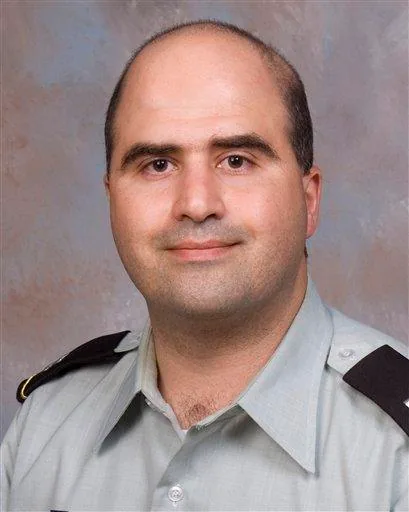
Figure 1: Official standard portrait of former U.S. Army Major and psychiatrist Nidal Malik Hasan
The Absurd Mirror: A Military Psychiatrist’s Bullets and the Real-Life Homeland
The TV series Homeland once depicted, with gripping intensity, the story of U.S. Marine Sergeant Nicholas Brody, a prisoner of war deeply radicalized by an enemy faction in the Middle East, who then returned home under the guise of a war hero to infiltrate the nation’s institutional core and undermine it. Yet, the absurdity and irony of reality often cut deeper than any Hollywood script.
Nidal Hasan was born in Arlington, Virginia, possessing unquestionable American citizenship. He received higher education and specialized medical training within the U.S. military system, holding the rank of U.S. Army Major at the time of the incident. He served as a psychiatrist at the prestigious Walter Reed National Military Medical Center. One of Hasan’s core duties was to provide psychological evaluations, psychiatric assessments, and trauma desensitization for U.S. service members returning from the front lines in Afghanistan and Iraq, many suffering from severe Post-Traumatic Stress Disorder (PTSD).
A medical officer specifically tasked with diagnosing others’ mental trauma and ensuring the combat readiness of soldiers, quietly underwent a spiritual conversion to extremist ideology within the very heart of the state’s apparatus of violence.
During his service at Walter Reed, Hasan established long-term, intensive private contact with Anwar al-Awlaki, a key ideologue for al-Qaeda in the Arabian Peninsula (AQAP), via encrypted email. Their communications delved deeply into religious conflicts for Muslim soldiers serving in the U.S. military, the justification for attacking fellow service members, and extremist doctrines.
The system’s security perimeter was not entirely oblivious. The FBI’s Joint Terrorism Task Force (JTTF) had earlier intercepted emails between Hasan and Awlaki. However, within the highly bureaucratic security review network of the time, Hasan framed these communications as “academic research into the psychology of Muslims in the military.” Coupled with an institutional reluctance to scrutinize individuals based on sensitive ethnic or religious identities, this fatal warning signal was repeatedly downgraded through bureaucratic channels, ultimately failing to trigger effective security intervention.
On November 5, 2009, on the eve of his official deployment to Afghanistan, Hasan entered the soldier processing and medical examination center at Fort Hood (now Fort Cavazos) in Texas, armed with two high-capacity pistols. Shouting religious slogans, he opened fire indiscriminately.
The massacre ultimately resulted in 13 fatalities (including a pregnant female soldier) and 32 serious injuries, becoming one of the deadliest internal attacks on a U.S. military base in history. Hasan was shot in the spine by responding civilian police, rendering him paraplegic, and was subsequently apprehended. The very system that had conferred upon him rank and the authority to prescribe, was, on the eve of his deployment, torn apart by his hand from within.
Sixty-Five Years of Judicial Freeze: Why Military Capital Punishment Requires Presidential Assent
The Fort Hood shooting occurred in 2009, and a military court jury unanimously convicted Hasan of 13 counts of premeditated murder and 32 counts of attempted murder, sentencing him to death in 2013. Why did it take over a decade for the sentence to move from judicial verdict to White House approval?
This protracted delay stems from the U.S. military’s unique judicial jurisdiction and extremely high political approval threshold:
| Judicial Dimension | Federal Civilian Court System | U.S. Military Justice System (UCMJ) |
|---|---|---|
| Legal Basis | U.S. Code | Uniform Code of Military Justice (UCMJ) |
| Trial & Jury Mechanism | Federal Grand Jury & District Judge | Military Court Jury (Composed of Officers & Senior NCOs) |
| Final Death Sentence Authority | Federal Circuit Courts & U.S. Supreme Court | U.S. President (Commander-in-Chief) Personal Signature Required |
| Historical Execution Precedent | Federal Death Penalty Resumed Intensively (2020-2021) | Unexecuted for 65 Consecutive Years Since 1961 |
In accordance with the rigid stipulation of Article 71 of the Uniform Code of Military Justice, death sentences handed down by U.S. military courts cannot be directly issued for execution by a judge. Instead, after all military appeals are exhausted, the U.S. President, in their capacity as Commander-in-Chief, must personally sign off on the approval.
The last time the U.S. military carried out an execution dates back to 1961, when Army Private John Bennett was hanged at Fort Leavenworth military prison in Kansas for rape and murder. In the 65 years since, successive U.S. Presidents (from Cold War-era Kennedy and Reagan, to post-Cold War Clinton, Bush Jr., Obama, and Biden) have, without exception, opted for a de facto “procedural freeze” when faced with military death sentences.
This policy deferral, spanning over six decades, was not born of leniency towards heinous crimes, but rather from a highly pragmatic institutional risk aversion:
- Political Cost of Breaking Precedent: Signing an execution order means reactivating a military capital punishment mechanism dormant for over half a century, which could easily ignite intense controversy in international opinion and domestic human rights politics.
- Procedural Backlash from Civilian Courts: Once the President signs the death warrant, the defense legal team will inevitably extend the battle into the federal civilian judicial system, filing Habeas Corpus petitions to subject every technical detail of the military trial to endless judicial scrutiny.
- Complexity of the Post-9/11 Political Narrative: During the decade-plus entanglement of the War on Terror, publicly executing a paraplegic former Major who claimed jihad could easily be politically weaponized as a propaganda martyr by extremist groups.
However, with newly appointed Secretary of Defense Pete Hegseth formally submitting the execution recommendation, President Trump, with a stroke of his pen, signed the approval, instantly shattering the 65-year procedural ice surrounding military capital punishment.
This intertwining of internal radicalization and the lingering aftershocks of geopolitical warfare precisely confirms the pattern of internal attrition within military systems engaged in prolonged overseas conflicts—from the long-term psychological alienation experienced on the front lines of the geopolitical quagmire of Afghanistan, the “graveyard of empires,” to the sudden eruption at a domestic processing center, the immense psychological toll of war ultimately recoiled upon the homeland’s core in the most absurd fashion.
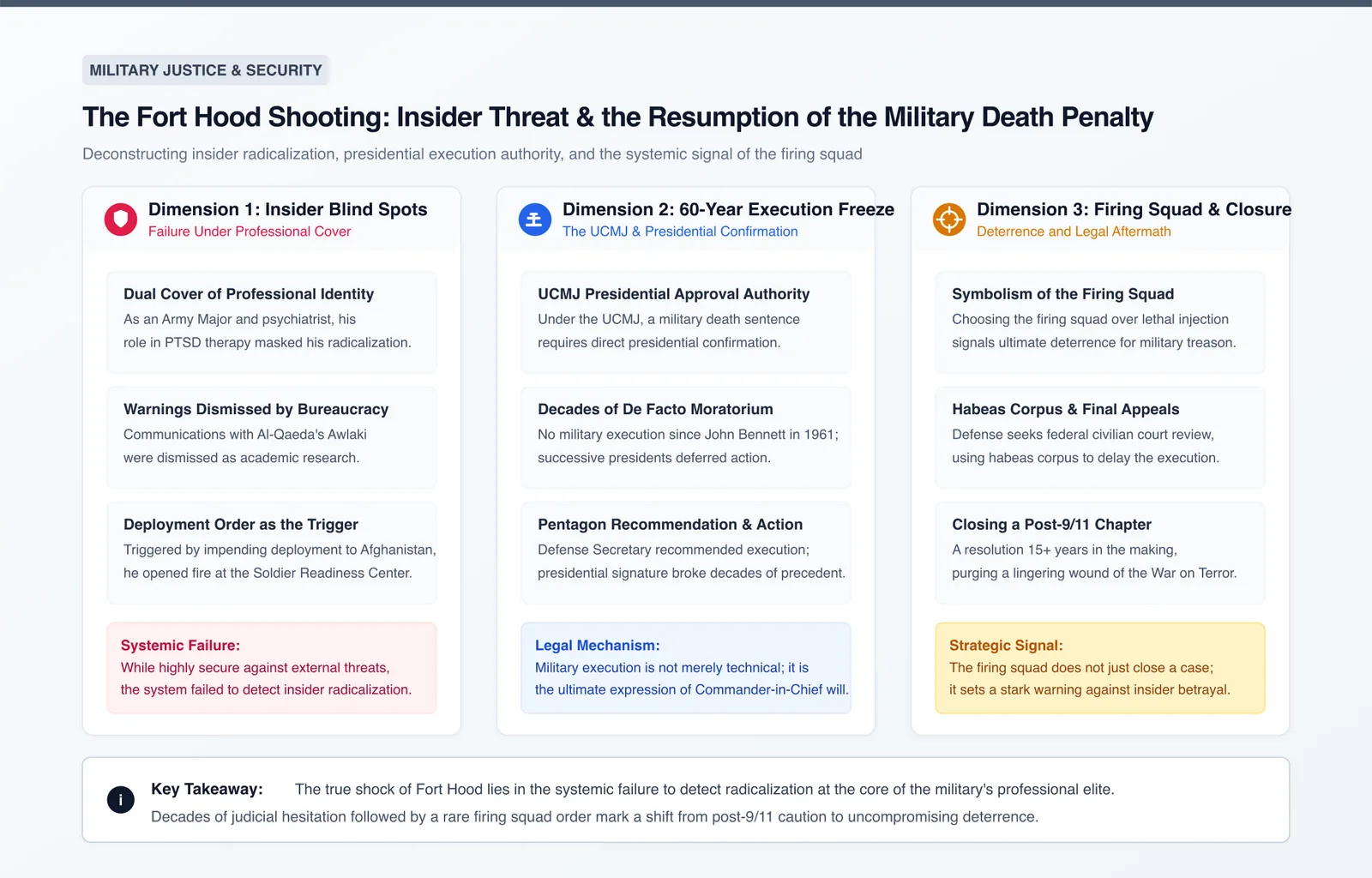
Figure 2: U.S. Military Fort Hood Shooting: Institutional Alienation Defense Penetration and Sixty-Five Year Death Penalty Restart Mechanism Comparison
The Deterrent Symbolism of the Firing Squad and the Final Legal Tug-of-War
Among the details disclosed by the Pentagon, one of the most striking is that the method of execution has been designated as a firing squad.
In modern U.S. judicial practice, the few states that have reinstated capital punishment primarily rely on lethal injection, with occasional use of nitrogen hypoxia. While the U.S. military code, in principle, allows for both injection and firing squad, the direct selection of the latter in this case sends a highly pointed political and military signal:
The Firing Squad: A Multifaceted Institutional Symbol
- Classical Return to Strict Military Discipline: Historically, firing squads have been reserved for punishing traitors guilty of treason, battlefield mutiny, and the murder of fellow service members. Its ritual carries strong connotations of moral forfeiture and military disgrace.
- De-medicalized, Purely Physical Reckoning: This method circumvents recent legal entanglements surrounding lethal injection, such as drug supply shortages and controversies surrounding venous access techniques, opting for the most direct physical means to conclude the process.
- Absolute Deterrence Against Internal Extremism: It unequivocally signals to the entire military system that for traitors within the system who, clad in uniform, turn against it, the state will deploy the coldest punitive instrument to purge them.
It must be objectively stated that the White House’s approval does not, however, mean the firing squad’s volleys will echo in the immediate future. According to the current judicial framework, a final legal firewall still stands between the presidential signature and the ultimate execution:
- Army Department’s Administrative Preparation Period: The Secretary of the Army is now responsible for designating the specific military base for execution, facility setup, and execution specifics (including selecting and training firing squad members, medical oversight protocols, etc.).
- Civilian Federal Court’s Habeas Corpus Challenge: Hasan’s defense legal team will most likely swiftly transcend military jurisdiction, filing Writ of Habeas Corpus petitions with federal district courts and even the Supreme Court. The defense may launch a final procedural blockade around issues such as Hasan’s mental culpability at the time of the incident, the procedural compliance of voluntarily waiving legal counsel during his trial, and whether executing a paraplegic constitutes “cruel and unusual punishment” (Eighth Amendment).
This is not merely a race between the killer and the execution block; it is a high-stakes institutional contest between exclusive military jurisdiction and civilian constitutional rights at the highest level.
Systemic Blind Spots: The Defense Dilemma Against Internal Radicalization
From the base massacre in 2009 to the White House’s execution approval in 2026, the nearly two decades of protracted legal and political struggle surrounding the Fort Hood case offer lessons for modern organizational risk management that extend far beyond this singular case:
-
“Professional Aura” as a Fatal Blind Spot for Risk Management In any large institution, core personnel in specialized technical hubs (such as doctors, auditors, or high-privilege system administrators) often enjoy inherent trust immunity. The system’s scrutiny tends to focus on external infiltration and lower-ranking personnel, yet remains almost entirely blind to the ideological radicalization of senior professionals operating under a veneer of expertise.
-
“Avoidance and Downgrading Instincts” in Inter-Departmental Flow Even before the incident, multiple intelligence reports concerning extremist communications were detected. However, due to concerns about ethnicity, academic research pretexts, and inter-departmental coordination costs, this information was progressively blunted by bureaucratic layers. This “less trouble, the better” compliance inertia constitutes the largest intrinsic vulnerability in the security perimeter.
-
Offshore and Atomized Ideological Radicalization Hasan never traveled to Yemen or Afghanistan for terrorist training. From the comfort of his domestic apartment, solely through email and encrypted networks, he completed his radicalization within the shell of a medical officer tasked with psychological trauma healing. If modern defense mechanisms continue to rely on physical footprint analysis, they will be powerless against atomized spiritual radicalization.
The firing squad’s execution order is not merely a procedural reckoning for delayed justice; it is the state machine, scarred by a protracted War on Terror, attempting a belated closure on the uncontrolled specter lurking within its own veins.
Related Research & Topics
Beyond the Territorial Refuge: Costa Rica’s 15% Foreign Income Tax and the Financial Trajectory of Nomadic Capital
The Anatomy of Digital Predation: Inside the Syndicate Targeting the Elderly via Livestream Appraisal Scams
Tello Mobile eSIM
SafetyWing Nomad Insurance
* Disclosure: This post contains affiliate links. If you make a purchase through these links, V-G Journal may earn a small commission at no additional cost to you. We only recommend services we independently evaluate and trust.
FIRE and Golf:自由旅居之路
专注于为追求 FIRE 与品质生活的人群提供特惠打球权益与候鸟微度假。不持一砖一瓦,运营品质生活。