The Ontological Boundary of 'The Investiture of the Gods': Why Classical Epics Defy Modern Labels
A deep dive into the structural and philosophical divergence between Ming Dynasty 'Gods and Demons' fiction and modern fantasy. Moving beyond the 'Chinese Harry Potter' trope to rediscover the Eastern Iliad.

Executive Summary: In the hyper-accelerated, label-driven discourse of contemporary pop culture, classical masterpieces are often lazily shoehorned into modern paradigms. Some marvel at the flying contraptions and mystical artifacts in The Investiture of the Gods (Fengshen Yanyi), calling it “Ming Dynasty Hard Sci-Fi”; others observe the sectarian rivalries and spell-casting duels, branding it the “Chinese Harry Potter.” However, stripping away these reductive analogies reveals a work of far more profound texture. Fengshen Yanyi is a classical chapter-based ‘Gods and Demons’ (Shenmo) novel born of the Longqing and Wanli eras. Only by delineating its boundaries from science fiction and modern YA fantasy can we grasp this grand Eastern epic—a narrative where the rise and fall of dynasties serve as the skeleton, and the celestial “Great Slaughter” provides the nervous system.
I. Literary Lineage: From Historical Chronicles to Supernatural Romance
To locate the literary coordinates of The Investiture of the Gods, one must return to the historical context of Ming Dynasty vernacular literature. In Lu Xun’s seminal A Brief History of Chinese Fiction, the work is categorized alongside Journey to the West as the pinnacle of “Shenmo Xiaoshuo” (Gods and Demons fiction).
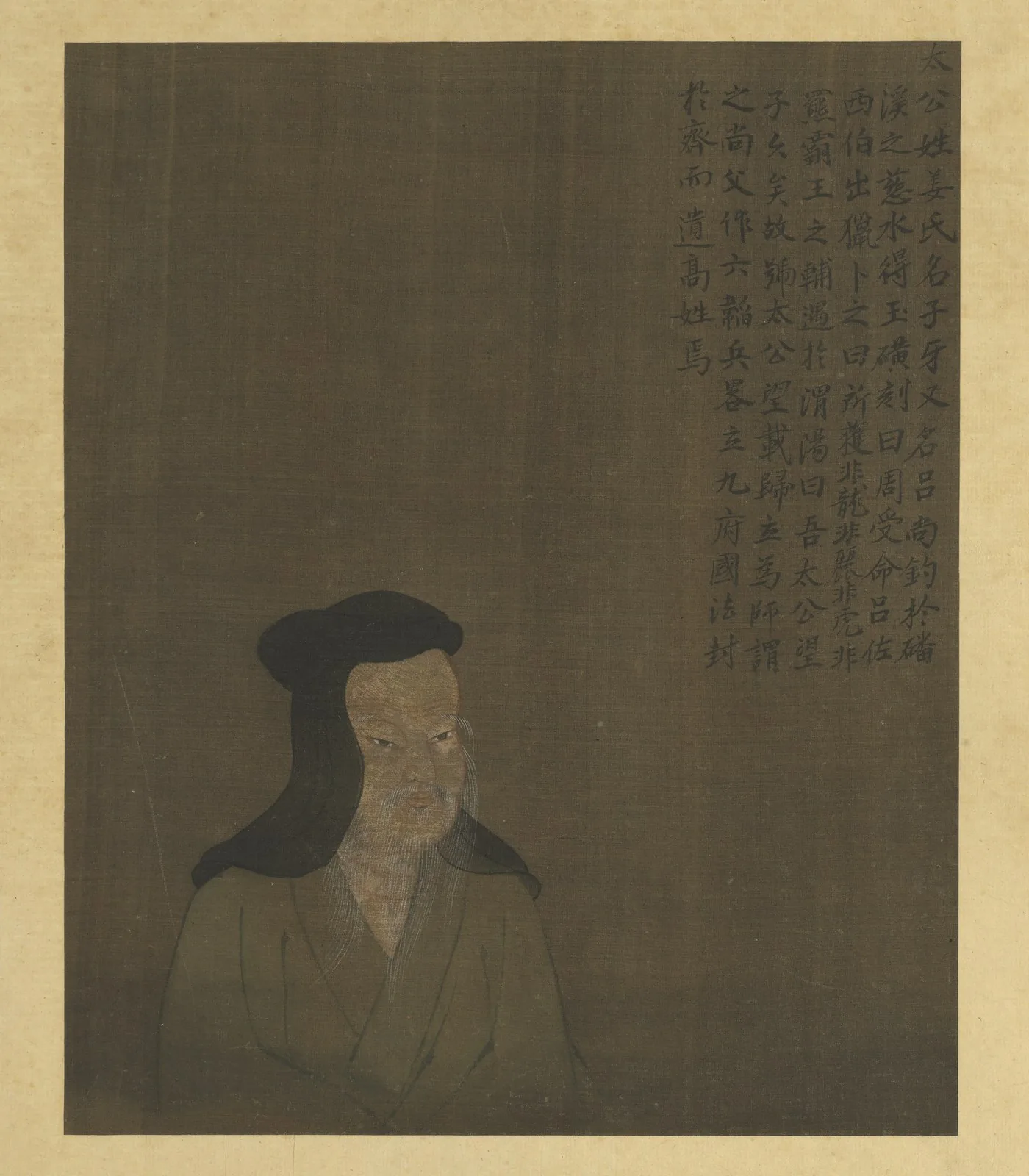
Figure 1: Jiang Ziya (National Palace Museum, CC BY 4.0). In classical Shenmo fiction, he embodies the dual identity of a mortal Prime Minister and a celestial Commander.
1. Authorship and the Ming Zeitgeist
The Investiture of the Gods (also known as The Canonization of the Gods) emerged during the late Ming Dynasty. While traditionally attributed to Xu Zhonglin, modern scholarship suggests its core text may be deeply linked to Lu Xixing, a prominent Neidan (Internal Alchemy) scholar of the Quanzhen School of Taoism.
Regardless of the final verdict on authorship, the text is a product of the late Ming’s urban merchant culture, the “Three Teachings in One” (Confucianism, Taoism, Buddhism) syncretism, and a flamboyant imagination regarding ancient sorcery.
2. “History as Bone, Myth as Flesh”
The novel is not a “secondary world” fantasy built from scratch; it is an evolution of deep historical memory and Song-Yuan era storytelling traditions:
- The Historical Skeleton: The narrative arc strictly follows the “King Wu’s Campaign against King Zhou” (the transition from the Shang to the Zhou Dynasty). It draws from the Records of the Grand Historian (Shiji) to ground its political stakes in reality.
- The Supernatural Flesh: The author weaves Taoist hagiography, folk demonology, and shamanic memory into this historical frame. The mortal dynastic transition is mirrored by a celestial war between two sects: the Chan (Enlightenment) sect, led by Yuanshi Tianzun (supporting the Zhou), and the Jie (Interception) sect, led by Tongtian Jiaozhu (supporting the Shang).
- The Final Teleology: The resolution lies in the “Investiture” itself. After the victory, Jiang Ziya ascends the terrace to canonize 365 deities. This act integrates the fallen immortals, mortal generals, and demons into a singular divine bureaucracy, completing the dual reconstruction of political order and the celestial pantheon.
II. Why This Is Not Science Fiction
A common contemporary trope is to label Fengshen Yanyi as “Classical Sci-Fi,” citing Lei Zhenzi’s wings as “flight tech,” Tu Xingsun’s earth-traveling as “subterranean machinery,” or the “Thousand-Mile Eye” as “radar.”
This view conflates imaginative faculty with speculative logic.
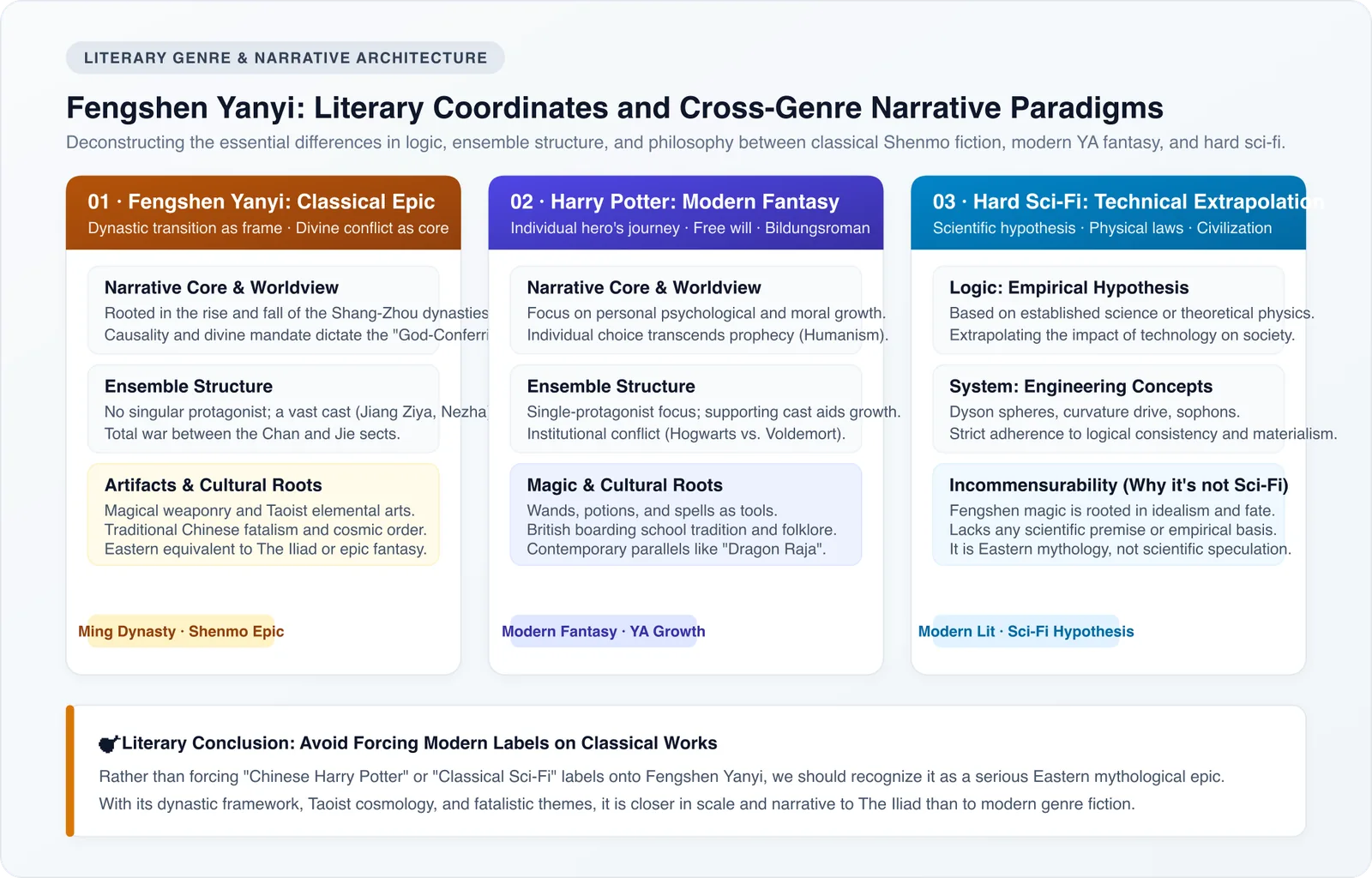
Figure 2: A dimensional comparison of setting logic, ensemble structure, and cultural core.
1. Logic of the Setting: Rational Deduction vs. Metaphysical Law
The core of Science Fiction is the logical extrapolation of natural laws, engineering, or materialist hypotheses. Whether it is Asimov’s Three Laws or Liu Cixin’s dual-vector foil, the foundation is an empirical, self-consistent loop exploring the alienation of technology.
In contrast, the wonders of Fengshen Yanyi are rooted in traditional Chinese metaphysics, the Wu Xing (Five Elements), and Neidan cultivation. Elemental escapes, the Samadhi True Fire, and weather manipulation are externalizations of spiritual power within a subjectivist worldview. They do not follow physical laws; they follow the “Dao.”
2. The Origin of Creation: Engineering vs. Spiritual Resonance
In Sci-Fi, objects are “engineered products”—reproducible, mechanical, and scientifically explicable.
In Fengshen Yanyi, the “Dharma Treasures” (artifacts) like the Fan Tian Yin (refined from a mountain) or the Golden Dragon Scissors are concrete projections of celestial aura and divine will. The user does not need to understand micro-physics; they require the correct incantation, a specific level of cultivation, and the “Karmic Mandate” to wield them.
3. The Value Core: Rational Exploration vs. Fatalistic Submission
Sci-Fi celebrates the human spirit using reason to break the unknown. Fengshen Yanyi is governed by Tianming (The Mandate of Heaven) and Causality. The immortals are dragged into the slaughter because of a “Great Kalpa” occurring once every 1,500 years. Those who resist the Mandate—no matter how powerful (like Wen Zhong or Zhao Gongming)—inevitably perish to fulfill their destiny on the “Investiture List.”
III. The Gulf Between ‘Fengshen’ and ‘Harry Potter’
The “Chinese Harry Potter” comparison is popular due to several surface-level similarities:
- Supernatural Systems: Wands and potions vs. Elemental escapes and the “Ten Absolute Arrays.”
- Artifact-Heavy Combat: Invisibility Cloaks vs. Wind-Stopping Pearls and Immortal-Binding Ropes.
- Sectarian Conflict: Hogwarts Houses/The Order of the Phoenix vs. the Kunlun and Penglai sects.
However, beneath the surface of “magic items,” the philosophical foundations are worlds apart:
| Dimension | Harry Potter (Modern Fantasy) | Fengshen Yanyi (Classical Shenmo) |
|---|---|---|
| Genre | Modern YA Coming-of-Age | Classical Chapter-based Epic |
| Narrative Core | Psychological growth, friendship, and moral choice | Dynastic transition and the restructuring of the Divine |
| Philosophy | Humanism: “It is our choices that show what we truly are.” | Fatalism: “The Shang’s energy is spent; the Zhou rises by Heaven’s will.” |
| Structure | Single-core protagonist (Harry) | Panoramic multi-threaded ensemble |
| Cultural Matrix | British boarding schools, Arthurian legend | Taoist pantheons, Confucian legitimacy |
1. Free Will vs. Cosmic Determinism
The soul of Harry Potter is modern humanism. Dumbledore’s classic dictum—that choices define us more than abilities—is the heart of the series. Harry breaks the prophecy through his active choice to love and sacrifice.
In Fengshen Yanyi, individual moral choice is almost powerless against “Qishu” (Cosmic Energy/Fate). Characters like Yin Jiao and Yin Hong, who swear oaths and then defy the Mandate to help their father, are doomed to gruesome deaths despite their filial intentions. The novel does not celebrate the transformation of a hero; it depicts a grand epic where gods, men, and demons are all cogs in the Great Slaughter.
2. The Protagonist Circle vs. The Panoramic Epic
Harry Potter follows a strict single-core growth narrative. The reader views the world through Harry’s eyes.
Fengshen Yanyi is a panoramic, multi-threaded epic. There is no single absolute protagonist. The first half follows Nezha’s rebellion, Yang Jian’s descent, and the tragedy of Bi Gan. The middle focuses on Jiang Ziya’s military campaigns. The end focuses on the Battle of Muye. Every character—from the Golden Immortals of Kunlun to the tragic loyalist Grand Preceptor Wen—has an independent karmic arc.
IV. Correcting the Coordinates: The Eastern ‘Iliad’
If we must find a global peer for Fengshen Yanyi, its narrative structure and logic align most closely with the Iliad:
- Mortal War, Divine Intervention: Just as the Olympian gods split into factions to intervene in the Trojan War, the immortals of Kunlun and Jiao Island descend to the mortal battlefield, suffering injuries and losses in the process.
- The Tragedy of Fate: Achilles goes to war knowing his end; Grand Preceptor Wen fights for the Shang knowing the dynasty is doomed. This creates a sense of “Epic Sublimity” that transcends cultural boundaries.
Furthermore, from a fantasy perspective, it is a work of High Fantasy akin to Tolkien’s The Lord of the Rings. It possesses a self-consistent pantheon, a vast geographical map, and a sense of historical weight as a civilization resets itself through a chaotic transition.
V. Conclusion: Respecting the Classical Text
Fengshen Yanyi may lack the psychological precision of Dream of the Red Chamber or the gritty realism of Water Margin, but it laid the foundation for the Eastern mythological worldview. Its blend of Five Elements metaphysics and dynastic transition created a template for the “Grand Supernatural Epic.”
To dismiss it as “superstition” is a mistake; to force it into the boxes of “Sci-Fi” or “YA Fantasy” is an even greater one. True respect for the classics lies in returning them to their original literary coordinates—at the intersection of history and myth.
Related Research & Topics
Tello Mobile eSIM
SafetyWing Nomad Insurance
* Disclosure: This post contains affiliate links. If you make a purchase through these links, V-G Journal may earn a small commission at no additional cost to you. We only recommend services we independently evaluate and trust.
FIRE and Golf:自由旅居之路
专注于为追求 FIRE 与品质生活的人群提供特惠打球权益与候鸟微度假。不持一砖一瓦,运营品质生活。