The Dumbphone as an AI Terminal: Five Minimalist Architectures for Offline and Air-Gapped Intelligence
Constrained by megabytes of RAM and sub-gigahertz chips, feature phones cannot run language models on-device. Yet, by decoupling compute from physical interface, dumbphones become resilient, week-long battery I/O terminals for self-hosted LLMs via VoIP, SMS, brutalist Web, legacy mail/IRC protocols, and Bluetooth.

Executive Summary: The extreme hardware constraints of feature phones—often running on sub-gigahertz processors with double-digit megabytes of RAM—render on-device LLM inference structurally impossible. Yet in an era where self-hosted compute (home NAS clusters, headless Mac minis, and private edge nodes) has become commonplace, the humble dumbphone offers a compelling proposition. Stripped of the computational overhead, it becomes what it was always best at: an ultra-durable, distraction-free, battery-resilient input/output terminal with physical tactile feedback. This field manual explores five production architectures for bridging classic feature phones to local private AI models using telephony signaling, SMS modems, brutalist Web, legacy protocols, and near-field Bluetooth.
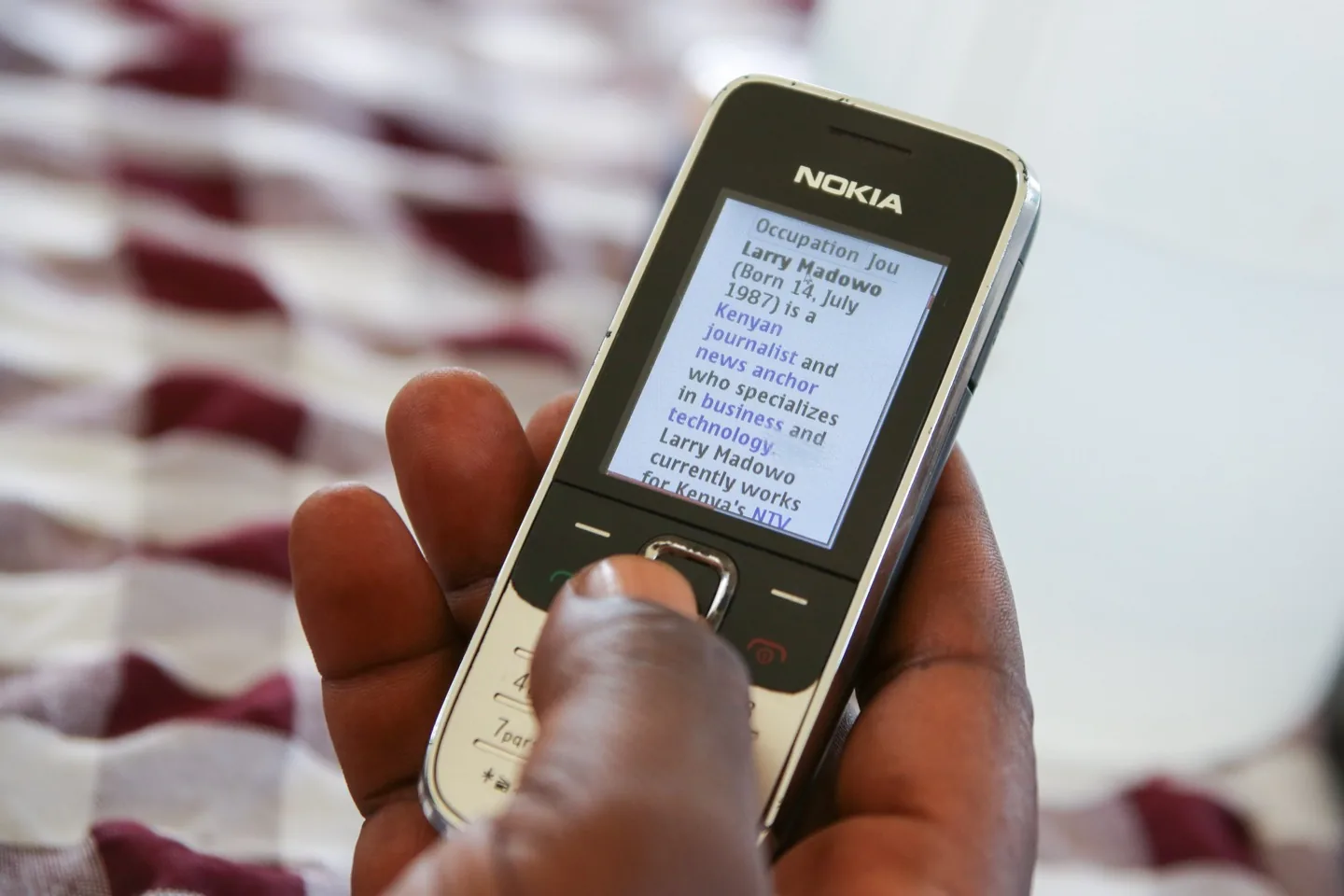
Figure 1: The vintage tactile dumbphone—a high-reliability interactive interface built for extreme environments and rigorous digital minimalism.
In the cultural counter-movement toward digital minimalism and emergency off-grid preparedness, the feature phone holds a permanent foothold. Its computational liabilities, however, are absolute: low-spec microcontrollers, severely capped memory allocations, and rudimentary operating kernels cannot execute even the most aggressively quantized 1-billion-parameter neural network.
The breakthrough lies in avoiding the brute-force trap of shrinking models to fit underpowered chips. Instead, one must enforce a strict decoupling of control interface from computational engine. The feature phone is relegated entirely to physical I/O—microphone, keypad, speaker, low-resolution monochrome or SPI display. The intensive workloads of natural language processing and inference are offloaded to an autonomous local compute node, linked solely through lightweight, standard communication pipes.
Architectural Taxonomy and Selection Matrix
Depending on the physical medium, protocol stack, and deployment friction, the bridge between a dumbphone and an air-gapped compute host splits into five distinct topologies:
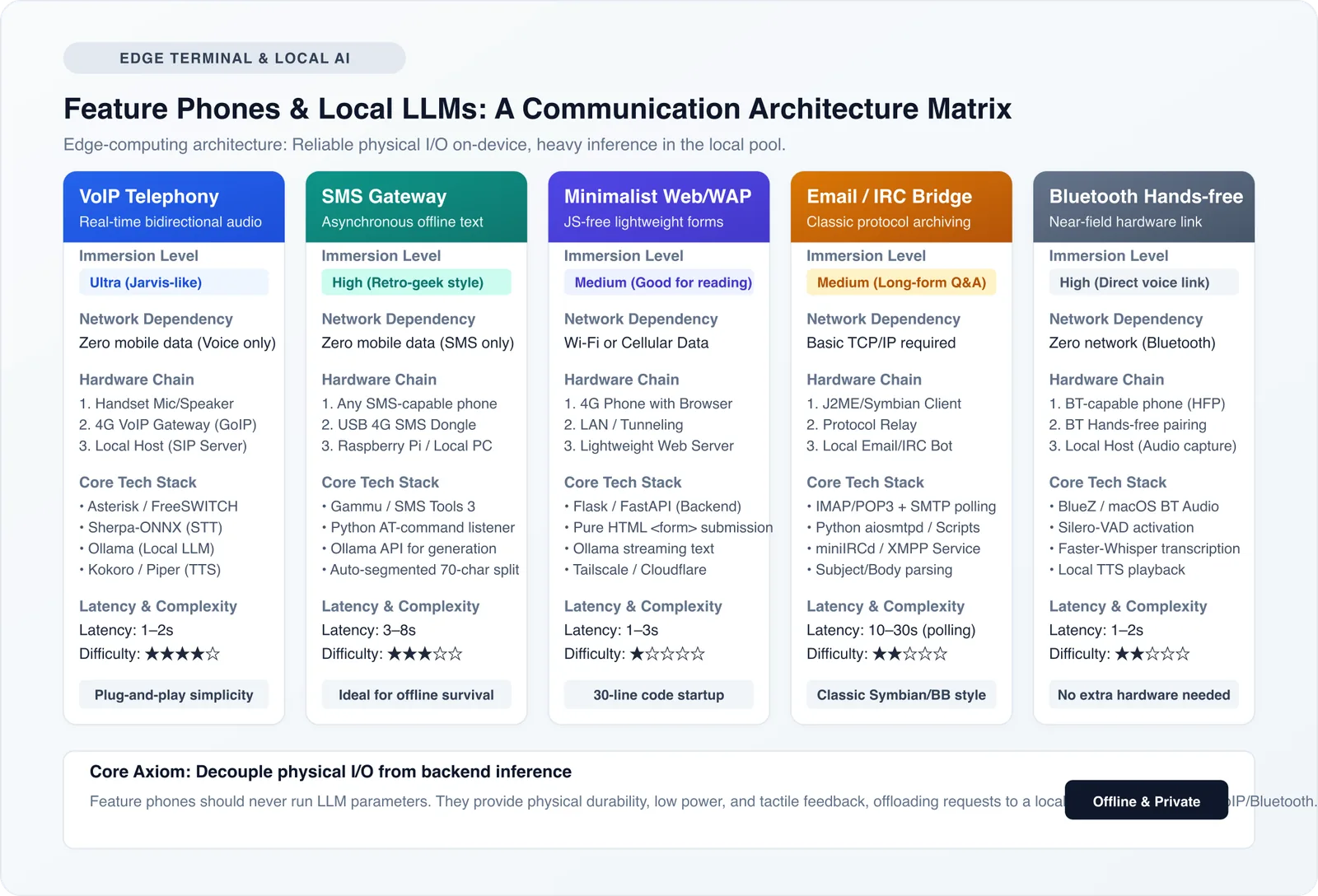
Figure 2: The five physical transport layers and software stacks linking dumbphone hardware to private inference nodes.
Architecture 1: The Cellular VoIP Trunk (Real-Time Duplex Voice)
This setup treats the feature phone as a standard telephony handset. By dialing a designated extension or residential number, the operator initiates a full-duplex, voice-to-voice session with a private local model—without requiring a cellular data connection or mobile browser.
1. Hardware Pipeline
- Handset: Any classic dumbphone with basic 2G/3G/4G voice capabilities;
- Telephony Gateway: A domestic 4G VoIP/SIP gateway (e.g., GoIP gateway, a voice-enabled Quectel/Qualcomm USB dongle, or a standard FXS/SIP analog telephone adapter);
- Host Engine: A local server, homelab NAS, or low-power x86 mini-PC on the local network.
2. Software and Audio Flow
- PBX Signaling: Run an open-source softswitch (Asterisk or FreeSWITCH) locally, registering the cellular gateway as a primary SIP trunk.
- Streaming Speech-to-Text (STT): Upon call setup, incoming PCM audio is intercepted via RTP streams and piped into a streaming inference engine (such as Sherpa-ONNX or quantized Whisper.cpp), achieving word-level transcription in 200–400 milliseconds.
- Core LLM Inference: Transcribed tokens are streamed directly into a local Ollama instance hosting quantized weights (e.g., DeepSeek-R1, Qwen2.5, or Llama 3.2).
- Text-to-Speech (TTS): The first generated sentence tokens feed into a low-latency neural synthesizer (such as Piper or Kokoro-TTS) to generate streaming audio frames.
- Backchannel Delivery: The synthesized PCM audio is transmitted back into the active SIP RTP session, outputting directly through the handset’s earpiece.
End-to-end latency can be tuned down to 1.0–2.0 seconds. The user experience mirrors a standard phone call, making it entirely intuitive in cold-weather fieldwork with gloves, for non-technical users, or during tactical hands-free operations.
Architecture 2: The Cellular SMS Gateway (Zero-Data, Asynchronous Link)
When voice bandwidth is unavailable, SMS provides a resilient, store-and-forward fallback. The user dispatches a plain-text SMS to a dedicated number, and the local host processes the query asynchronously, returning the response as chunked text messages.
1. Hardware Topology
- Terminal: Any GSM-compatible phone capable of basic short-message signaling.
- Server Receiver: A dedicated USB industrial modem (“SMS Cat” or a flashed cellular dongle with an off-the-shelf SIM running a low-cost IoT or domestic secondary cellular plan) plugged into the compute host.
2. Software Implementation
- The host executes
GammuorSMS Server Tools 3in daemon mode, monitoring the serial interface for new message notifications (+CMTI). - A lightweight daemon script extracts the message payload and sender CLI, constructs an contextual prompt, and posts it to the local inference REST endpoint.
- Chunking Logic: Standard GSM messages cap at 160 standard ASCII characters or 70 Unicode glyphs. The host script slices the model’s output on sentence boundaries and punctuation, numbering them (
[1/3],[2/3]) to prevent out-of-order cognitive friction. - Outbound fragments are queued and pushed back over the modem using standard AT commands (
AT+CMGS).
The primary asset of this topology is complete cellular data independence. In fringe signal zones where cellular base stations cannot sustain a reliable TCP/IP connection, standard SMS signaling channels consistently achieve superior transmission penetration.
Architecture 3: The Brutalist Web Interface (For Wi-Fi-Equipped 4G Handsets)
For contemporary “smart-feature” devices running stripped-down Linux environments (such as KaiOS, Mocor OS, or micro-Android) featuring Wi-Fi modules and minimal WebKit browsers (e.g., Nokia 2720, 8000 4G), plain-text HTML is the path of least resistance.
1. The Principle of Frontend Austerity
Commercial web frameworks rely on massive client-side JavaScript bundles and CSS animations that reliably crash low-memory feature phone browsers. The remedy is absolute frontend brutalism:
- A tiny Python (FastAPI or Flask) microservice serving unstyled, raw HTML.
- Exactly one
<textarea>input field and a single native<input type="submit">button. - Zero external fonts, zero third-party telemetry, zero client-side scripts.
2. Transport Execution
The handset joins the private Wi-Fi network or connects via an encrypted overlay network (such as Tailscale or WireGuard) to access the server’s local IP. Upon form submission, the backend employs HTTP Chunked Transfer Encoding, streaming raw plain text directly onto the page. The device renders the response as an uncomplicated, vertically scrollable plain document with near-zero memory footprint.
Architecture 4: Classical Protocol Relays (Email, IRC, and XMPP)
Legacy mobile operating systems (Nokia Symbian S40/S60, vintage BlackBerry OS, or early J2ME environments) contain robust, battery-efficient clients for historical internet protocols:
- Email Protocol Bridge (IMAP/POP3 + SMTP):
- The feature phone uses its native mail client to dispatch queries to a specific internal mailbox.
- A local daemon polls the inbox, extracts the subject and body, pipes them to the LLM, and dispatches the formatted response back via a local SMTP relay.
- This approach offers natural persistence, threaded message history, and support for lengthy analytic outputs.
- IRC / XMPP Chatrooms:
- J2ME hosts an extensive ecosystem of lightweight IRC clients (such as JMIRC).
- Run a minimalist IRC server (like miniIRCd) on the local host alongside an automated Python IRC bot.
- The dumbphone authenticates to the local channel and queries the bot directly, replicating a command-line REPL session within a distraction-free mobile interface.
Architecture 5: The Bluetooth Hands-Free Pipe (Zero-Investment Audio Loop)
If the dumbphone supports basic Bluetooth Headset/Hands-Free profiles (HFP/HSP) and the operational radius is restricted to a single room or vehicle, no modems or telecom gateways are required. The phone can be mapped as an external audio peripheral for the main computer.
- Configuration: The local PC or laptop runs a BlueZ audio stack configured as a “Bluetooth Hands-Free Audio Gateway.”
- Pairing: The feature phone discovers and bonds with the PC, entering an active hands-free call mode.
- Audio Routing: The host runs an active Voice Activity Detection module (such as Silero-VAD). When speech is detected from the phone’s microphone, the audio buffer is processed by local Whisper transcription, directed to the LLM, and the synthesized TTS speech is instantly played back into the phone’s earpiece over the Bluetooth audio channel.
This provides an immediate, hardware-free proof-of-concept for testing voice interactions using obsolete phones sitting in desk drawers.
Engineering Trade-offs and System Boundaries
Deploying minimalist terminals against self-hosted intelligence mandates clarity around technical trade-offs:
- Determinism Over Interface Bloat: A feature phone is not an iPad. Attempting to replicate rich markdown rendering, canvas visualization, or multi-modal token streams defeats the medium. Its purpose is high-durability, distraction-free transmission of plain human thought and structured answers.
- Air-Gapped Data Sovereignty: All five architectures run completely closed loops on your own local-area network or over direct radio frequencies. They bypass corporate API endpoints, eliminate subscription gatekeeping, and guarantee that private queries, prompts, and voice samples never touch third-party cloud infrastructure.
- Layered Degradation Strategy: In an operational digital sanctuary or off-grid homestead setup, these topologies form a graceful hierarchy: local VoIP handles high-throughput everyday vocal exchanges, while SMS remains the robust, low-bandwidth fallback when cellular data networks degrade.
Related Research & Topics
Tello Mobile eSIM
SafetyWing Nomad Insurance
* Disclosure: This post contains affiliate links. If you make a purchase through these links, V-G Journal may earn a small commission at no additional cost to you. We only recommend services we independently evaluate and trust.
FIRE and Golf:自由旅居之路
专注于为追求 FIRE 与品质生活的人群提供特惠打球权益与候鸟微度假。不持一砖一瓦,运营品质生活。