The Leverage of Failure: Inside the Maextro Brake Pedal Controversy and the Market's Instant Verdict
A deep dive into Dongchedi's emergency braking test of the Maextro V800, which triggered a limit-down crash for JAC Motors. This analysis unpacks the strategic timing of the disclosure, the mechanics of market panic, and the eventual path to resolution across engineering, PR, and regulatory dimensions.

Executive Summary: On October 8, 2026—the first trading day following China’s Golden Week holiday—automotive vertical platform Dongchedi released a high-stakes emergency braking test of the Maextro V800, an ultra-luxury MPV co-developed by Huawei’s Harmony Intelligent Mobility Alliance (HIMA) and JAC Motors. During the test, the brake pedal brackets of three separate vehicles fractured under emergency braking at 100 km/h, rendering the foot brakes entirely useless. The video triggered immediate market panic. Shares of JAC Motors (600418.SH) plummeted to their daily 10% downward limit, wiping out over 6.2 billion RMB in market value in a single day. This black swan event, bridging mechanical engineering, media warfare, and secondary capital markets, thrusts both the credibility of independent testing platforms and the safety redundancies of high-end electric vehicles (EVs) into the spotlight.
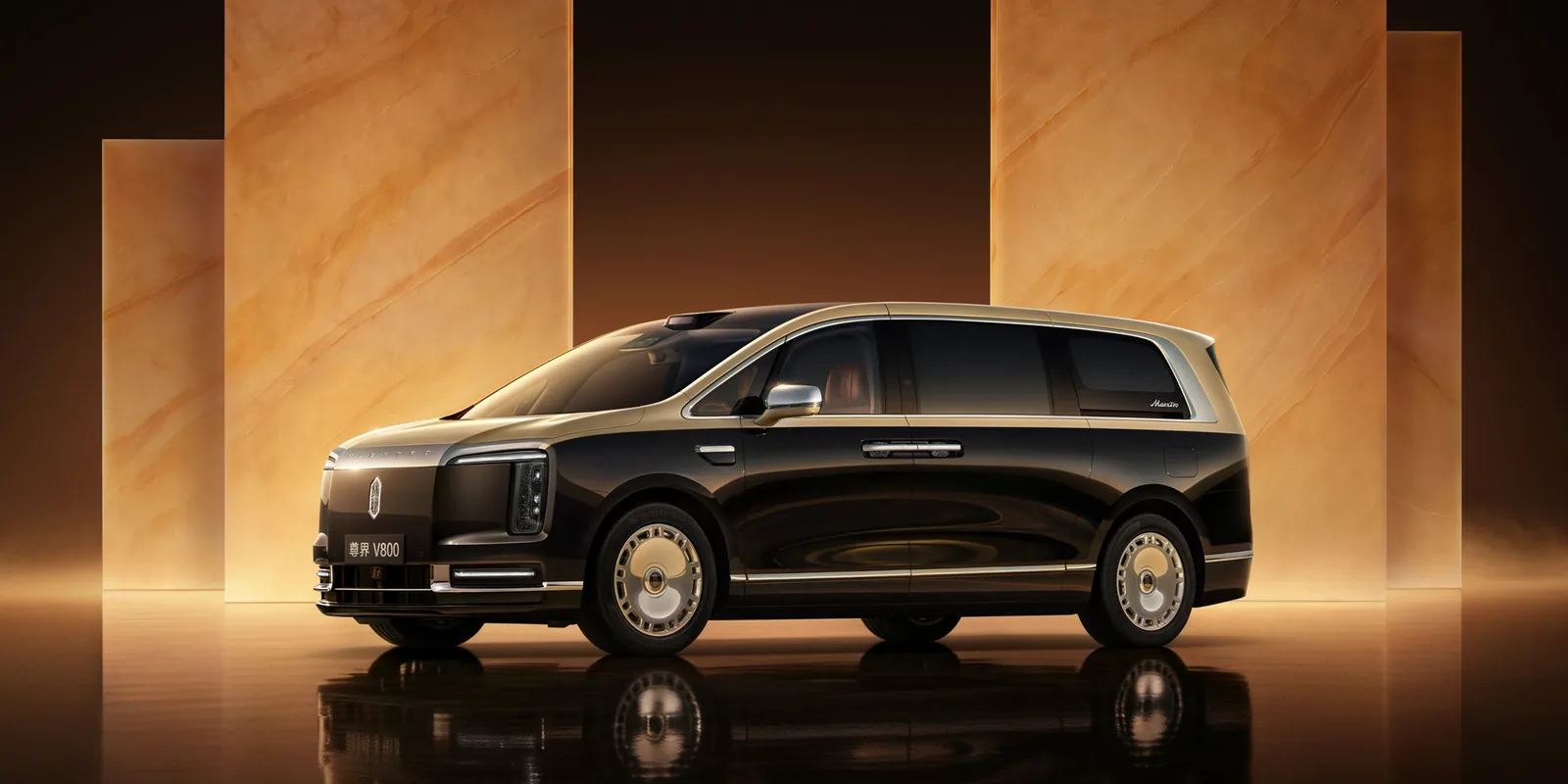
Figure 1: The Maextro V800, an ultra-luxury large MPV under Huawei’s HIMA ecosystem.
I. Why Unleash the News at the A-Share Opening? Attention Leverage and Defensive Firewalls
Dongchedi’s decision to drop this explosive test report precisely as the market opened on the first post-holiday trading day was no coincidence. It was a calculated maneuver optimized for platform distribution, legal self-defense, and forcing the hand of a massive automotive manufacturer.
1. Bypassing the Holiday Attention Sink to Capture the Information Hub
During major national holidays, public attention is highly fragmented, scattered across travel, leisure, and entertainment. Serious business, financial, and automotive reporting typically sees its lowest engagement of the year. Releasing a highly technical, critical report during this period risks having it diluted by lifestyle content, failing to generate cross-industry resonance.
The first working day after a long holiday, however, is a high-concentration window when the business world restarts its information engines. Institutional investors, automotive executives, supply chain managers, and mainstream tech media all return to their desks simultaneously. Introducing a structural safety controversy surrounding a million-RMB flagship vehicle at this exact moment guarantees immediate, top-tier placement across all major news aggregators.
2. Rigorous Testing Protocols and the Legal Compliance Window
The Maextro brand, co-created by Huawei and JAC Motors, carries the strategic weight of China’s premium EV ecosystem pushing into the 700,000 to 1,000,000 RMB ultra-luxury segment. Any independent testing platform taking on an entity backed by such formidable PR and legal machinery must ensure its evidence chain is bulletproof.
Dongchedi claimed to have procured three separate units from different production batches, equipping them with pedal-force sensors and high-speed cameras. The process of conducting multiple rounds of physical tests, calibrating sensor data, editing multi-angle footage, and passing internal legal compliance reviews naturally requires a rigorous preparation window. Finalizing this pipeline over the holiday to prepare for a post-holiday launch is a highly logical operational sequence.
3. Financializing Technical Flaws to Break Corporate Inertia
In the traditional automotive PR playbook, manufacturers handle vehicle defects exposed by vertical media through strategic delay. Standard responses like “we are conducting an internal investigation” or “please refer to official channels for updates” are deployed to cool down public interest, letting the controversy decay naturally within the news cycle.
By dropping the bombshell during active A-share trading hours, Dongchedi instantly translated a mechanical engineering dispute into tangible market-cap destruction. The rapid limit-down of JAC Motors forced the listed company’s board, R&D teams, and brand PR to abandon their usual foot-dragging. They were forced to deliver concrete technical explanations and mitigation strategies on the very same day.
II. Short-Selling Allegations: Compliance Boundaries and the Leverage of Influence
As JAC Motors hit its downward limit, allegations that the media platform was colluding with external financial institutions to short the stock spread rapidly. To understand this dynamic, one must strictly separate illegal market manipulation from the organic market panic generated by high-impact reporting:
| Dimension | Malicious Short-Selling Hypothesis | Industry Reality & Structural Analysis |
|---|---|---|
| Financial & Regulatory Risk | Building short positions beforehand to profit off negative reports. | A-share securities lending is subject to strict, look-through regulatory oversight. The compliance and criminal risks for a major platform colluding with external funds to short a single stock are prohibitively high. |
| Strategic Objectives | Capturing short-term capital gains from stock price fluctuations. | Establishing a reputation as an “independent arbiter free from OEM capital control,” breaking through the noise of homogenized, paid-for car reviews. |
| Market Impact | Precision strike on liquidity, triggering panic selling. | Releasing highly damaging empirical evidence during morning trading hours inevitably triggers a stampede, creating market shocks similar to an activist short-seller report. |
1. The Financial and Legal Reality: Highly Unlikely to Be Institutional Short-Selling
Under the current regulatory framework of the Chinese securities market, any anomalous short-selling or algorithmic trading is monitored in real-time by exchanges. Dongchedi, as a core automotive business unit of ByteDance, relies on long-term platform independence and eventual capital monetization. Directly engaging in market manipulation or insider trading would carry legal risks that dwarf any short-term financial gain.
2. The Business Model: The Leverage of Influence
As major automakers increasingly build their own direct-to-consumer media channels and executive personal brands, traditional automotive portals face intense commercial pressure. Their credibility has long been eroded by years of paid advertorials and soft reviews.
By exposing a physical failure in a million-RMB flagship vehicle backed by a tech giant, Dongchedi’s core objective was to cement its position as a hard-nosed, independent referee that refuses to bow to corporate power. Rebuilding commercial credibility often requires a highly disruptive, symbolic event.
Even if the primary motive was not financial arbitrage, releasing the video during active trading hours acted as a “black swan trigger,” unleashing a liquidity panic comparable to a Western activist short-seller’s campaign.
III. The Endgame: How Will the Multi-Party Game Resolve?
Looking at historical precedents of automotive safety controversies and corporate crisis management, this standoff is likely to resolve through a three-pronged approach: pragmatic technical patches, face-saving PR, and forced industry-wide redundancy.
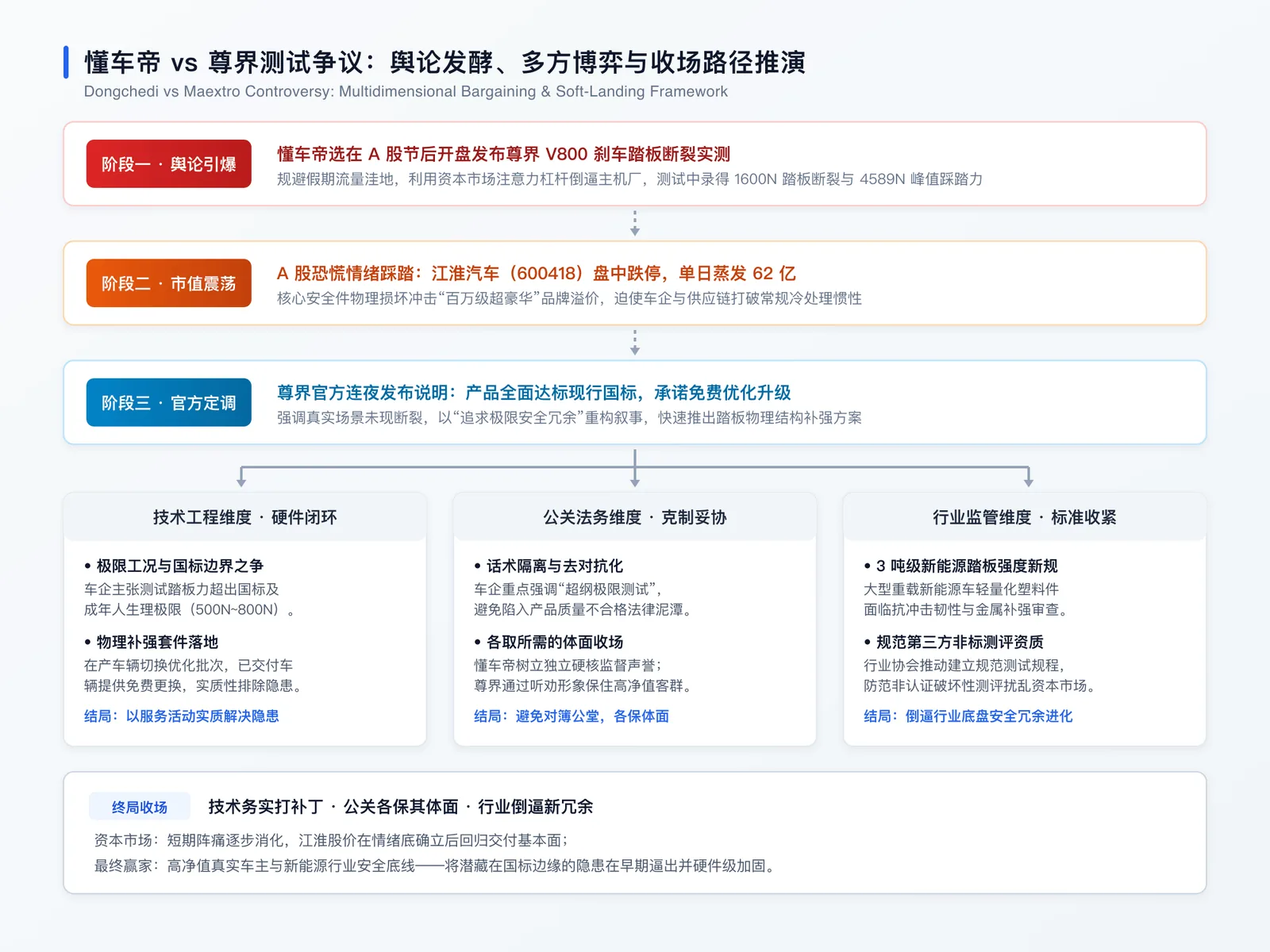
Figure 2: The evolutionary path and multi-party game theory of the Maextro brake pedal controversy.
1. Engineering and Product: “Active Free Upgrades” to Eliminate the Hazard
This is the most predictable engineering resolution:
- Framing the Extreme Condition: In its rapid response, Maextro’s engineering team will likely define the test conditions as “extreme and non-standard.” While national standards (such as GB/T 40664-2021) require pedal assemblies to withstand forces covering human physiological limits (typically 500N to 800N), Dongchedi’s test recorded transient forces of 1,600N, with peaks hitting 4,589N. By emphasizing that the vehicle met all regulatory baselines, the manufacturer protects its legal standing.
- Physical Reinforcement to Defuse Anxiety: The official response will likely promise to “optimize the component design and offer free upgrades to existing owners.” Future production batches will feature reinforced structures, and delivered vehicles will have the parts replaced via the service network. Framing this as a proactive, safety-first customer service action turns a quality hazard into a narrative of a “responsive, responsible” brand.
2. PR and Legal: Restraint and Compromise Over Litigation
Neither side has an interest in a protracted legal battle:
- The manufacturer cannot easily dispute high-definition footage of three consecutive physical failures. Launching an aggressive defamation lawsuit would only keep the phrase “brake failure” in the headlines, damaging the ultra-luxury brand’s reputation far more than any courtroom victory would salvage.
- Dongchedi has already achieved its goal of proving its independent, hard-hitting credentials. Its next step will be constructive follow-ups—monitoring the OEM’s fixes and re-testing the reinforced parts, completing the loop of “identifying a flaw, driving optimization, and closing the safety loop.”
3. Industry and Regulatory Spillovers: Forcing New Chassis Redundancy Standards
The ripples from this test will fundamentally alter design parameters for heavy, high-end electric vehicles:
- Re-evaluating Material and Strength Standards: To pursue extreme lightweighting and minimize lower-limb injuries in crashes, the industry has increasingly adopted modified engineering plastics (like PA/PP) for brake pedal brackets. However, for heavy EVs weighing near or over 3 tons, this incident will force R&D teams to re-evaluate the fatigue and brittle fracture margins of lightweight components under violent impact.
- Standardizing Third-Party Testing: Non-standard destructive testing of critical chassis safety components can instantly wipe out billions in market value. Industry associations and regulators may push for more standardized protocols for independent testing, requiring public destructive tests to adhere to strict, uniform force calibrations and operating procedures to prevent chaotic market shocks.
4. Capital Markets: Short-Term Panic Clearing, Returning to Fundamentals
JAC Motors’ limit-down was a knee-jerk reaction to a perceived threat to its ultra-luxury growth narrative. With a clear engineering fix and free replacement program announced within hours, and no actual road accidents reported, the panic will subside. The stock price should stabilize and return to tracking actual production and delivery fundamentals.
IV. Conclusion: The Virtuous Cycle of Forced Redundancy
The controversy over the Maextro brake pedal will ultimately resolve through a combination of pragmatic technical patches, face-saving PR, and forced industry-wide redundancy.
For Maextro, the cost of re-tooling and retrofitting is a small price to pay to eliminate a critical vulnerability early in its lifecycle. For Dongchedi, its reputation as an uncompromising watchdog is cemented. The ultimate winners are Maextro’s owners and the broader Chinese EV supply chain, which has successfully flushed out an extreme safety risk lurking in the blind spots of national standards and aggressive lightweighting before mass deliveries began.
Related Research & Topics
Tello Mobile eSIM
SafetyWing Nomad Insurance
* Disclosure: This post contains affiliate links. If you make a purchase through these links, V-G Journal may earn a small commission at no additional cost to you. We only recommend services we independently evaluate and trust.
FIRE and Golf:自由旅居之路
专注于为追求 FIRE 与品质生活的人群提供特惠打球权益与候鸟微度假。不持一砖一瓦,运营品质生活。