The Fatalism Trap: Independent Auditing and the Ethics of Risk Mitigation
Popular discourse often misuses the boundary principle of 'non-interference with karma' to justify passive fatalism. By analyzing crash tests, physical teardowns, and information transparency, this essay deconstructs the paradox of risk-mitigating professions and reveals how independent auditing serves as the bedrock of modern commercial ethics.

Core Insight: Popular discourse frequently invokes the maxim “do not interfere with another’s karma” as an interpersonal defense mechanism. Yet, when applied indiscriminately to the modern division of labor, this principle degenerates into a crude form of fatalism. When third-party platforms like Dongchedi expose industrial realities through extreme cold-weather endurance runs, rigorous crash tests, and destructive teardowns, are they improperly meddling in fate—or are they using empirical data to calibrate a market warped by capital? Deconstructing this premise goes to the very core of civilization’s social contract.
In recent years, pop psychology and vulgarized esoteric circles have popularized “non-interference in others’ karma” as a ubiquitous refrain. Originally meant to encourage healthy personal boundaries and prevent savior complexes, this crude defense mechanism has been amplified across social media into a posture of indifferent fatalism. The logic dictates that if an event is unfolding along its natural trajectory, any intervention—whether to correct course, mitigate disaster, or pierce deceptive marketing—is dismissed as “improperly assuming another’s karmic burden.”
A thought-provoking question emerges: If no intervention is permissible, does a third-party testing platform—which conducts physical crash tests and teardowns, shielding thousands of families from hidden engineering flaws—improperly “interfere with karma”? Pushing this fatalistic logic to its conclusion, what critical professions in modern society would be left standing?

Figure 1: Physical response of occupant protection systems during high-speed laboratory crash testing.
The Paradox of Mechanistic Fatalism: When Risk-Mitigation Professions Become “Illegitimate Construction”
If every professional act that dismantles an information black box, prevents a catastrophe, or halts a natural physical trajectory is branded as “karmic interference,” the division of labor that humanity spent centuries building collapses instantly. Under this doctrine, society’s most essential risk-mitigation functions become absurd overreaches:
| Professional Sphere | Natural Physical/Biological Trajectory | Essence of Professional Intervention | Absurd Categorization Under Vulgar Fatalism |
|---|---|---|---|
| Clinical Medicine & Emergency Care | Cellular mutation leading to tumors; coronary plaque rupture causing fatal cardiac arrest | Targeted pharmacological disruption of pathology; surgical intervention restoring life | “Forcibly interrupting the natural metabolic cycle of mortal flesh” |
| Firefighting & Emergency Rescue | Electrical aging igniting blazes; gravity and asphyxiation causing drowning | Breaching security doors to suppress fires; diving to rescue drowning victims | “Arbitrarily blocking the natural release of physical disasters” |
| Criminal Justice & Law Enforcement | Violent offenders executing assaults; illegal transfer of illicit assets | Detective investigations and arrests; judicial sentencing; anti-fraud wire interception | “Obstructing the natural karmic settlement between perpetrator and victim” |
| Industrial Quality Control & Safety | Structural fatigue in bridge steel; overpressurized vessels exploding | Flaw detection via non-destructive testing; issuing halt-work remediation notices | “Depriving the public of their opportunity to endure probabilistic calamity” |
| Meteorological Warning & Flood Control | Severe atmospheric convection causing flash floods and mudslides | Doppler radar monitoring; preemptive evacuation of vulnerable riverbank communities | “Improperly evading the natural discharge of cosmic/environmental energy” |
The absurdity of this reasoning is plain: if altering the probability of someone escaping harm constitutes “interfering with karma,” a civilized society could legitimately retain only two occupations—the mortician who verifies the casualty list, and the fortune teller who counsels the victim to accept their fate in silence.
As explored in our analysis on the boundaries of cause-and-effect and compassionate aid, classical philosophy never framed cause and effect as a rigid, one-way track, but as a dynamic web of interdependent conditions (pratītyasamutpāda). Falling into peril is the seed (cause); the arrival of a tool or a warning signal is the condition (environment); the resulting survival is the final outcome (fruit). Providing rescue or early warning is an organic, legitimate addition to the network of conditions, not a supernatural disruption overriding natural law.
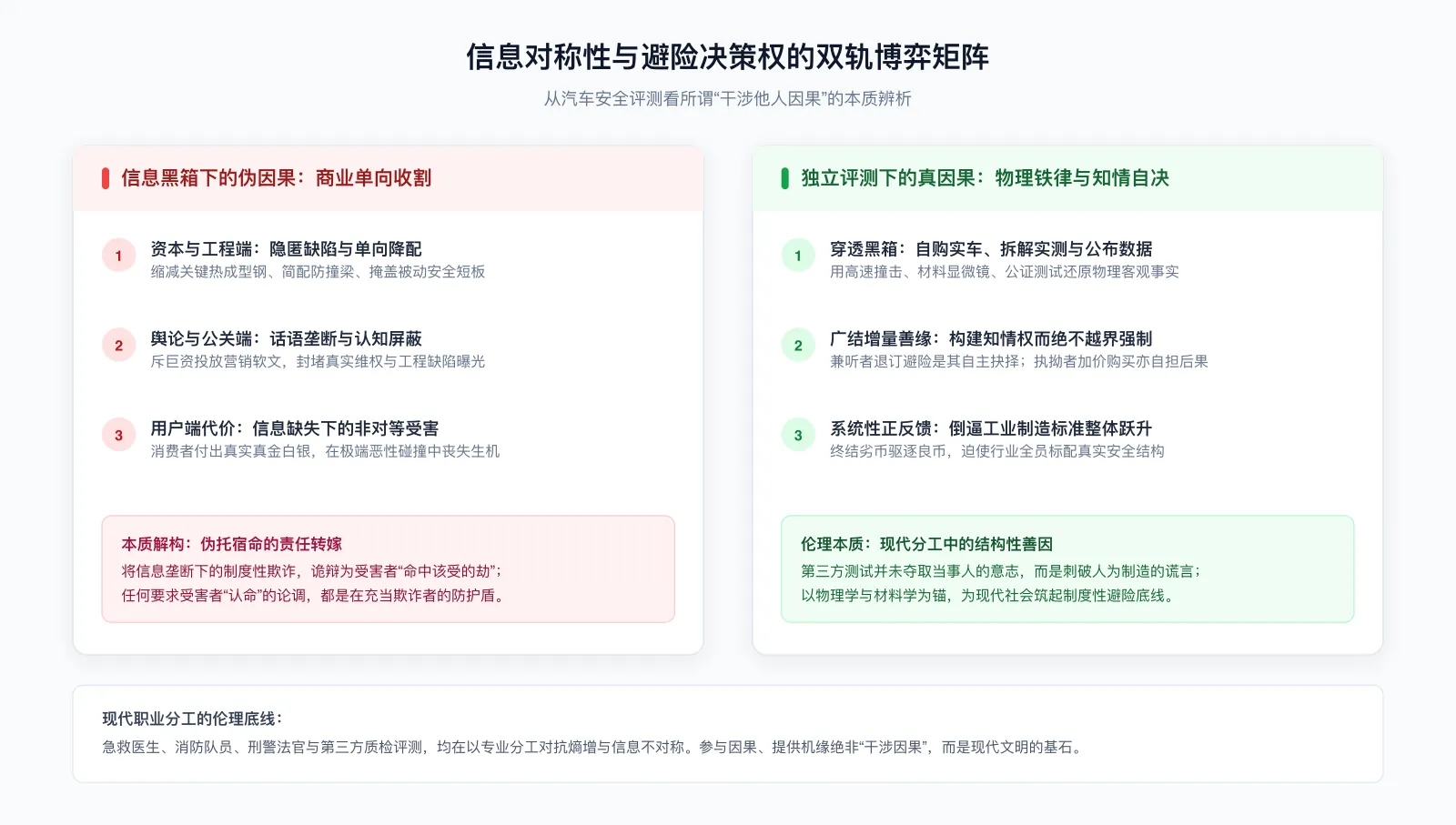
Figure 2: The dual-track game matrix of information symmetry and risk-mitigation decision rights.
Pseudo-Karma vs. True Karma: What Does Independent Auditing Actually Pierce?
To locate the ethical coordinates of third-party evaluation, one must separate two distinct dynamics often conflated in commercial discourse.
The “Pseudo-Karma” Fabricated by Commercial Monopolies
In legacy markets lacking independent verification, information flows unidirectionally. To maximize profit margins, a manufacturer might quietly cut costs on obscure components—reducing the structural integrity of rear crash beams, lowering the yield strength of A-pillar thermoformed steel, or downgrading airbag deployment algorithms—while redirecting hundreds of millions into PR campaigns, opulent showrooms, and narrative spins about “fortress-level safety.”
When a working-class family spends years of savings on a vehicle marketed as exceptionally safe, only for the passenger cell to collapse in a crash, this tragedy is not an unavoidable “karmic debt” written in the stars. It is commercial fraud enabled by engineering corners and information asymmetry. This fragile, lethal outcome is an artificial artifact forged by corporate PR and subpar engineering.
Just as the absence of information intermediaries turns financial markets into lemon markets (as discussed in independent audit verification and financial institution accountability), a market lacking rigorous third-party verification inevitably devolves into a race to the bottom—where victory goes to whoever hides defects most convincingly.
“True Karma”: Physical Laws and Informed Self-Determination
When platforms like Dongchedi enter the automotive sector, they do not rely on moralizing rhetoric; they rely on empirical physical tools. They purchase off-the-line mass-production vehicles with their own capital, place them in accredited crash laboratories, and drive them into rigid barriers under standardized conditions (e.g., 60 km/h or 80 km/h offsets) in front of high-speed cameras and precision sensors. They then use plasma cutters, welding torches, and ultrasonic thickness gauges to tear the vehicles down from exterior skin to structural core.
The Unforgiving Nature of Physics: Whether a steel plate possesses a tensile strength of 1500 MPa or is merely a cheap stamping piece, whether spot welds shear cleanly under stress or hold firm, whether crash beam coverage effectively mitigates a 25% small-overlap impact—these reality checks never yield to corporate press releases. They answer solely to material mechanics.
Throughout this process, the testing platform deprives no consumer of their agency:
- By publishing objective test metrics, high-frame-rate footage, and material analyses, the platform allows consumers to cancel orders and switch to safer alternatives—a positive outcome stemming from informed decision-making.
- Conversely, a consumer may dismiss the data, claim the tests are biased marketing, pay a premium for their preferred brand, and shoulder the mechanical risks themselves—a closed loop of personal choice and consequence.
In this light, independent evaluators do not decide for the consumer. Their entire value proposition lies in shattering the information black box built by corporate PR and returning cold physical reality back to the decision-maker.
Who Weaponizes the Myth of “Non-Interference”?
In the deep game theory of modern commercial society, the paradox of “non-interference” lies in how readily it is weaponized by entrenched interests.
Whenever an action that exposes false advertising, uncovers engineering shortcuts, or blows the whistle on systemic risk is vilified as “troublemaking” or “disrupting the ecosystem,” the ultimate beneficiary is always the architect of the black box.
- Cost-cutting manufacturers eagerly foster this narrative: if consumers attribute structural failures to personal misfortune or “bad luck,” the manufacturer smoothly avoids recall costs and transforms safety hazards into quarterly profit margins.
- Ponzi operators and multi-level marketing schemes fear professional fraud-busters and whistleblowers above all else. Once a predatory structure is exposed early, the fragile liquidity bubble bursts. In the operator’s narrative, the whistleblower is painted as the villain who “destroyed the investors’ financial dreams.” As seen in the game theory of consumer rights advocacy and professional fraud hunting, those who pierce asymmetrical structures face the fiercest moral character attacks.
Weaponizing “non-interference” shifts the responsibility of institutional misconduct onto isolated, defenseless victims. It seeks to silence skilled professionals whenever others are deceived or endangered, creating the ultimate sanctuary for bad actors.
The True Boundary: Institutional Good Karma vs. Overstepping Substitution
A clear boundary exists between the principle of healthy non-interference and the risk-mitigation functions of modern professional labor.
The real boundary lies in whether an intervention deprives the individual of their agency or improperly assumes consequences that belong to them:
- If an adult succumbs to destructive habits and a bystander repeatedly clears their debts without requiring self-reflection, allowing them to sink deeper in a penalty-free vacuum, that is classic overstepping substitution. It severs the feedback loop between action and consequence.
- However, if someone is walking in the dark toward an open well, and a bystander shines a spotlight and posts a warning sign at the crossroads, this is not overstepping—it is providing the condition for risk avoidance. Whether the traveler heeds the sign or leaps into the abyss remains entirely their choice.
Modern civilization evolved from a primitive jungle into a collaborative society because humanity constructed a vast framework of institutionalized constructive conditions through specialized labor. Physicians combat cellular entropy; firefighters contain the random destruction of fire; legal professionals bound arbitrary power through procedural justice; and independent testing bodies shatter the information barriers of capital.
They do not violate cause and effect. Their very existence is the sturdiest safety airbag humanity has engineered against the cold randomness of nature and the quiet calculations of commercial deceit.
Related Research & Topics
Tello Mobile eSIM
SafetyWing Nomad Insurance
* Disclosure: This post contains affiliate links. If you make a purchase through these links, V-G Journal may earn a small commission at no additional cost to you. We only recommend services we independently evaluate and trust.
FIRE and Golf:自由旅居之路
专注于为追求 FIRE 与品质生活的人群提供特惠打球权益与候鸟微度假。不持一砖一瓦,运营品质生活。