The Quicksand Class: Governance Logic and the Fragility of China’s Middle Income
A sociological deconstruction of China’s 400-million-strong middle income group, analyzing why they function as a 'quicksand layer' rather than a stable bourgeoisie, and how governance logic prioritizes economic extraction while strictly suppressing horizontal organization.

Executive Summary: A common intuition persists that China’s social structure is bifurcated into a privileged elite and a struggling underclass, with the state intentionally suppressing the middle class to ensure regime stability. While this captures the pervasive anxiety and lack of agency felt by the modern middle-income group, it confuses the state’s desire for wealth generation with its fear of organized dissent. China does not lack a middle class in economic terms; rather, its institutional evolution has systematically prevented the emergence of a modern bourgeoisie—one defined by independent property rights and the capacity for horizontal networking. Understanding this “quicksand” nature is the prerequisite for navigating wealth redistribution and individual defense in the current era.
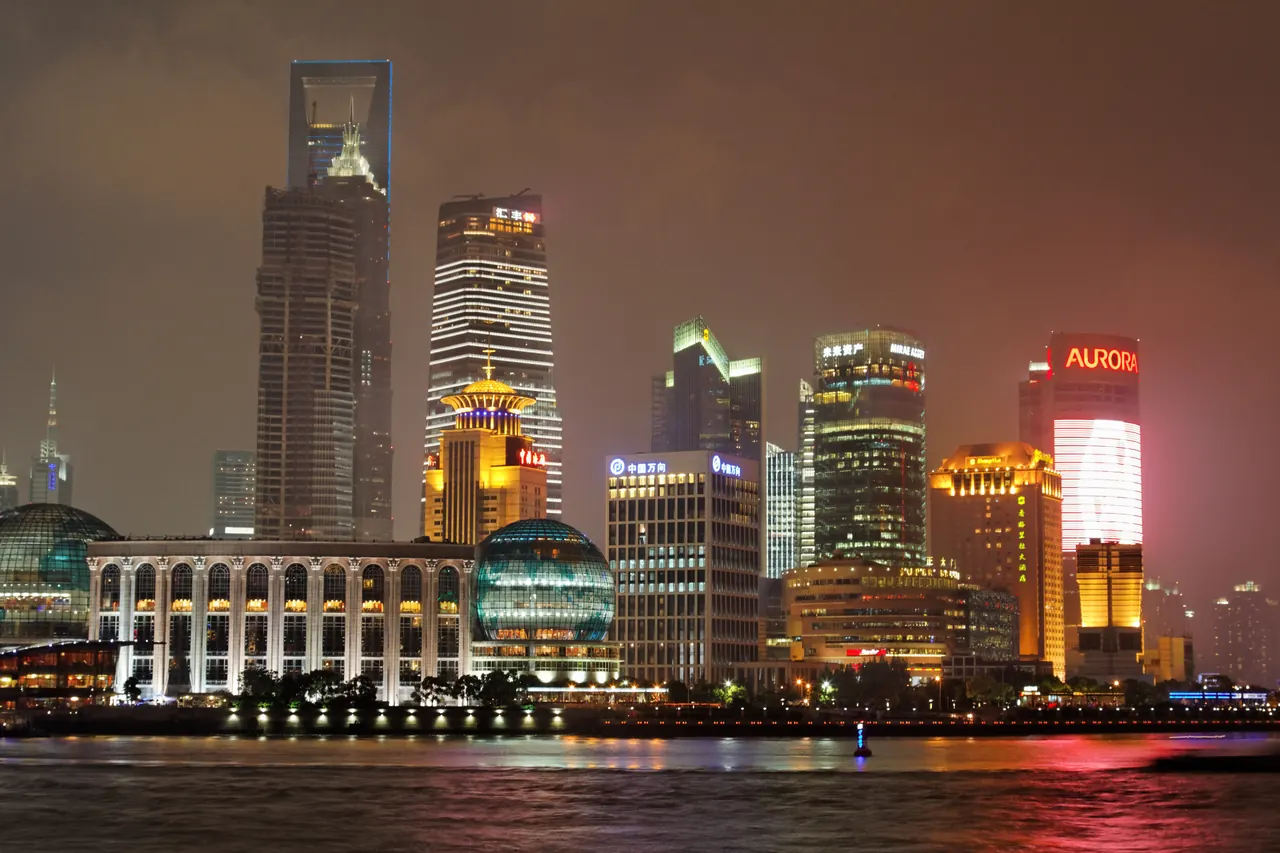
Figure 1: The Lujiazui skyline, Shanghai—a quintessential symbol of urban economic concentration.
I. The Illusion of Class: The 400-Million-Strong “Quicksand Layer”
The assertion that “a true middle class does not exist in China” resonates deeply in public discourse. Yet, from the perspective of macroeconomic statistics and material consumption, this claim is factually incomplete.
By the metrics of the World Bank, the OECD, and China’s National Bureau of Statistics, China possesses a middle-income group of approximately 400 million people (defined by an annual household income of 100,000 to 500,000 RMB). This cohort includes civil servants, academics, tech-sector professionals, medical and legal practitioners, and small-to-medium enterprise owners. Their consumption—from automobile ownership to higher education and tourism—has been the bedrock of China’s domestic demand for three decades.
Why, then, do these individuals feel a profound lack of class security, often identifying more closely with the precarious underclass than with a stable middle class?
This disconnect is not mere psychological fragility; it is rooted in the institutional realities of property dependency and asymmetric defense.
| Dimension | Modern Autonomous Bourgeoisie | Institutional “Quicksand” Middle Class |
|---|---|---|
| Foundation | Permanent ownership of land and capital, protected by constitutional law | Assets tied to 70-year land-use rights and administrative concessions |
| Defense | Independent judicial review and systemic legal self-defense | Minimal leverage against administrative intervention or cross-jurisdictional enforcement |
| Wealth Nature | Independent of economic cycles | Dependent on administrative licenses, industry deregulation, and macro-liquidity |
| Social Form | Horizontal networking via guilds, unions, and autonomous communities | Atomized and exposed to the discretionary power of the state |
As explored in our analysis of Public Ownership and Property Defense, private property is not merely a contract; it is a defensive barrier against arbitrary state seizure. The wealth structure of China’s middle-income group rests on two fragile pillars: urban real estate and high-salary roles in “windfall” sectors (tech platforms, education, finance).
This structure suffers from two fatal flaws:
- Lack of Ultimate Ownership: Urban real estate is essentially a long-term lease on state-owned land. Its valuation is tethered to local government monopoly and credit cycles. When the macro-environment shifts, the “financial accelerator” effect—as seen in the US-China Mortgage System Comparison—causes the balance sheets of highly leveraged middle-class families to collapse.
- Homogenized Legal Vulnerability: Without independent judicial relief, a tech architect earning 50,000 RMB a month has no more institutional self-defense than a factory worker earning 5,000 RMB when faced with an administrative investigation or a sudden industry crackdown.
The Chinese middle class is, therefore, a “quicksand layer”: during economic upturns, they mistake globalization dividends and credit leverage for permanent class ascension. When the cycle turns, their fragile defenses vanish, causing them to plummet back toward the baseline of economic precarity.
II. The Governance Logic: Thirst for Capital, Fear of “Horizontal Networks”
If the middle class’s sense of oppression is real, the theory that the state “deliberately destroys the middle class to maintain power” is a misreading of political economy.
1. No Motive for Destruction
In a complex industrial society, a “dumbbell-shaped” social structure (a tiny oligarchy versus a massive, impoverished underclass) is a powder keg. A “middle-heavy” olive-shaped distribution is not only a strategic goal for social stability but a fiscal necessity:
- Fiscal Backbone: The middle class is the primary contributor to personal income tax, VAT, and social security funds.
- Consumption Engine: Domestic demand for high-value services, EVs, and healthcare relies entirely on middle-class spending power.
- Industrial Upgrading: Strategic sectors like AI and semiconductors require a highly educated, professional technical class.
The state has no incentive to destroy this group; it has spent decades actively fostering its expansion.
2. The Real Target: Horizontal Organization
The state does not fear the wealth in the middle class’s pockets; it fears the “organized voice” and “class consciousness” that might emerge from it.
In classical political theory, modernization is accompanied by the rise of civil society. As Barrington Moore noted, the growth of a commercial middle class leads to demands for property rights, judicial independence, and public accountability, manifested through guilds, unions, and independent media. This creates a “middle society” between the state and the family.
The Chinese governance model, however, relies on vertical administrative penetration:
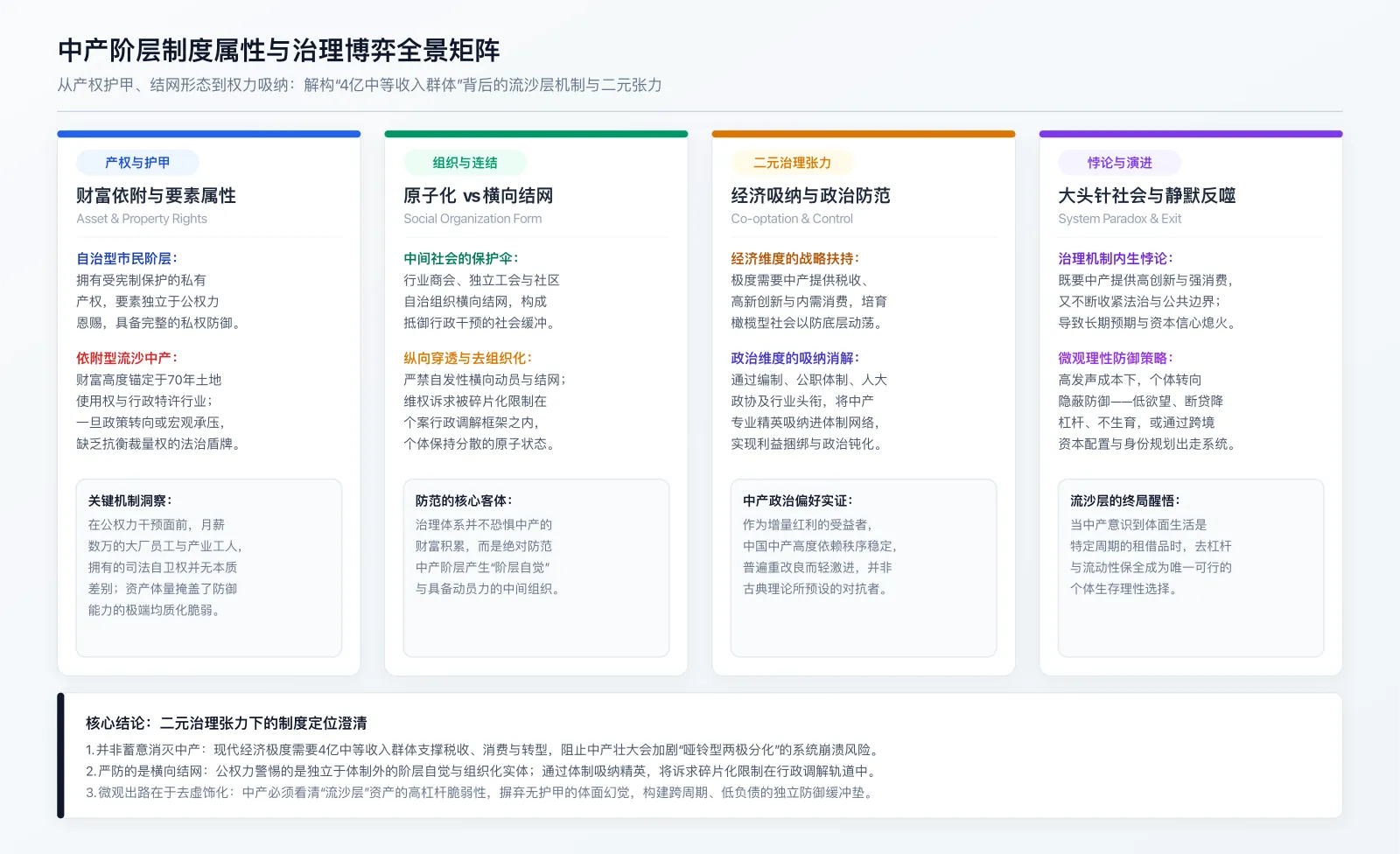
Figure 2: The Governance Matrix of the Middle Class.
- Vertical Dependency vs. Horizontal Connection: The state tolerates millions of individual taxpayers and homeowners but forbids them from forming cross-industry, cross-regional entities to address public grievances (e.g., real estate defaults, environmental issues, education equity).
- Fragmented Administrative Mediation: When the middle class suffers, the state’s response is to atomize the grievance. By handling issues through local petitions or neighborhood committees, the state prevents individual complaints from coalescing into systemic legal or political challenges.
- Clearing the “Middle Ground”: The systematic compression of NGOs, public-interest lawyers, and independent industry associations is not an economic attack; it is the removal of the “glue” that could turn atomized individuals into a collective force.
3. Co-optation over Confrontation
The state’s strategy is co-optation. By integrating top professionals into the civil service, state-owned enterprises, or consultative bodies like the CPPCC, the state ensures that the most capable members of the middle class remain stakeholders in the existing order, favoring “order and moderate reform” over radical confrontation.
III. The “Pin-Head” Social Structure and the Paradox of Silence
The contemporary Chinese social structure is not an “olive” or a “pyramid,” but a “pin-head” (or thumbtack) structure:
The Three-Tiered Pin-Head Structure
- The Head (Privileged Elite): Monopolizes core resource allocation, credit gates, and administrative force. Small in number, absolute in control.
- The Suspended Layer (Quicksand Middle Class): Relies on professional skills and high-intensity labor. Lacks land rights and institutional armor; lacks upward access to decision-making and downward safety nets.
- The Needle (The Underclass): Bears the heaviest labor and the highest structural pressure in education, healthcare, and retirement.
This structure maximized capital accumulation for decades, but now faces an irreconcilable paradox:
1. The Incentive Mismatch
High-quality economic growth requires innovation, long-term capital expenditure, and high-trust consumption. These behaviors require a bedrock of private property protection and rule transparency. When the state expands its intervention radius to mitigate political risk, it inadvertently destroys the confidence required for the very economic activities it seeks to promote.
2. Rational Defensive Silence
When the cost of public advocacy becomes prohibitively high, the rational strategy for the middle class is not resistance, but hidden defensive withdrawal:
- Liquidity Contraction: Refusing to take on 30-year mortgages, paying down debt, and slashing non-essential consumption.
- Demographic Exit: Choosing to delay or forgo childbirth to avoid becoming “systemic fodder.”
- Geographic/Asset Flight: Accelerating the transfer of assets and seeking offshore status to decouple from local risks.
This “non-cooperation as resistance” is the ultimate governance cost.
IV. Conclusion: Escaping the Class Illusion
The popular notion that the state is “deliberately destroying the middle class” is a misdiagnosis. The state is not destroying the middle class; it is maintaining a system that prevents the middle class from ever becoming a civil society.
For the individual, breaking the “middle-class” identity myth is the first step toward survival. In an era of professional depreciation and cyclical volatility, “decency” is not independence, and high income is not asset security.
The only true armor in a quicksand society is the preservation of liquidity, the reduction of debt, and the cultivation of portable, cross-border capabilities. To survive the shifting sands, one must stop betting one’s life on the stability of a system that treats the middle class as a temporary, extractable resource.
Related Research & Topics
Tello Mobile eSIM
SafetyWing Nomad Insurance
* Disclosure: This post contains affiliate links. If you make a purchase through these links, V-G Journal may earn a small commission at no additional cost to you. We only recommend services we independently evaluate and trust.
FIRE and Golf:自由旅居之路
专注于为追求 FIRE 与品质生活的人群提供特惠打球权益与候鸟微度假。不持一砖一瓦,运营品质生活。