The Forty-Year Incubation: You Benchang’s Counter-Cyclical Life Strategy
Publicly mocked as a forty-year 'Gap Year' between his two career peaks, You Benchang’s life from age 52 to 90 reveals a profound strategy of artistic incubation. His journey—marked by selling assets to fund theater and pausing fame to care for the sick—is a masterclass in long-cycle vitality and spiritual resilience.

Curator’s Note:
On September 24, 2026, the legendary performance artist You Benchang passed away in Beijing at the age of 93.In the wake of his passing, a poignant meme has resurfaced: the notion that You Benchang spent a nearly forty-year “Gap Year” between his 1985 breakout in Ji Gong and his 2023 resurgence as “Uncle” (Ye Shu) in Blossoms Shanghai. This “gap” spanned from age 52 to 90.
In a hyper-accelerated society governed by algorithms—where the prevailing narrative demands “financial freedom by thirty, obsolescence by thirty-five, and irrelevance by retirement”—any period spent outside the spotlight is reflexively labeled as “falling behind.”
However, a forensic look at You Benchang’s trajectory reveals that these four decades were not a passive void. Instead, they represented a rigorous, counter-cyclical incubation of life force, where worldly assets and mental energy were pushed to their limits to secure a spiritual breakthrough.
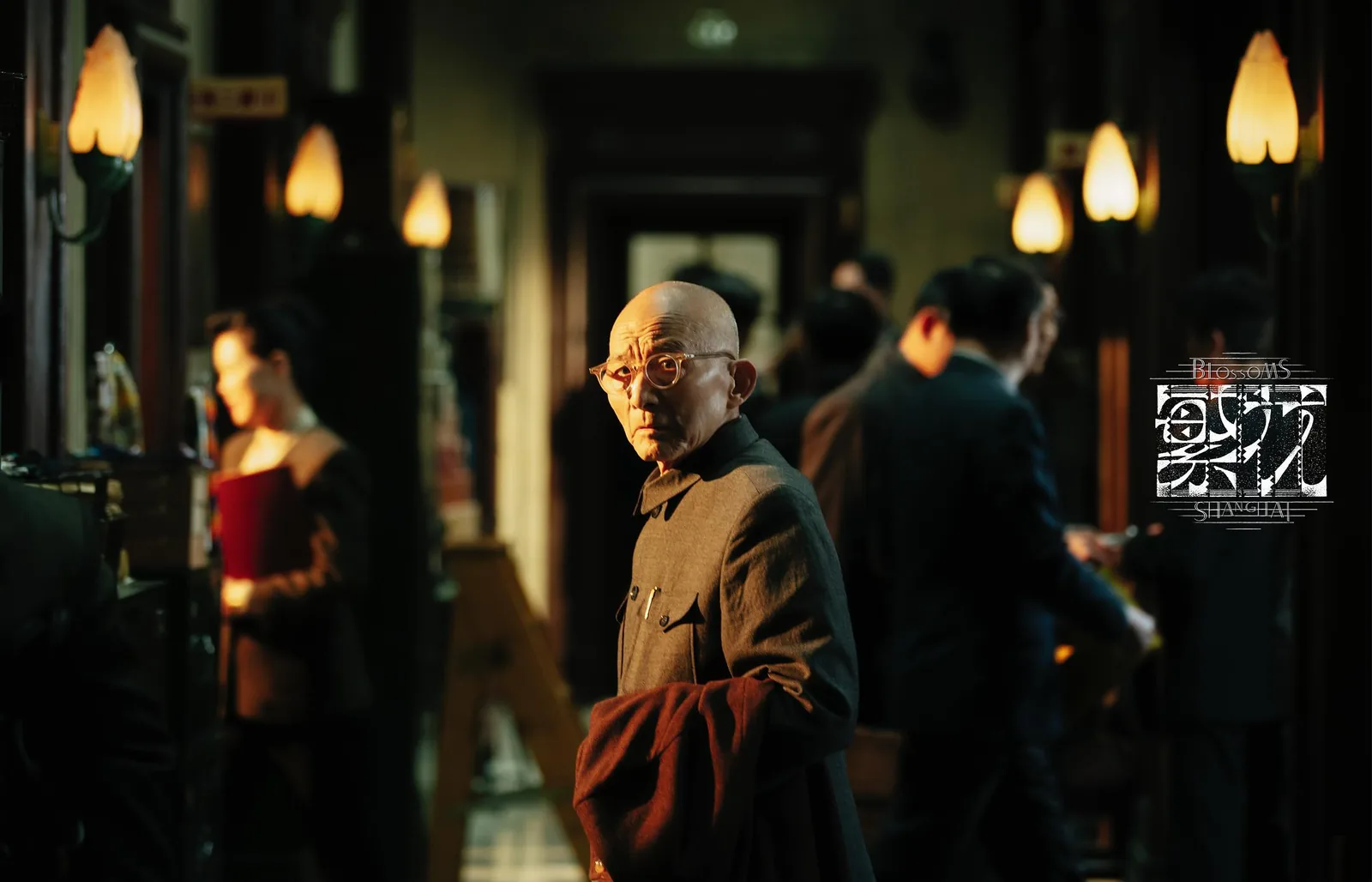
Fig 1: Performance artist You Benchang at age 90, portraying the iconic character “Uncle” in Wong Kar-wai’s Blossoms Shanghai.
I. The Emergency Brake: Protecting the Ethical Floor at the Peak of Fame

Fig 2: A timeline of You Benchang’s life span from 1985 to 2023, highlighting four critical nodes of artistic tempering (Source: V-G Journal).
In 1985, at age 52, You Benchang became a national phenomenon through the TV series Ji Gong. In an era of scarce entertainment, his portrayal of the “Mad Monk”—with his tattered hat, broken fan, and infectious laughter—became a collective memory for hundreds of millions.
Fame brought an avalanche of lucrative contracts, commercial appearances, and endorsements. In the cold calculus of the entertainment industry, this was the “golden window” for monetization. By simply riding the wave, he could have multiplied his net worth and social standing overnight.
Yet, in 1991, his wife, Yang Huihua, was diagnosed with advanced stomach cancer.
Faced with this crisis, You Benchang made a choice that defied conventional logic: At the absolute peak of his commercial value, he walked away. He canceled all pending contracts, halted commercial tours, and retreated to his wife’s bedside for four years.
During this period, he did not outsource her care. He personally managed every detail—from hygiene to researching medical treatments and preparing specialized diets. Under his dedicated care, her condition miraculously stabilized and eventually recovered.
From a utilitarian perspective, he “missed” the greatest wealth-creation wave of the early 90s Chinese media boom. But from the perspective of long-cycle asset pricing, his decision was remarkably lucid:
- Liquidity premiums cannot replace the ethical floor: Money and fame are renewable resources; the presence required during a partner’s life-or-death crisis is a non-renewable asset. To miss it is a permanent breach of one’s personal foundation.
- Active braking as a defensive maneuver: The ability to stop at the height of a storm is not a loss of momentum, but the ultimate assertion of sovereignty over one’s own life.
II. Counter-Cyclical Asset Allocation: Trading Concrete for Spiritual Capital
When You Benchang returned to the stage, he faced a new era. By the late 90s, the market was flooded with “fast-food” commercial dramas. As a household name, he could have easily coasted through high-paying, low-effort roles to secure a comfortable retirement. Instead, he funneled his life savings into niche, high-art explorations:
The Two Financial Gambles of Artistic Pioneering:
- Funding Niche Pantomime: In the late 90s, he exhausted his savings to produce China’s first pantomime series, Mr. You’s Silent Laugh. Lacking commercial backing and catering to a niche audience, the acquisition price from TV stations was abysmal. He lost millions.
- Selling Property for Liao Fan: In the early 2000s, to promote traditional values of kindness, he produced the 52-episode series Liao Fan. When funding dried up mid-production, he sold one of his apartments to bridge the gap, accepting a massive financial hit.
This phase coincided exactly with the explosion of the Chinese real estate market. While the rest of society was leveraging up to hoard property and chase paper wealth, You Benchang was engaged in a reverse asset swap.
He liquidated “hard assets” (real estate) and converted them into “spiritual heavy assets”—serious artistic experiments that were structurally incapable of commercial closure. To a financial analyst, this was “irrational wealth destruction.” But this obsessive filtering process stripped away the noise of the market, refining his craft and life experience to a state of absolute purity.
III. Living by Dying: Selling the Last Home at 76
If his earlier investments were merely a reallocation of surplus, his decision in 2009 was a leap into the abyss.
At age 76—an age when most are calculating their pension—You Benchang encountered the script for The Last Victory, a play about the final days of the Buddhist master Hong Yi (Li Shutong). To bring this commercially “unviable” play to the stage, he took three radical steps:
- Liquidated his final residence: Despite the pleas of friends to keep his last safety net, he sold his only remaining home in Beijing to fund the theater troupe’s rehearsals.
- Short-term Monkhood at 76: To truly inhabit the psyche of Master Hong Yi, he traveled to Daguangming Temple in Heilongjiang to be ordained as a monk (Dharma name “Ding Chang”). He lived by the monastic code—waking at 3:00 AM to strike the morning bell—to strip away the “performance” and find the soul.
- Subsidizing the Next Generation: He founded the “You Benchang Art Troupe,” recruiting young actors from humble backgrounds who lacked connections. He provided free training, room, and board, passing down his craft by hand.
At the premiere, the audience was smaller than the cast. He didn’t flinch. He led the troupe from domestic stages to international tours. Over several years, they performed hundreds of shows, eventually reaching sold-out status and becoming a modern classic of Chinese theater.
When a man is willing to sacrifice his last piece of real estate and his secular comfort for an artistic truth, the market’s “gains and losses” lose their power to threaten him.
IV. Defying Biological Obsolescence: Algorithms at 86, Blossoms at 87
As the digital divide marginalized his peers, You Benchang embraced the new world. In 2019, at age 86, he joined short-video platforms. He didn’t lecture; he addressed young viewers as “grandkids” (wawa), using his wit and perspective to alleviate the “involution” and anxiety of the younger generation, earning the respect of tens of millions.
The ultimate realization of his life-force came in 2020, when Wong Kar-wai invited the 87-year-old to play “Uncle” in Blossoms Shanghai.
Wong is notorious for his grueling pace, demanding dozens of takes for a single shot. For a man nearly ninety, this was a high-stress test of both physiology and neurology:
- A Three-Year Commitment: He filmed from age 87 to 90, working ten-hour days and memorizing dense, rapid-fire Shanghainese dialogue.
- Rejecting Shortcuts: He refused body doubles, obsessing over every micro-expression and gesture.
- Soul Resonance: During a scene where he looks through a car window at the young protagonist, his eyes welled with a century of complexity. He remarked to the monitor, “In that moment, I saw the version of myself that was struggling decades ago.”
When Blossoms Shanghai aired in late 2023, “Uncle”—with his gravitas, ruthlessness, and profound dignity—stunned the nation. At 90, You Benchang stood once again at the pinnacle of the cinematic world.
V. Life Cycle Asset Allocation: Secular Metrics vs. Counter-Cyclical Incubation
To understand the mechanics of this “Forty-Year Gap Year,” we must compare conventional career logic with You Benchang’s strategic choices:
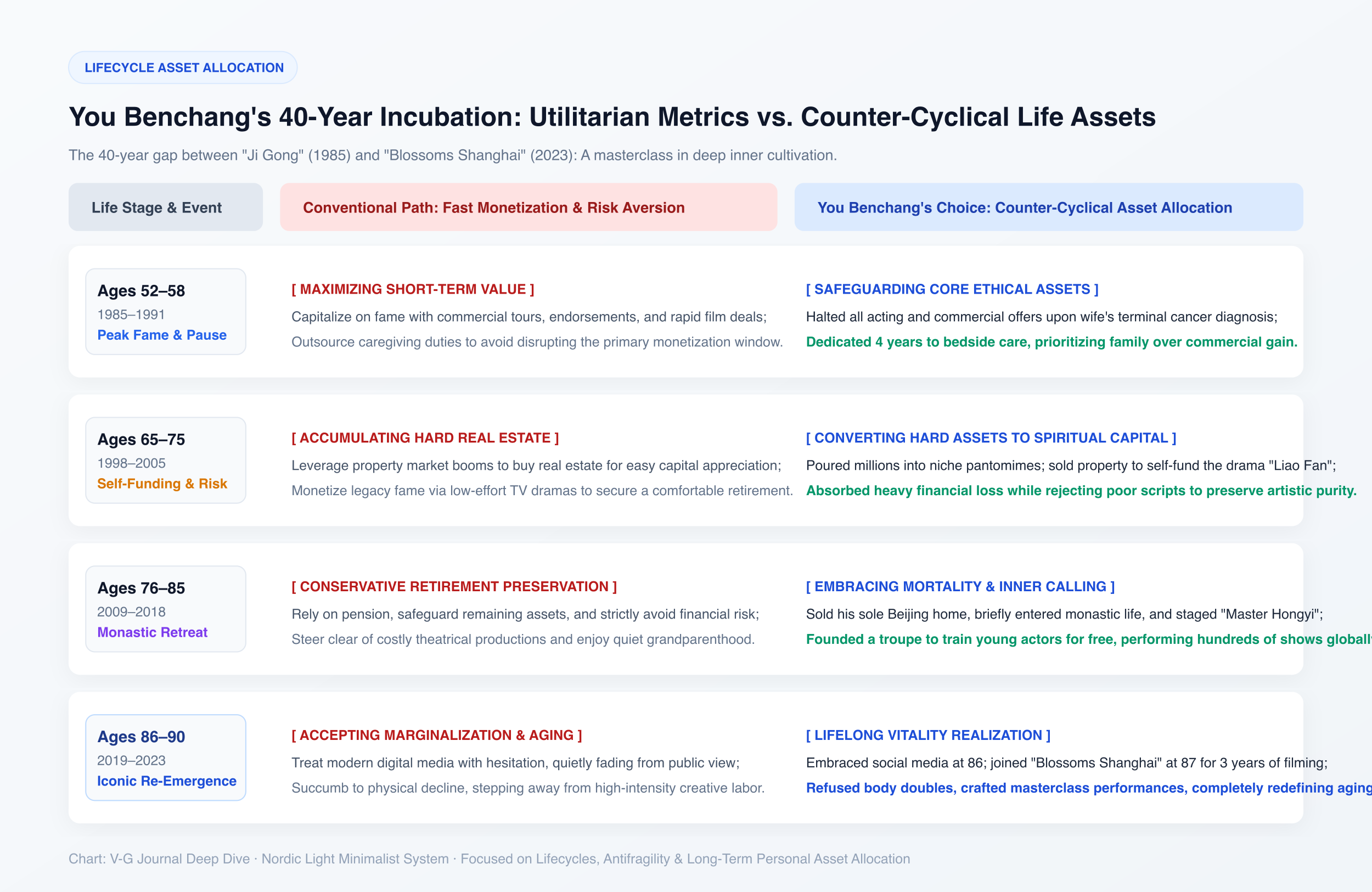
Fig 3: You Benchang’s Forty-Year Incubation: A Matrix of Counter-Cyclical Life Strategy (Source: V-G Journal).
| Dimension | Conventional Secular Path | You Benchang’s Counter-Cyclical Path |
|---|---|---|
| Peak Fame (Ages 52–58) | Maximize monetization; prioritize tours and endorsements over family. | Protecting the Ethical Floor: Walked away for 4 years to care for his wife; prioritized the “human foundation.” |
| Capital Boom (Ages 65–75) | Hoard real estate; accept “fast-money” roles to build a retirement fund. | Trading Concrete for Spirit: Sold property to fund niche pantomime and culture; accepted total financial depreciation. |
| Retirement (Ages 76–85) | Avoid risk; preserve the last home; retreat from the public eye. | Living by Dying: Sold his last home; entered monkhood for research; funded a troupe for the youth. |
| The Final Act (Ages 86–90) | Biological decline; marginalized by technology; exit the stage. | Life-force Realization: Embraced social media at 86; filmed Blossoms for 3 years; reached a new peak at 90. |
VI. Conclusion: The Compound Interest of a Long Life
Looking back at the decades between Ji Gong and Blossoms, the public’s “Gap Year” label is merely a cognitive bias—the result of measuring a great soul with the flat ruler of commercial productivity.
He never stopped. He simply refused to drift with the tide. His life shatters the “thirty-five-year-old deadline” and the pervasive age anxiety of our time.
A life’s balance sheet is not a hundred-meter sprint; it is a century-long ledger of mental and spiritual energy.
The “counter-cyclical retreats” made to protect one’s ethics or refine one’s craft may look like losses in the short term. But under the catalysis of time, they settle into indestructible spiritual assets. As long as the internal fire remains and the roots go deep enough, any point in life—even ninety—is a golden age.
Related Research & Topics
The Anatomy of Digital Predation: Inside the Syndicate Targeting the Elderly via Livestream Appraisal Scams
Starlink V4 and the Low-Earth Orbit Satellite Arms Race: How a 100,000-Node Optical Mesh Pierces the Submarine Cable Monopoly
Tello Mobile eSIM
SafetyWing Nomad Insurance
* Disclosure: This post contains affiliate links. If you make a purchase through these links, V-G Journal may earn a small commission at no additional cost to you. We only recommend services we independently evaluate and trust.
FIRE and Golf:自由旅居之路
专注于为追求 FIRE 与品质生活的人群提供特惠打球权益与候鸟微度假。不持一砖一瓦,运营品质生活。