The Founder's Scar: How Personal Trauma Forges Dynastic Systems
The Song and Ming dynasties offer a stark contrast in foundational logic. While Zhao Kuangyin, a military elite, decentralized power to a trusted civil bureaucracy, Zhu Yuanzhang, a former beggar, forged an empire as a singular instrument of his will, trusting no one. This essay explores how a founder's deepest traumas and anxieties are indelibly etched into the institutional DNA of a nation, shaping centuries of governance.

Core Insight: After the Chenqiao Mutiny, Emperor Taizu of Song’s first act was to relieve his comrades-in-arms of their military power, then invite them to a feast. Emperor Taizu of Ming, upon ascending the throne, systematically sent those who had fought alongside him to the executioner’s block. Two founders, two vastly different origins and methods, leaving behind institutional DNA that diverged by centuries.
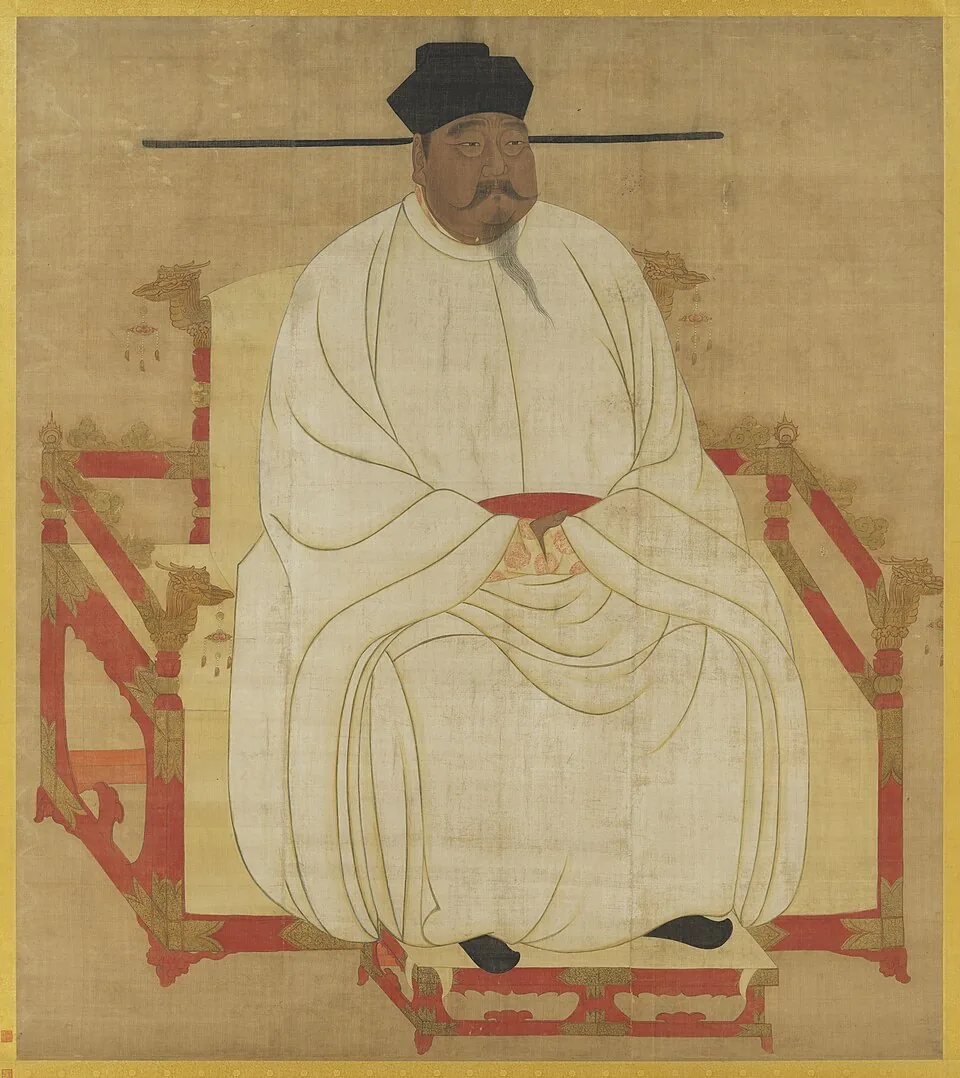
Figure 1: Portrait of Song Taizu (Zhao Kuangyin), housed in the National Palace Museum, Taipei (Public Domain)
Two Origins, Two Core Anxieties
Zhao Kuangyin hailed from a military lineage; his father commanded the Imperial Guards of the Later Han, and he himself was a battle-hardened professional soldier. In 960, during the Chenqiao Mutiny, his peers draped him in the imperial yellow robe, transforming him overnight from the Later Zhou’s Palace Inspector into the founding emperor of the Song Dynasty.
This genesis defined his core anxiety: he feared being overthrown by the very same means. He understood the inherent danger of military commanders, for he had been one himself.
Zhu Yuanzhang’s origins were starkly different. Born in Zhongli, Haozhou, he witnessed his parents and siblings succumb to starvation. As a youth, he wandered as a mendicant monk, surviving by begging. He later joined the Red Turban Rebellion, fighting his way from a common soldier to emperor over nearly two decades.
His core anxiety was: the terror of returning to destitution. Oppression by officials, land annexation by powerful clans, the usurpation of power by influential ministers—these were the realities he had witnessed and endured throughout his life. Deep in his bones, he harbored a profound class animosity towards the entire elite stratum, be they scholar-officials or meritorious generals.
A person’s deepest fears often stem from the loss of control they have personally witnessed or experienced.
The Solution: Institutionalizing Anxiety
Zhao Kuangyin’s solution was swift and decisive: the ‘Cup of Wine Dismissing Military Power,’ followed by the establishment of civil governance.
If military commanders posed a threat, then civil officials would be used to suppress them. In the second year of Jianlong (961 CE), at a banquet, he subtly prompted veteran generals like Shi Shouxin to relinquish their commands. Afterward, he compensated them with wealth and land, ensuring their honorable retirement. Subsequently, the Song Dynasty established ‘prioritizing civil affairs over military’ as its fundamental state policy. The chancellery system matured, and the civil official bureaucracy was integrated into the power structure as political partners. An ironclad rule, almost enshrined in Song political tradition, originated from Taizu’s era: “No execution of scholar-officials or those who submit remonstrances.”
The outcome was the Song Dynasty becoming the era of China’s most mature scholar-official politics. Figures like Ouyang Xiu, Su Shi, and Wang Anshi, who would likely have faced execution in other dynasties, were, at most, merely demoted or exiled in the Song.
Zhu Yuanzhang’s solution followed a different logic: since everyone could be a threat, he would eradicate all potential threats at their root.
During the Hongwu era, the Hu Weiyong case (1380) and the Lan Yu case (1393) implicated over 40,000 people, virtually wiping out the founding meritorious officials. In the same year, he abolished the chancellery system, which had endured in China for 1,500 years—a system that had been the most crucial check on imperial power. Thereafter, the emperor directly managed the Six Ministries, devoid of any structural checks and balances. Concurrently, the Embroidered Uniform Guard (Jinyiwei) was established, making secret police governance a permanent fixture.
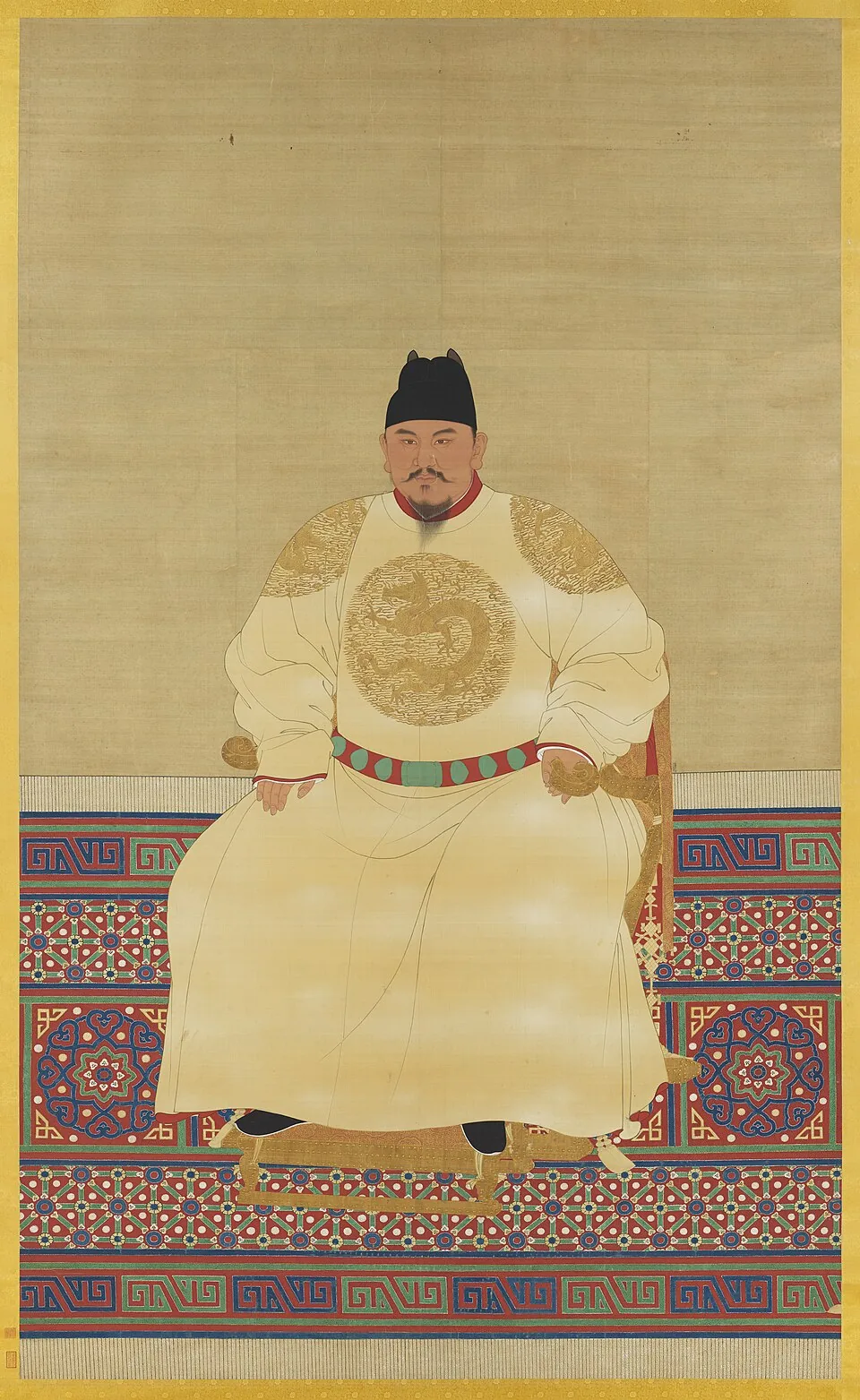
Figure 2: Portrait of Ming Taizu (Zhu Yuanzhang), housed in the National Palace Museum, Taipei (Public Domain)
Treating the Elite: Collaborators vs. Instruments
The divergence in these two anxieties manifested most clearly in their treatment of the elite class.
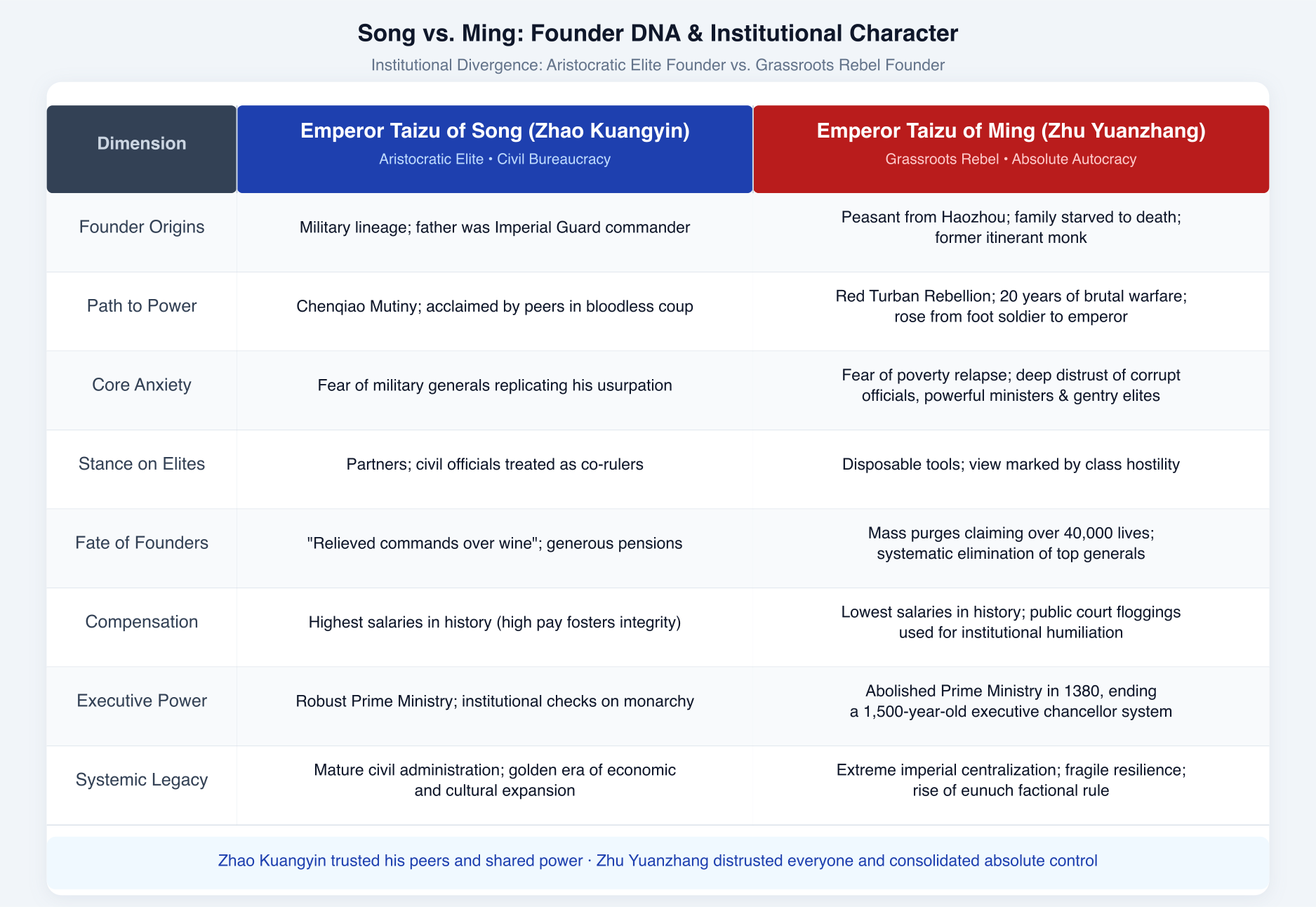
Figure 3: Song vs. Ming — Founder's DNA and Institutional Character Comparison Matrix
| Feature | Song Taizu (Zhao Kuangyin) | Ming Taizu (Zhu Yuanzhang) |
|---|---|---|
| Founder’s DNA | ||
| Origin | Military Aristocracy | Beggar, Mendicant Monk |
| Core Anxiety | Fear of Usurpation | Fear of Destitution |
| Institutional Character | ||
| Treatment of Elites | Collaborators | Instruments |
| Power Structure | Decentralized Checks & Balances | Absolute Imperial Power |
| Institutional Legacy | Civilian Rule, Economic & Cultural Flourishing | Secret Police State, Institutional Rigidity |
Song dynasty officials enjoyed the highest salaries in Chinese history. During Emperor Renzong’s reign, Bao Zheng’s monthly stipend, when converted to modern purchasing power, would be equivalent to hundreds of thousands of RMB today. The logic was simple: provide ample compensation to reduce incentives for corruption.
Ming dynasty officials, conversely, received the lowest salaries. Zhu Yuanzhang believed that corrupt officials deserved death, and low pay was no excuse; they deserved their poverty. Kneeling before the emperor was standard practice, and ‘court-flogging’ (廷杖)—publicly beating officials on their buttocks in the imperial court—was a formal punishment. Its purpose was to utterly humiliate the civil bureaucracy, degrading them from ‘scholar-officials’ to ‘imperial servants.’
This was not a matter of personality, but a cognitive framework dictated by their origins: Zhao Kuangyin and his civil officials were peers negotiating, while Zhu Yuanzhang and his officials were a master commanding his tools.
The Long Tail of Institutional Design
The Song dynasty’s path came at the cost of military weakness. The structure of civil officials suppressing military commanders led to the Song army’s long-term disadvantage in wars against the Liao, Jin, and Mongol empires, ultimately resulting in its destruction by the Mongol Empire. Yet, this path also fostered an era of economic and cultural prosperity rarely seen in Chinese history—the Northern Song’s GDP is estimated to have accounted for 25% to 30% of the global total at the time, and technological breakthroughs in movable type printing, the compass, and gunpowder were achieved during this period.
The Ming dynasty’s path, conversely, resulted in extremely poor institutional resilience. Excessive centralization of imperial power meant that the entire system’s operation depended entirely on the emperor’s individual capability and will. While this machinery could barely function during the Hongwu and Yongle eras, by the Jiajing and Wanli reigns, with emperors neglecting court for decades, the system rapidly approached paralysis—yet it possessed no self-repairing capacity, as the chancellery system had been abolished. The vacuum was filled by eunuchs. The Donglin factional disputes and the rampant power of the imperial secret police (厂卫) were direct consequences of this power vacuum.
In the third month of the seventeenth year of Chongzhen’s reign, Li Zicheng’s forces breached Beijing. Emperor Chongzhen ascended Coal Hill, where he tragically hanged himself from a crooked neck tree. He was not without personal strength, but he lacked a system: no civil bureaucracy to rely on, no military commanders to trust, no institutional buffer whatsoever. His great-great-great-grandfather had personally dismantled every conceivable support.
Conclusion
The Song represented a political negotiation between aristocrats, resulting in institutionalization. The Ming was a commoner’s retribution against the entire ruling class, resulting in personalization.
Neither path possessed absolute superiority or inferiority, but a structural law emerges: the founder’s original trauma at the genesis of their enterprise is inherited institutionally, spanning centuries.
Zhao Kuangyin feared military commanders, leading to three centuries of prioritizing civil over military in the Song. Zhu Yuanzhang feared being usurped, resulting in two hundred and seventy-six years of absolute imperial power and an empty institutional shell in the Ming.
What gets etched into institutions is often not the product of rational design, but the instinctive reaction of an individual at their most vulnerable moment, magnified by history into the destiny of a dynasty.
Related Research & Topics
The Anatomy of Digital Predation: Inside the Syndicate Targeting the Elderly via Livestream Appraisal Scams
Starlink V4 and the Low-Earth Orbit Satellite Arms Race: How a 100,000-Node Optical Mesh Pierces the Submarine Cable Monopoly
Tello Mobile eSIM
SafetyWing Nomad Insurance
* Disclosure: This post contains affiliate links. If you make a purchase through these links, V-G Journal may earn a small commission at no additional cost to you. We only recommend services we independently evaluate and trust.
FIRE and Golf:自由旅居之路
专注于为追求 FIRE 与品质生活的人群提供特惠打球权益与候鸟微度假。不持一砖一瓦,运营品质生活。