The Surgical Swing: Biomechanical Leverage and the Orthopedic Advantage in Golf
An analysis of why orthopedic surgeons possess a distinct interdisciplinary advantage in golf. From thoracic-hip dissociation to the Mikulicz mechanical axis, medical expertise facilitates a superior kinetic chain while mitigating the compensatory injuries common to amateur players.

Executive Summary: Within the golfing community, there is a recurring observation: orthopedic surgeons tend to bypass the “clumsy amateur” phase with startling efficiency. Their swings are disciplined, repeatable, and notably free of the chronic lower back pain, medial epicondylitis, or wrist injuries that plague most hobbyists. This is not a matter of innate athletic talent, but rather a profound structural isomorphism between modern orthopedic clinical practice and the physics of the golf swing. This essay deconstructs the six-dimensional biomechanical advantage that allows the surgical mind to master the links.
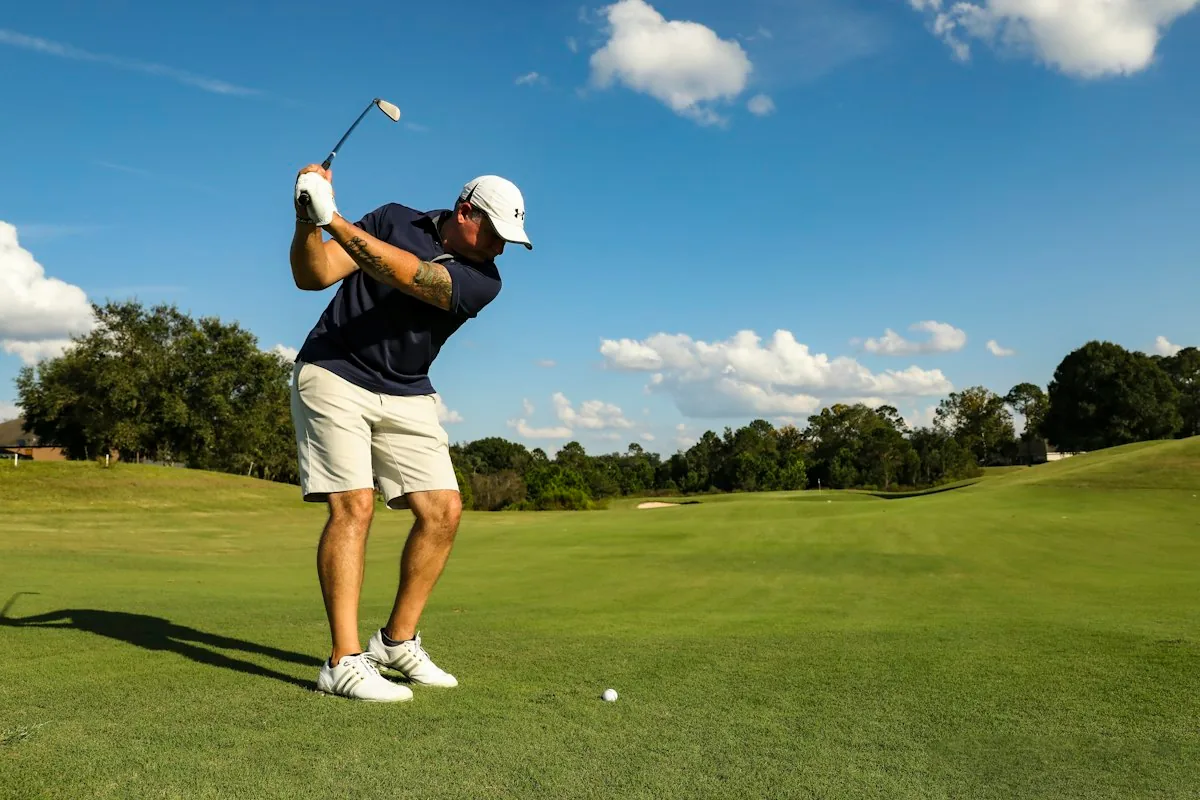
Figure 1: Axial stability and efficient kinetic release during the downswing transition.
I. Anatomical Perspective: Mobility vs. Rigid Anchors
The most common pitfall for beginners is the instruction to “turn the waist.” To the layperson, this often triggers a violent twisting of the lumbar spine, leading to erratic power delivery and acute disc herniation.
From a clinical perspective, the lumbar vertebrae (L1-L5) feature sagittal-oriented facet joints that are mechanically interlocked. This anatomy dictates that the axial rotation of a single lumbar segment is a mere 1° to 2°, with the entire lumbar region rarely exceeding 15° of physiological rotation. The biomechanical role of the lower back is to serve as a “rigid anchor”—a stabilizer designed to bear axial loads, not to facilitate high-velocity horizontal rotation.
True three-dimensional rotation is driven by the thoracic spine (T1-T12, contributing 30°–35° of rotation) and the ball-and-socket hip joints (contributing 35°–45° of internal/external rotation).
An orthopedic surgeon, accustomed to analyzing spinal and pelvic Range of Motion (ROM) on imaging and in the theater, possesses an internal anatomical map:
- Differentiating Mobility from Stability: Surgeons recognize the lumbar spine as a power conduit requiring rigidity. They understand that rotation must be sourced from deep hip articulation and thoracic coiling.
- The Pure “X-Factor”: During the backswing, they can actively stabilize the pelvis while stretching the thoracic spine, creating high-quality elastic potential energy without relying on premature pelvic sway or lumbar compensation.
- Eliminating Compensatory Patterns: By identifying which segments are responsible for “Mobility” and which for “Stability,” the surgeon blocks technical deviations at the source.

Figure 2: The mapping matrix between clinical orthopedic systems and the golf kinetic chain.
II. Three-Dimensional Intuition: The Mikulicz Axis
The success of orthopedic procedures—be it trauma reconstruction, total knee/hip arthroplasty, or scoliosis correction—hinges on Alignment. Whether it is the femoral neck anteversion or the Mikulicz line (the mechanical axis of the lower limb), a deviation of even 2 millimeters or 2 degrees can lead to abnormal stress concentration and early prosthetic failure.
The golf swing is essentially a geometric system operating at high velocity in three-dimensional space:
- Spine Angle at Address: The baseline for the swing plane.
- Swing Plane: The geometric angle formed by the club’s path and the torso.
- Face Angle at Impact: The micro-metric determinant of initial launch and side-spin.
Amateur golfers often struggle with spatial awareness during dynamic movement, leading to Sway and Slide—the attempt to generate momentum through lateral displacement. This shifts the center of the swing arc, resulting in “fat” or “thin” shots.
Surgeons possess a professional-grade sensitivity to the mechanical axis (connecting the center of the femoral head, the knee, and the ankle). At address, they instinctively construct a stable triangular base through subtle ankle inversion and knee flexion. During the rotation, they lock the axis of rotation, ensuring the head and central axis remain fixed, resulting in high-consistency “sweet spot” strikes.
III. Mechanical Torque: From Bone Mallets to Rigid Levers
Orthopedics is often colloquially referred to as “the carpentry of surgery.” The sterile table is populated with mallets, chisels, rasps, and torque wrenches.
In a grueling multi-hour hip replacement or spinal fusion, a surgeon who relies solely on bicep strength would suffer from fatigue and tremors within the first hour. Senior surgeons develop a mechanical intuition: work is performed by the tool’s lever arm, center of mass, and the impulse of gravitational acceleration.
As analyzed in our guide on Golf Club Tiers and Bag Strategy, a golf club is an extended lever system composed of lightweight carbon or high-strength alloys.
The fatal flaw of the novice is “hitting with the hands,” attempting to muscle the ball. This breaks the kinetic chain and causes clubhead speed to dissipate before impact. The surgeon understands the physics of momentum accelerating from the proximal trunk to the distal extremity:
- They naturally grasp the Lag mechanism, maintaining the wrist cock during the transition.
- They allow the clubhead’s mass and shaft elasticity to do the work, utilizing centrifugal force rather than muscular tension.
IV. High-Resolution Proprioception: The Microsurgical Touch
In arthroscopic surgery or deep trauma reduction, the surgeon’s eyes often cannot see the bone directly. They rely on tactile feedback—resistance, damping, and vibration transmitted through the fingertips—to judge if a screw has engaged the far cortex.
A golf club’s sweet spot is roughly the size of a coin. At clubhead speeds of 130–170 km/h, a mere 1°–2° deviation in face angle at impact can send a ball dozens of yards off-line.
An orthopedic surgeon’s Proprioception is honed through rigorous training. They have a high neural resolution for grip pressure (the “30% bird-holding” vs. “80% tension” distinction), forearm rotation (pronation/supination), and the subtle feedback of the club striking the turf. This translates to superior face control and a reduction in “big slice” errors caused by over-active wrists.
V. The “Injury Radar”: Soft Tissue Limits and Longevity
Golf is far from a zero-impact sport. In amateur circles, the incidence of chronic injury is remarkably high:
| Common Golf Injury | Clinical Pathology | Compensatory Trigger |
|---|---|---|
| Medial Epicondylitis | Chronic tearing/inflammation of the common flexor tendon | Excessive wrist flip; “hitting at” the ground with arms |
| TFCC Injury | Triangular Fibrocartilage Complex tears | Impacting the ground without body rotation; wrist absorbing the shock |
| Rib Stress Fractures | Repeated serratus anterior/oblique traction on ribs | Insufficient thoracic mobility; forcing a backswing beyond physical limits |
| Lumbar Facet Strain | Overload of sagittal facet joints via shear stress | Failure to use hip rotation; “violent waist twisting” |
These injuries stem almost exclusively from “compensatory movements that violate human ergonomics.”
Surgeons understand the physical breaking points of tendons, ligaments, and fibrocartilage under shear stress. As advocated in our Provincial Wellness & Golf Rankings, the goal of the sport is long-term health and “resetting,” not the consumption of joint health. A surgeon’s “Injury Radar” sounds an alarm the moment a movement feels anatomically “wrong,” ensuring a pain-free swing for decades.
VI. The Closed-Skill Mindset: Surgical SOPs and Pressure
In motor learning, golf is a Closed-skill sport, distinct from the “Open-skill” nature of soccer or tennis.
- The ball is stationary; there is no external interference.
- The player triggers the action from a static start.
- Once initiated, the trajectory is irreversible.
This psychological state—requiring static stability and high-stakes precision—is identical to the mental model of a lead surgeon.
Performing a spinal decompression or driving a nail near the spinal cord is a high-stakes, irreversible procedure with zero margin for error. Surgeons bring two critical competitive traits to the tee:
- Standard Operating Procedures (SOPs): They treat the pre-shot routine with the same rigor as a surgical checklist—stance check, alignment, practice swing—mechanically replicating the process to block out distractions.
- Emotional Compartmentalization: When a surgeon encounters unexpected bleeding, they must remain calm and focus on the next mechanical step. On the course, a “bad shot” does not trigger an emotional spiral; they simply focus on the mechanical “reduction” of the next stroke.
Conclusion: The Intersection of Ergonomics and Long-termism
The golf course is not a coliseum for brute force; it is a laboratory for biomechanical efficiency and three-dimensional geometry.
Orthopedic surgeons excel because they do not view the swing as a muscular struggle against the ball. Instead, they see it as an engineering project: the skeleton as a rigid linkage, the joints as geometric fulcrums, and gravity as the primary power source. By adhering to the “First Principles” of biomechanics, they achieve what every golfer seeks: a swing that is both powerful and permanent.
Related Research & Topics
The Anatomy of Digital Predation: Inside the Syndicate Targeting the Elderly via Livestream Appraisal Scams
Starlink V4 and the Low-Earth Orbit Satellite Arms Race: How a 100,000-Node Optical Mesh Pierces the Submarine Cable Monopoly
Tello Mobile eSIM
SafetyWing Nomad Insurance
* Disclosure: This post contains affiliate links. If you make a purchase through these links, V-G Journal may earn a small commission at no additional cost to you. We only recommend services we independently evaluate and trust.
FIRE and Golf:自由旅居之路
专注于为追求 FIRE 与品质生活的人群提供特惠打球权益与候鸟微度假。不持一砖一瓦,运营品质生活。