The 3-Second Heist: China’s Systemic Eradication of the Motorcycle Bandit and a Manual for the Global Nomad
An analysis of the 'motorcycle snatch-and-grab' phenomenon through the lens of physical asymmetry, exploring the four-fold systemic engineering China used to eliminate the practice and providing tactical defense strategies for international travelers.

Executive Summary: A recent dashcam recording of a daylight robbery in heavy traffic has reignited a conversation familiar to many expatriates and global nomads: the vulnerability of the “trapped” motorist. In the video, a car sits paralyzed in rush-hour congestion; a motorcycle threads through the gaps, a hand reaches through a half-open window, and in under three seconds, a smartphone is gone. This “physical asymmetry” was once a defining trauma of urban China twenty years ago. This essay deconstructs the four-fold systemic engineering—legal, physical, digital, and economic—that China utilized to eradicate the “motorcycle bandit,” while offering a micro-manual for safety in the world’s remaining high-friction zones.
I. Three Seconds of Asymmetry: The Physics of the Grab
In the footage captured by a rear-facing dashcam, the crime is a masterclass in tactical agility and predatory timing.
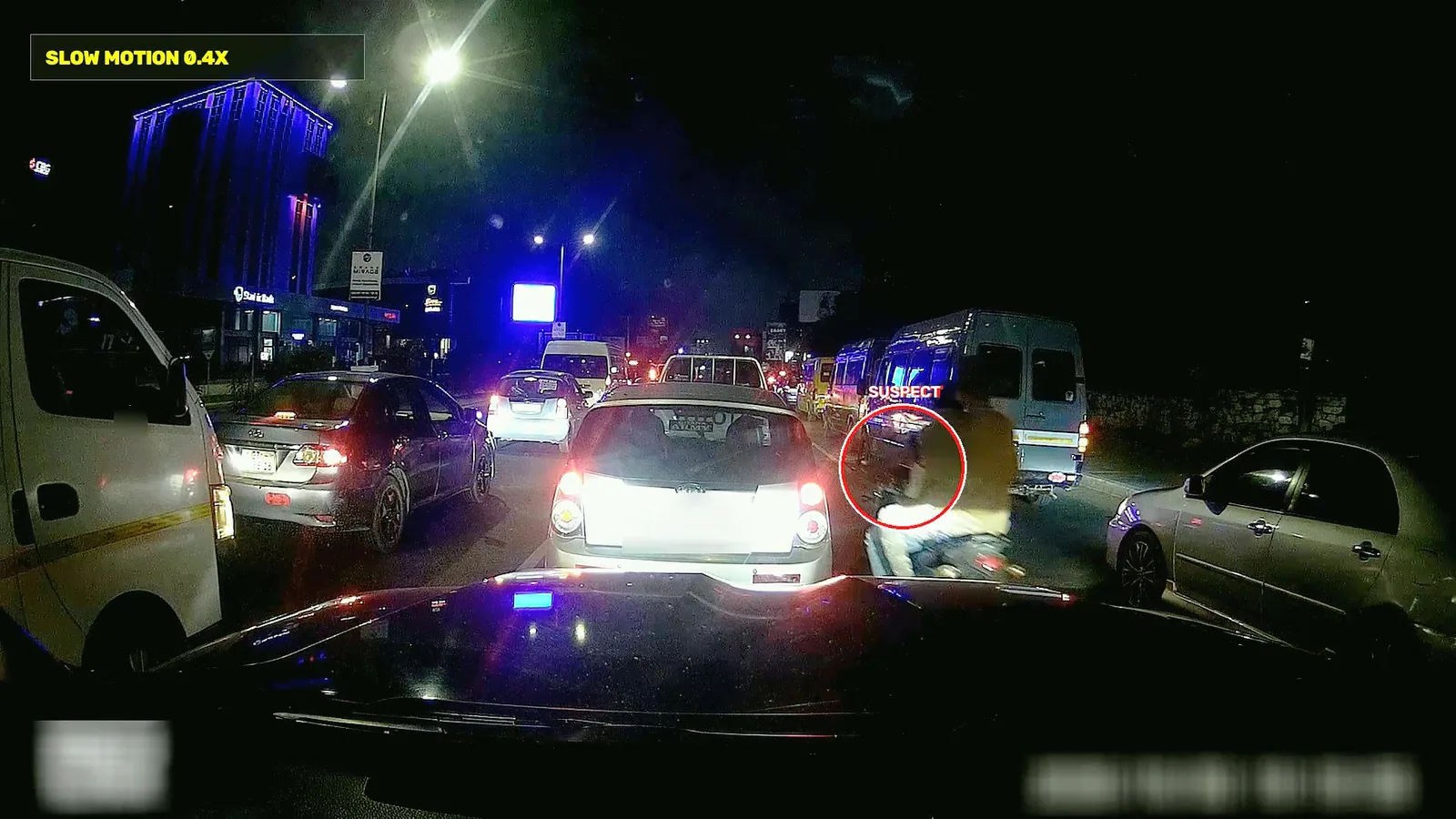
Figure 1: Dashcam video capture: Suspect tracked on motorcycle threading rush-hour congestion to execute a grab-and-run snatch through a car window.
The logic of this heist rests on three pillars of extreme imbalance:
- The Mobility Gap: A four-wheeled vehicle in gridlock is a cage. Even if the driver witnesses the theft, there is no physical space to open the door, let alone pursue. Conversely, a motorcycle—less than 80cm wide—navigates the “veins” of traffic with impunity.
- The Greenhouse Illusion: Inside a car, passengers feel a false sense of sanctuary. This leads to “screen focus”—heads down, processing emails or scrolling feeds. If a window is even partially lowered for ventilation, this “greenhouse” defense evaporates instantly.
- Zero-Intercept Probability: From the reach to the throttle-twist, the encounter lasts less than three seconds. By the time the victim’s nervous system registers the loss, the perpetrator is fifty meters away, shielded by a sea of bumpers.
For the global nomad in Ho Chi Minh City, Manila, São Paulo, or parts of Southern Europe, this remains a daily reality. In China, however, this scene is a ghost of a bygone era.
II. Historical Trauma: The Era of the “Flying Bike Gangs”
At the turn of the millennium, as China’s manufacturing heartlands—particularly the Pearl River Delta—exploded with migrant labor and merchant capital, urban governance lagged behind economic velocity. The “Flying Bike Gangs” (飞车党) became a pervasive urban shadow.
- The Two-Man Cell: One pilot focused on high-speed maneuvering; one pillion passenger focused on the violent snatch and rear-guard defense.
- Escalating Violence: The kinetic energy of a moving motorcycle meant that a grabbed bag often resulted in the victim being dragged, leading to severe head injuries or fatalities.
- The Friction of Business: In peak years, the anxiety surrounding street safety became a tangible tax on the “Ease of Doing Business,” forcing local governments to deploy iron-cage checkpoints and specialized task forces.
From a game theory perspective, the crime flourished because the Expected Value (EV) was high while the Cost of Prosecution was negligible. In a cash-heavy society with few cameras, a stolen gold necklace or a premium handset represented months of wages, while the anonymity of a plateless bike in a “urban village” (城中村) made the risk of capture nearly zero.
III. The Four-Fold Systemic Engineering: How the Practice Was Eradicated
China’s transition to a high-safety society is often oversimplified as “more police.” In reality, it was a multi-dimensional engineering project that attacked the crime’s viability from the roots.
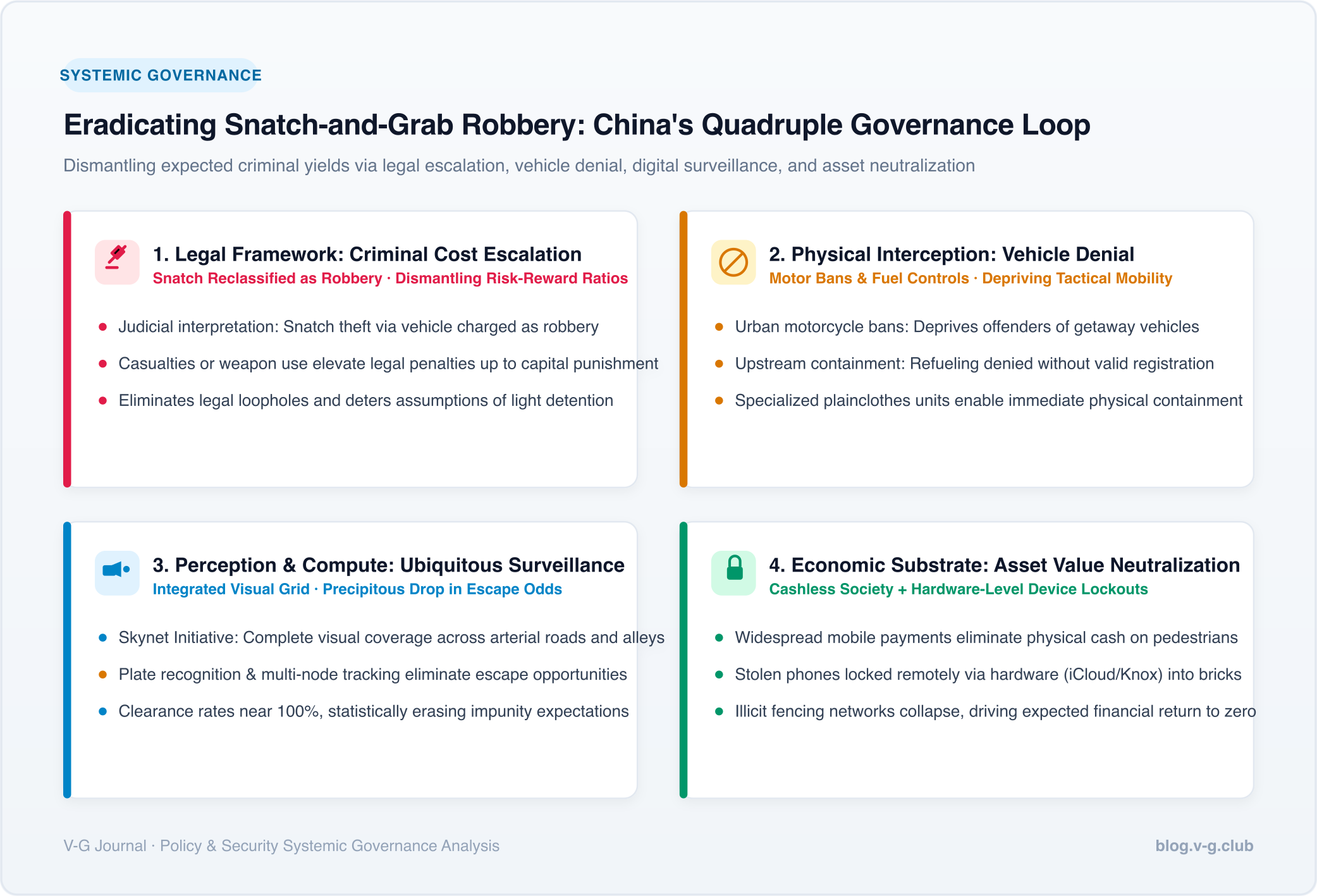
Figure 2: The Systemic Engineering Loop: Deconstructing the Game Theory of Deterrence.
1. The Legal Layer: Recalibrating the Cost of Crime
Originally, “snatching” was often classified as a non-violent property crime with relatively light sentencing. This loophole was closed in 2002 by a Supreme People’s Court judicial interpretation:
- Automatic Escalation: Any theft involving a motor vehicle that endangers the victim’s physical safety is automatically prosecuted as Robbery, not Larceny.
- Capital Stakes: If the act results in serious injury or death, or if the perpetrators carry weapons, the sentencing starts at ten years and can escalate to the death penalty.
When the “price” of a $500 phone is potentially a life sentence, the rational actor’s gamble collapses.
2. The Physical Layer: “Jinmo” and the Deprivation of Tools
The motorcycle is the “force multiplier” of the thief. To stop the thief, the state removed the tool.
- Urban Bans (Jinmo): Major Tier-1 and Tier-2 cities implemented sweeping bans on fuel-powered motorcycles in central districts.
- Energy Interdiction: Gas stations were prohibited from refueling unlicensed or non-compliant motorcycles, effectively starving “black” vehicles of their energy supply.
- Specialized Intercept Units: Police formed elite “Mobile Cavalry” units—officers on high-performance bikes with professional training—to eliminate the mobility advantage of the criminals.
3. The Perceptual Layer: Skynet and the Infinite Escape Cost
Even the fastest bike cannot outrun a fiber-optic signal. The “Skynet” and “Sharp Eyes” projects transformed cities into active sensing grids:
- Structural Tracking: High-definition cameras at every intersection, overpass, and alleyway use plate recognition and gait analysis.
- The End of the “Clean Break”: Escaping the scene no longer means escaping the crime. The suspect’s path is reconstructed in real-time on command center screens. In modern Chinese cities, the solve rate for street-level felonies approaches 100%.
4. The Economic Layer: The Death of the Loot
The ultimate goal of the snatch-and-grab is liquidity. Digital transformation has rendered the “loot” worthless:
- The Cashless Society: With the ubiquity of mobile payments, citizens rarely carry large sums of physical currency. A stolen bag often contains nothing but tissues and un-withdrawable cards.
- Hardware-Level Bricking: The rise of iCloud Activation Locks, Google FRP, and Knox security means a stolen phone can be remotely wiped and locked within minutes. On the black market, a “bricked” phone is merely a collection of low-value spare parts. The profit margin has plummeted by over 90%.
IV. The Nomad’s Manual: Micro-Defensive Strategies
When digital nomads move from high-trust, high-tech environments back into “high-friction” global cities, they often carry a dangerous “safety inertia.” They assume the “greenhouse” of the car or the sidewalk is a neutral zone.
To survive the “3-second heist” abroad, one must adopt Micro-Defensive Protocols:
1. The Rule of Physical Seclusion
- The One-Finger Gap: In traffic or at red lights, never lower your window more than an inch. Use the internal AC circulation. If you must vent, ensure the gap is too narrow for a human hand.
- The “Low-Zone” Placement: Never leave laptops, cameras, or bags on the passenger seat. Place them in the footwell or the trunk. If a thief can’t see it, they won’t smash the glass for it.
- Screen Discipline: Avoid using a brightly lit smartphone near an open or unlocked window. The light acts as a beacon for predators in the “blind spot” of your A-pillar.
2. Defensive Positioning on the Street
- The Building-Side Carry: Always walk on the inner side of the sidewalk. Carry your bag on the shoulder furthest from the road.
- The “Anti-Zombification” Check: When waiting for a ride-share, do not stare at your phone. Check the map, put the phone away, and scan the 5-meter radius for approaching motorcycles.
3. Digital Kill-Switches
- Enable Stolen Device Protection: Ensure “Find My” or “Find My Device” is active with “Offline Finding” enabled.
- SIM PIN & 2FA: Lock your physical SIM with a PIN to prevent thieves from intercepting SMS verification codes. Use app-based authenticators (like Authy or Yubikeys) that are not tied to the phone’s hardware.
- Data Decoupling: Never store master passwords or sensitive identity documents in your phone’s unencrypted notes or photo gallery. Use a cloud-based vault with biometric triggers.
Safety is not a natural state; it is an expensive order maintained by systemic pressure. When you step outside that system’s shield, your own tactical awareness is the only “Skynet” you have.
Related Research & Topics
Tello Mobile eSIM
SafetyWing Nomad Insurance
* Disclosure: This post contains affiliate links. If you make a purchase through these links, V-G Journal may earn a small commission at no additional cost to you. We only recommend services we independently evaluate and trust.
FIRE and Golf:自由旅居之路
专注于为追求 FIRE 与品质生活的人群提供特惠打球权益与候鸟微度假。不持一砖一瓦,运营品质生活。