The Divergent Realities of Majuqiao: Micro-Anatomy vs. Gonzo Surveillance in China's Gig Economy
A dual-lens examination of Majuqiao, Northern China's largest day-labor hub, through the analytical indie documentary of Qi Xiaobo and the gonzo street-level dispatch of internet personality Feng Ge, exploring how narrative strategies and state pushback expose the fragility of China's urban safety net.

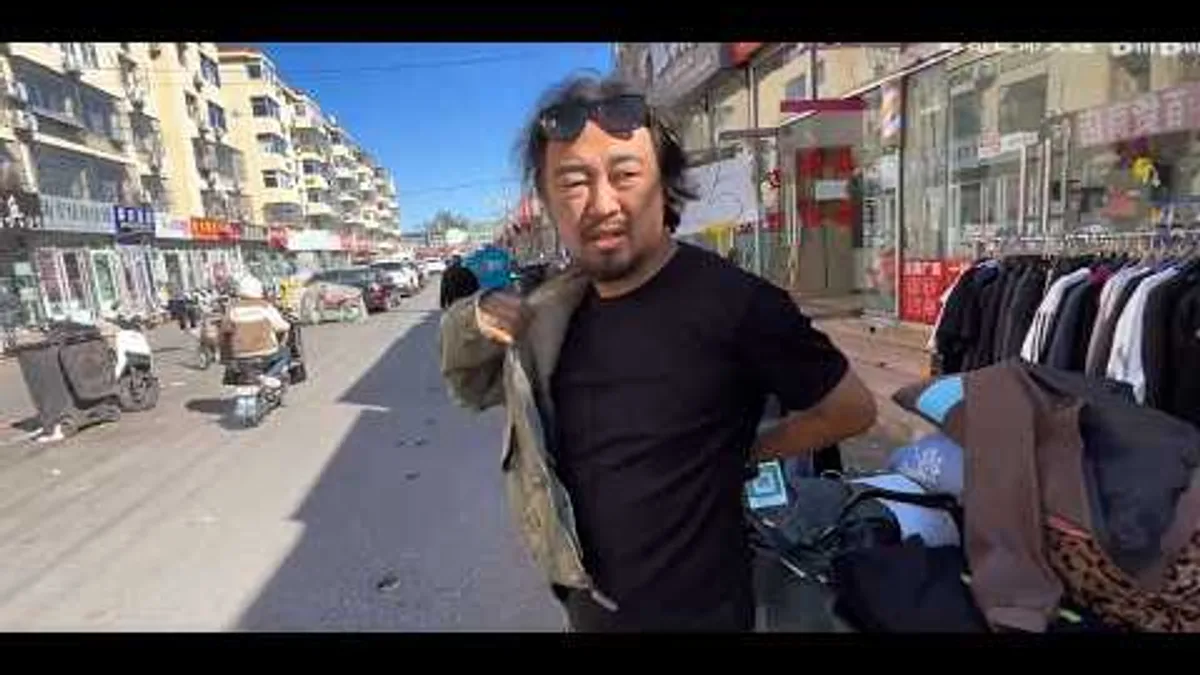
Figure 1: In the latter half of 2026, two documentary projects focusing on the Majuqiao day-labor market in Beijing’s Tongzhou district ignited intense public discourse, laying bare the survival landscape and communicative divides of Northern China’s largest casual labor hub.
In the second half of 2026, Majuqiao—located in Beijing’s Tongzhou district, merely three kilometers from JD.com’s global headquarters—was thrust back into the center of public scrutiny. Two distinct documentary media projects captured this epicenter of North China’s casual labor: An Unemployed Programmer Wandering Majuqiao, a 40-minute independent documentary by Qi Xiaobo (Xiao Qi), and A Day Doing Day Labor in Majuqiao, a 25-minute street-level experiential video by influencer Feng Ge. Although both works were subsequently scrubbed from domestic platforms, they generated explosive resonance within overseas Chinese communities.
While Feng Ge’s piece initially appeared superficial—a casual walk-and-talk through the market—his horizontal sweep shattered comforting illusions of exceptionalism. Amplified by top-tier creator leverage and subsequent administrative blowback, the video catalyzed an unprecedented wave of public emotional resonance.
I. Mirror Images: Two Narrative Systems in a Single Physical Coordinate
Majuqiao is more than a geographical collection point for low-end labor; it is a hyper-concentrated sociological cross-section. Here, an ultra-low-cost survival infrastructure—6 RMB oversized noodle bowls, 15 RMB second-hand clothes, and 20 RMB communal bunks improvised from kitchens—interlocks directly with a high-risk, volatile day-labor market. Confronting this exact spatial arena, two creators produced radically divergent audio-visual representations and analytical frameworks:
| Comparative Dimension | Qi Xiaobo (Xiao Qi) | Feng Ge |
|---|---|---|
| Representative Work | An Unemployed Programmer Wandering Majuqiao (~40 mins, August 2026) | A Day Doing Day Labor in Majuqiao (~25 mins, October 2026) |
| Perspective | Vertical Deep-Dive (Individual Fate Tracking): Independent documentary paradigm featuring long-cycle follow-ups with core subjects and extreme cases. | Horizontal Sweep (First-Person Immersive Experience): Influencer field research utilizing a sensory, street-level scan of food, housing, and transit. |
| Core Subjects | Class Sliders and the Destitute Fringe: Unemployed programmers, a 50-year-old uncle who lost his ID, and critically ill, despairing laborers. | Confused Youth Entering Society and Mainstream Day Laborers: A fresh junior college graduate from Shanxi, couriers, and ordinary workers hunting for predawn gigs. |
| Narrative Focus | Dissecting the chain reaction of individuals falling through the social safety net (family debt, mental exhaustion, illness, and institutional failure). | Revealing Majuqiao’s spatial operational mechanics (6 RMB noodles, 20 RMB communal beds, predawn cargo-passenger mixed transit, and hiring unwritten rules). |
| Camera Language & Intervention | Restrained, Cold, Low-Intervention: The creator remains behind the lens, asking sharp questions while preserving the raw dignity of the subjects. | High-Intervention, Absurdist, Black Humor: Strong personal IP style; buying old clothes to cover a sleeping vagrant, bookended by stark black-and-white photography. |
| Real-World Feedback & Distribution | Sparked serious discourse on middle-class downward mobility and risk resilience before being completely purged domestically. | Surpassed 2 million views in a single day. Pre-censored due to sensitive labor conditions; live-stream disrupted by police visits upon release, rendering the video offline. |
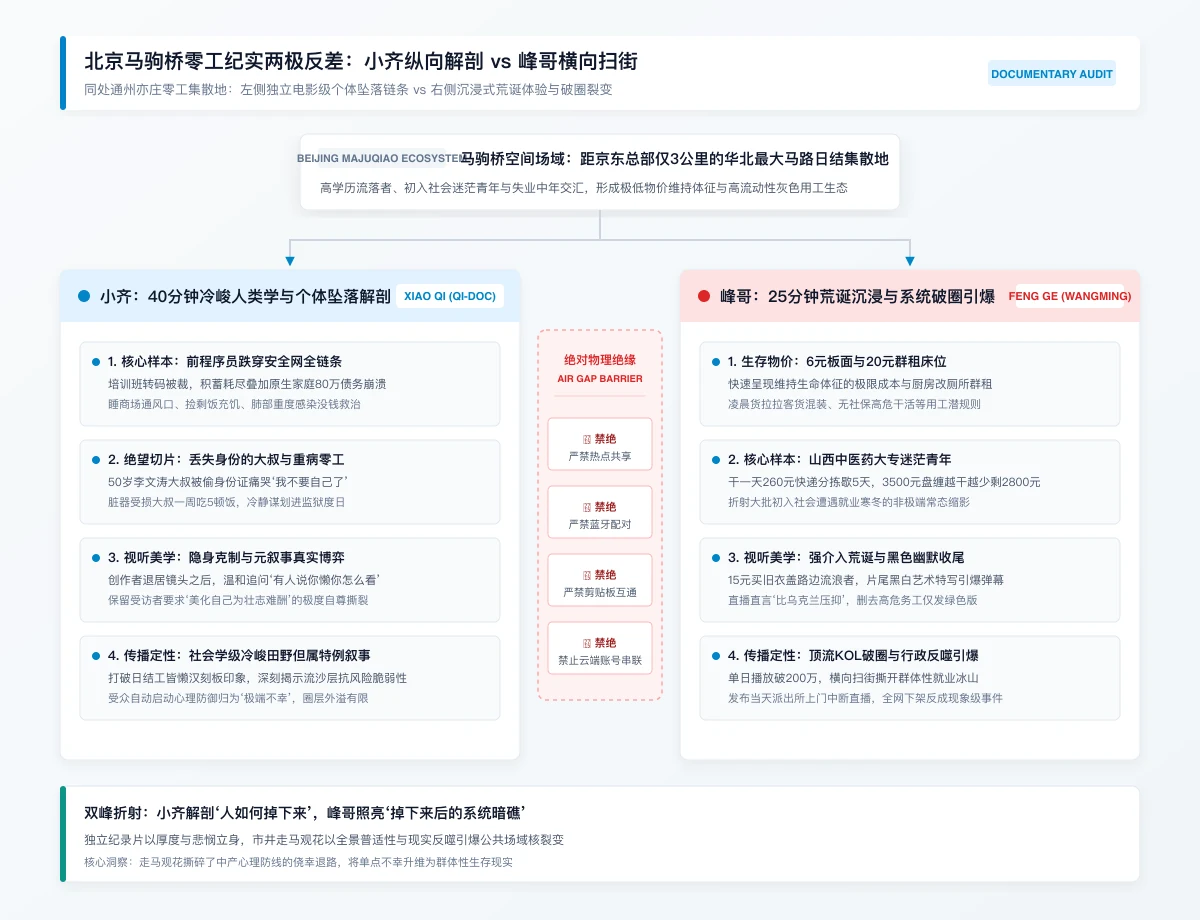
Figure 2: A comparative matrix of narrative structures, sample dimensions, camera aesthetics, and distribution backlashes between Qi Xiaobo and Feng Ge.
II. Tragic Depth Versus Ecological Cross-Section: The Anatomical Logic of Two Narratives
1. Qi Xiaobo: Dissecting How a Former White-Collar Worker Pierces the Safety Net
The suffocating sting of Qi’s documentary stems from his choice of subject—a former internet programmer whose profile closely mirrors the urban white-collar mainstream. Over nearly 40 minutes, the film peels back the layers of a logic chain that plunges an educated young man into the abyss of urban survival:
- Professional Obsolescence and Avoidance Mechanisms: Having transitioned into tech via a boot camp, he was laid off from his second company due to technical gaps and communication friction. Initially, he failed to grasp the gravity of the crisis, experiencing a psychological coping mechanism of “relief and freedom” while sinking into video games to escape reality. As explored in Worker Energy Depreciation and Baseline Risk Control, white-collar workers often realize their equity reserves are fully depleted only after their physical and mental regenerative capacity hits zero.
- The Fracture of Family Backstops: When his personal savings vanished and he attempted to borrow 3,000 RMB from home for transition funds, he was met not with a haven, but with his parents’ divorce proceedings and 800,000 RMB in joint family debt. Realizing he not only lacked a buffer but stood to inherit multi-decade family liabilities, his psychological defenses collapsed completely into self-abandonment.
- The Relentless Downward Spiral of Survival: From food delivery to applying for day-labor security jobs (where nodding off during a 24-hour shift incurs a 50% pay penalty, and where an old administrative penalty record disqualified him from the security guard license); from youth hostels to sleeping in iron air-conditioning vents outside shopping malls; from paying for meals to scavenging leftover meat and scraps from restaurants at midnight; culminating in a severe lung infection with a whited-out right lung, weeping silently in a hospital because he could not afford diagnostic tests.
- The Tearing of Dignity in Meta-Narrative: The climax arrives when the subject abruptly interrupts the filming, demanding that Qi frame him as a “tragic figure of unfulfilled ambition” rather than a “lazy slacker,” confessing that his overwhelming pride and refusal to accept reality paralyzed him. This raw game of protecting one’s ego amidst absolute destitution lends the work anthropological weight.
Qi also weaves in gripping portraits of the marginalized: Uncle Li Wentao, a 50-year-old migrant from Bozhou, Anhui, who wept uncontrollably after his ID and clothes were stolen while sleeping rough, crying out, “I don’t want myself anymore”; and a middle-aged laborer with multiple organ failures who ate only five meals a week while calmly plotting to “commit a minor crime just to spend time in prison.” Qi delivers a cold sociological field record, mapping precisely the vulnerable essence highlighted in China’s Middle-Class Quicksand and Governance Logic—populations stripped of institutional ballast plummet irreversibly once hit by dual shocks of career derailment and family debt.
2. Feng Ge: Restructuring the Bottom-Tier Commercial Ecosystem via Immersive Experience
Unlike Qi’s invisible, retreating stance, Feng Ge employs a classic Gonzo Journalism approach. He plunges his physical body directly into the food, lodging, and transit matrix of Majuqiao, using dense, gritty street details to rapidly reconstruct the mechanics of this underground ecosystem:
- Visceral Display of Extreme Survival Economics: The camera sweeps over massive bowls of noodles priced at 6 RMB, winter cotton coats selling for 15 RMB, and 20 RMB communal bunks where kitchens and squat toilets have been converted into sleeping quarters. Feng uses the vernacular of the streets to expose the bare physical costs required to maintain vital signs at China’s megacity peripheries.
- A Concrete, Relatable Youth Sample: The core subject of Feng’s interviews is a junior college graduate from Shanxi holding a degree in traditional Chinese medicine. Unlike Qi’s deeply destitute, rootless subjects, this young man represents the broader cohort of youth entering today’s market: unable to secure a hospital post or meet pharmaceutical sales quotas, he survives on 260 RMB daily courier sorting gigs so grueling they require five days of bed rest in a rented room. Armed with a 3,500 RMB stake, his capital dwindled to 2,800 RMB as he tried to survive in Majuqiao, desperately saving to test for a chef’s certificate to seek work abroad. This reflects the early-career disillusionment examined in Sabbatical Narratives and Time Control in the Midlife Unemployment Window.
- Abruptly Suspended High-Risk Labor Realities: While Feng thoroughly maps the living conditions in the first half, his coverage truncates sharply when he boards a predawn cargo van packed with day laborers, pointing out illegal passenger-cargo mixing, the total absence of labor contracts, and high-risk conditions—cutting off right before entering hazardous construction zones.
III. Deep Deconstruction: Why Did “Hit-and-Run” Observation Spark a Massive Public Uproar?
In terms of intellectual depth, humanistic nuance, and analytical rigor regarding personal collapse, Feng Ge’s video falls short of Qi Xiaobo’s work. Yet, in terms of volume, reach, and social impact, Feng’s “hit-and-run” approach generated an earthquake far exceeding Qi’s. This inversion of depth and volume is no algorithmic glitch; it is the predictable output of psychological defense mechanisms, media ecologies, and political-economic game theory.
1. The Collapse of Psychological Defenses: “Extreme Exceptions” Versus the “Submerged Iceberg”
Though profoundly moving, Qi’s documentary triggers a protective psychological response of “self-soothing defense” among mainstream audiences. Because the programmer’s story incorporates hyper-specific compounding factors—bootcamp coding limits, 800,000 RMB in family debts, extreme introversion, and past administrative penalties—viewers shed sympathetic tears while subconsciously filing it away as a low-probability statistical outlier: “He just had terrible luck; that could never happen to me.”
Feng Ge’s casual sweep shatters this defense mechanism. His wide-angle lens refuses to memorialize any single narrative; instead, it pans indiscriminately across dense crowds of ordinary faces waiting for work. The Shanxi college graduate carried no massive debts or psychological pathology—he was mild, slender, polite, and hardworking, yet utterly incapable of securing a dignified foothold in a Tier-1 city. By stripping away the halo of the exceptional, Feng exposed a chilling truth: This is not the misfortune of one individual, but a systemic, collective employment impasse. This inescapable mirror image resonates directly with every ordinary white-collar worker staring at a screen.
2. Dimensional Reduction of Media Posture: From “Heavy Compassion” to “Street-Level Absurdism”
Traditional independent documentaries often carry the moral weight of intellectualism. The heavy atmosphere they cultivate frequently induces emotional fatigue among modern audiences exhausted by high-stress daily lives, triggering an instinctive avoidance of unmitigated suffering.
Feng Ge adopts the inverse strategy: a near-cynical deconstructive posture. He avoids grand sermons or sweeping elevations, silently purchasing a 15 RMB thick cotton coat at a second-hand stall and draping it over a sleeping vagrant. He bookends the piece with cinematic music and stark black-and-white street photography, dissolving the oppressive weight of the subject matter. This conversion of grim reality into an absurdist performance art lowers the barrier to entry, instantly transforming an elitist sociological discussion into viral cultural memes and secondary creative output among youth.
3. Top-Tier Creator Leverage and the Political Metaphor of Real-World Backlash
The divide in cross-platform reach ultimately boils down to the dramatic real-world fallout surrounding the releases:
- Asymmetry of Traffic Potential: As an independent documentary creator, Qi’s audience remains relatively niche. Feng Ge is an established top-tier creator endowed with mainstream spotlight power and controversy capital, drawing in demographics ordinarily indifferent to sub-tier labor issues, thus acting as a natural cross-over lever.
- Administrative Backlash as the “Ultimate Performance Art”: During a live stream prior to release, Feng joked that he might be detained upon publishing, prompting him to self-censor a “green version.” Yet on the afternoon of its release, local police visited his location, abruptly cutting his live stream and triggering platform-wide deletions. This theatrical real-world pushback instantly elevated the video beyond a day-labor experiment into a litmus test for free expression, gig-economy sensitivities, and grassroots governance. The subsequent commentary wave from financial, political, and overseas self-media completed the viral loop.
Qi Xiaobo’s work wins on depth and compassion, serving as a precision surgical blade that exposes the downward trajectory of micro-individuals crushed by the tides of an era. Feng Ge’s work wins on breadth and reef-striking impact, using an ostensibly casual walk-and-talk to illuminate the colossal iceberg hidden beneath the waterline—sparking the most violent reverberations in the public sphere through its collision with institutional reality.
Related Research & Topics
Tello Mobile eSIM
SafetyWing Nomad Insurance
* Disclosure: This post contains affiliate links. If you make a purchase through these links, V-G Journal may earn a small commission at no additional cost to you. We only recommend services we independently evaluate and trust.
FIRE and Golf:自由旅居之路
专注于为追求 FIRE 与品质生活的人群提供特惠打球权益与候鸟微度假。不持一砖一瓦,运营品质生活。